




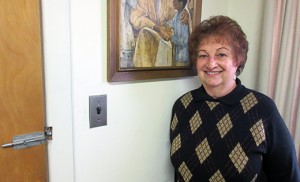
Diane Jannone sits beaming behind her desk at Catholic Charities’ Family and Community Services Center in Atlantic City. She has good reason to smile. Just last week she finished spending the last of $250,000 state housing grant — well before the March 31 deadline.
But outside the world of social services, the weight of that accomplishment might seem a little opaque. To put it in perspective, these kinds of grants are highly competitive and renewed from year to year. They come with strict qualifying requirements for potential beneficiaries. The clients must have received an eviction notice, with a court date and docket number, fall within a specific income level, have a particular kind of need, and never have received the assistance before.
Jannone had just 12 months to spend the money and if she failed to do so by the deadline, the agency would forfeit the remaining funds and would find it difficult to apply for the grant again in the coming year.
Every case required hours in paperwork, personal interviews and meetings. From open to close they took an average of two to three weeks. Jannone at one point was seeing up to three new clients a day, each for one and a half to two hours. And managing the grant was not her only responsibility at Catholic Charities.
She also helped with homeless ministry on Fridays and the center’s food pantry, and administered utilities assistance.
If success could be measured solely in such terms — hours, numbers, dollar amounts — Jannone’s accomplishment is outstanding. But in this work, the true measure of success has always been found on a more human level, in the lives of those impacted by that grant funding, monies otherwise tied up in faceless bureaucracies without faith-based and other non-profits to administer it.
In this kind of work, Jannone’s greatest accomplishment goes beyond the amount of money she was able to distribute. It’s in the human connections she makes with her clients, the face she puts on the state aid.
“I will never be able to thank you enough for your time and consideration you bestowed upon us during our time of need,” the handwritten thank-you note reads. Lindsay Villano was one of Jannone’s clients and was helped to remain in her home thanks to the funding she received.
“You were able to look past the black and white of it and into the areas of grey where most people don’t care to look,” Villano writes.
The grant itself is called a Homelessness Prevention Program grant. It’s for moderate income people who have fallen behind on their rent and are in danger of eviction — as Jannone puts it, people who were doing well, but “hit a bump in the road.”
It could have been a sudden car failure or a hospital trip that suddenly sent their finances into the red, but the results are the same. One missed rent payment snowballs quickly and it’s difficult to catch up, especially when children are involved, Jannone says. The families find themselves in landlord-tenant court at risk of becoming homeless.
“So many people are so grateful,” Jannone says. “They’ll want to give me a hug; I’ve gotten a couple of thank-you notes; there have been tears. One girl was living in her car and this grant allowed her to move into her own apartment. The next day she brought me flowers.”
The most painful part of her job, she says, is turning away those who do not meet the grant’s strict qualifications. The Atlantic City center manages another state grant for those with lower income, so she is able to refer some people there. But those who most gnaw at her heart are the ones who fall in the middle: income too low to qualify for her grant, too high for the other.
What gets her through is the gratitude of those she is able to help, witnessing their trust in God, and her own powerful faith.
“The clients who come here are not necessarily Catholic, but they have a strong belief in God. They’ll say things like, ‘God will provide; God will help me,’ and I think to myself, ‘They’re right,’” she says.
“I ask God every morning to strengthen my faith. And I pray to the Blessed Mother to send me a tiny drop of her strength and courage to get me through what I have to deal with. And that’s how I get through my life. Without my faith I don’t know where I would be.”
Maybe it’s that faith that makes such an impact on the clients Jannone has seen over her 10 years as a Catholic Charities certified case manager in Atlantic City. It certainly made an impact on Lindsay Villano.
“You showed us that there are still good people in the world,” Villano writes. “I don’t necessarily believe in coincidences. But I do believe that people are put in our paths for a reason.”
For more information on the services offered by Catholic Charities visit www.CatholicCharitiesCamden.org
Catholic Charities is supported by the House of Charity — Bishop’s Annual Appeal.





 at the bottom and then tap “Add to Home Screen”
