






CNS photo/Sergey Dolzhenko, EPA
In early December, the Institute of Global Homelessness invited theologians, practitioners and policymakers to Rome to work on coordinating global efforts to eradicate street homelessness and to discuss potential paths forward for Catholic social teaching and the universal church to engage more seriously with the issue.
I was delighted to participate and present some ecclesiological opportunities and challenges to further theological thinking on the issue. While I consider myself a systematic theologian, the boundaries between historical perspectives, practical engagement, moral theology and the church’s developing relationship with the contemporary world become fluid, especially in the face of glaring social issues, such as the one we hoped to tackle seriously and effectively in our conversations.
A number of Vatican officials, including Cardinal Peter Turkson, prefect of the Dicastery for Promoting Integral Human Development, and Archbishop Rino Fisichella, president of the Pontifical Council for Promoting the New Evangelization, addressed those of us gathered in the shadow of the dome of Saint Peter’s. Amazing presentations included a number of world experts in various fields of study outside of theology: social scientists, demographers, politicians, (in)adequate housing experts, and those on the frontlines of combatting what is among the most humiliating and difficult issues for the global community to address.
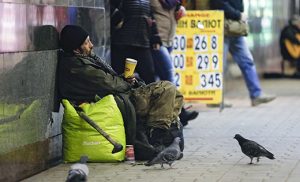
A striking example of this “discomfort” arose in the unsettling moment when a 4-year-old asks a parent why a person they pass is sleeping in a doorway when they have an empty bedroom (or vacation property). If there is any moment where Christians ought to resonate with the Good Samaritan’s “being moved in the depths of his or her gut” as the original biblical text implies, surely hearing this penetrating query is it.
Why is it that the vast majority of Westerners are infinitely more comfortable around an unscrupulous businessman who is clean-shaven and wearing expensive cologne than an evicted or addicted, but perhaps fundamentally moral, person who is dirty and unshowered?
Most enlightening to me personally was two hours of conversation by various women engaged in academic study of or ministerial service to the homeless in Chile, Jamaica and India. These too often underrepresented voices emphasized the related issues of sexual abuse, patriarchy and gender-based violence that contribute to the reality of street homelessness among women. Surely — and sadly — “machismo,” as it is named in the Latin American context, has universal cognates in every language of the world.
Truly the most invisible of the global population, it’s a damning critique on our human race that the Audubon Society’s grassroots annual bird-watch does a better job of informally cataloguing various species of migrating geese than we do with human beings living without land, lodging or labor (what the pope says are the necessary three T’s in Spanish: Tierra, Techos, y Trabajo).
Because the IGH is closely related with both DePaul International and the work of universities like Saint John’s, DePaul and Niagara, the conference had an intentionally Vincentian flavor. The current Super General of the Congregation of the Mission and the Company of the Daughters of Charity, Father Tomaž Mavrič, and a former one, Father Robert Maloney, (who is now based in Philadelphia) were key voices in our discussions and liturgies. We talked often about Saint Vincent DePaul’s encouragement to leave the presence of Jesus in the Blessed Sacrament if a knock on the chapel door came from a poor man, woman, or child, so that one could encounter his divine presence “out there” in addition to the more familiar paths within the sacramental life in the church.
If I could put forward a humble request to the readers of this publication, please do all you can through word of mouth, social media or prayer to support our ongoing work to “go out to the highways and hedges” as the Host of the Great Banquet encouraged those serving him to do, compelling the forgotten and unhoused to enter the festivities (cf. Lk 14:16-24). More information can be found at www.IGHomelessness.org
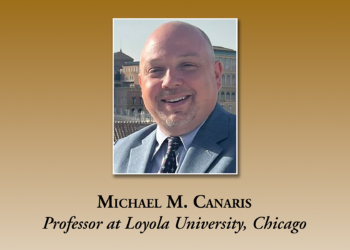
Originally from Collingswood, Michael M. Canaris, Ph.D., teaches at Loyola University, Chicago.



 at the bottom and then tap “Add to Home Screen”
