


Click Here to Subscribe

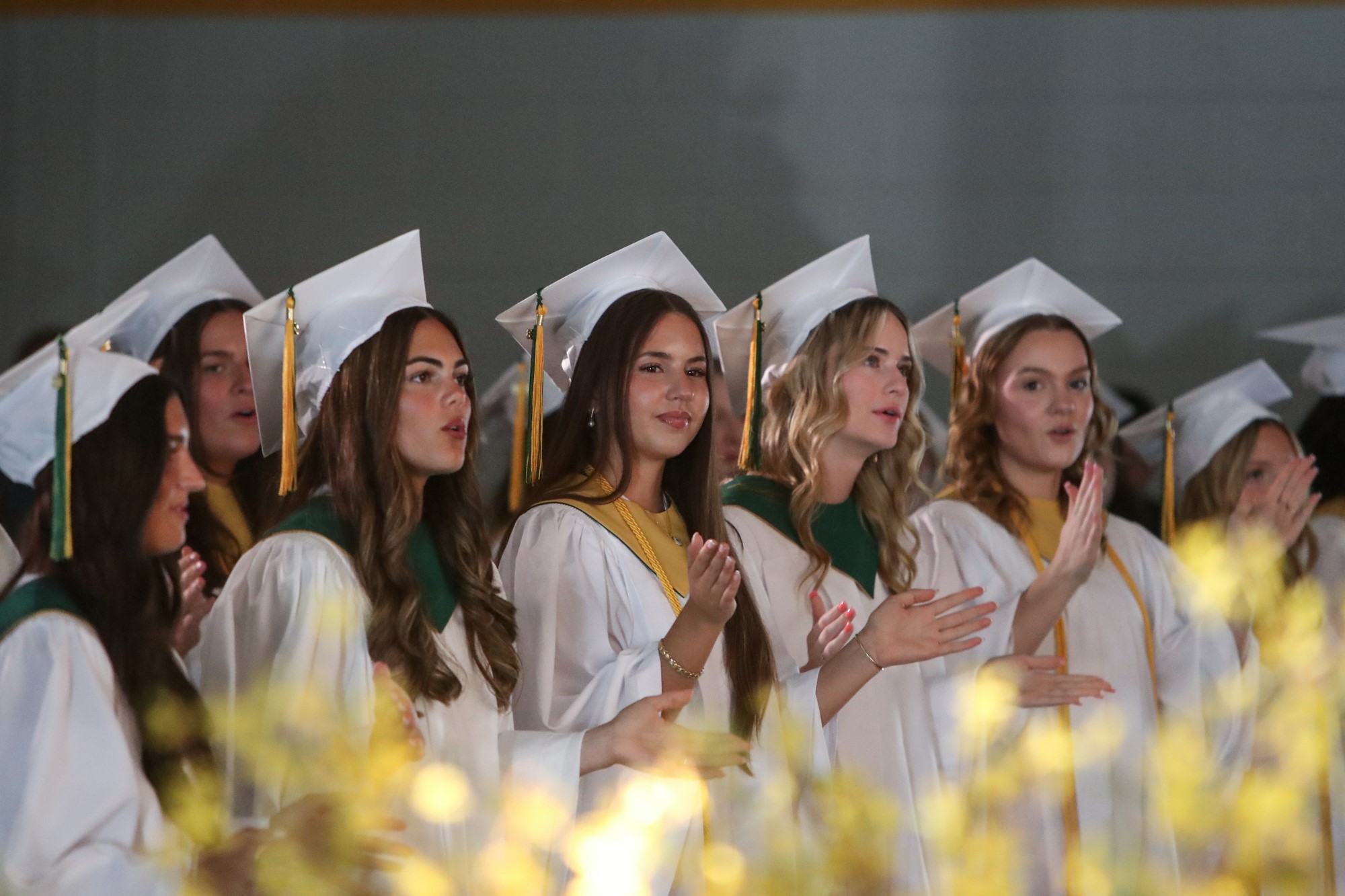
Photo Gallery: OLMA Graduation

Bishop's Schedule

The Bishop’s Schedule, May 26 – June 2

by Staff Reports
May 21, 2026
0
ShareTweet

Featured

New Jerseyans urged to push for nonpublic school security funding

by David Karas, Correspondent
3 days ago
0
ShareTweet

The Ascension, like death, not a departure, but a lifting

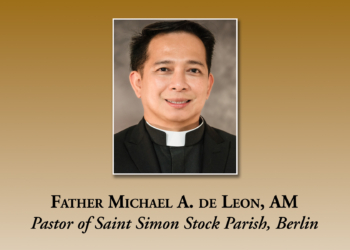
by Father Michael A. de Leon, AM
3 days ago
0
ShareTweet

Bishop connects with staff, mission at SSJ Neighborhood Center

by Staff Reports
5 days ago
0
ShareTweet
  • Contact
  • Advertise
  • Subscribe
  • Home
Sunday, May 24, 2026
Catholic Star Herald
  • News
    • From Bishop Williams
    • Parish Life
    • Diocesan News
    • Sports
    • Columns
      • From Bishop Sullivan
    • Obituaries
    • World/Nation
  • Catholic Schools
  • Español
  • Features
    • Special Supplements
      • Thank You Bishop Sullivan
      • Welcome Bishop Williams
      • Jubilarians
    • Entertainment
      • Movie Reviews
    • Photo Galleries
    • Talking Catholic
    • Latest Videos
    • Health and Wellness
  • Advertise
  • More
    • Classified
    • Subscribe
    • Contact Us
  • News
    • From Bishop Williams
    • Parish Life
    • Diocesan News
    • Sports
    • Columns
      • From Bishop Sullivan
    • Obituaries
    • World/Nation
  • Catholic Schools
  • Español
  • Features
    • Special Supplements
      • Thank You Bishop Sullivan
      • Welcome Bishop Williams
      • Jubilarians
    • Entertainment
      • Movie Reviews
    • Photo Galleries
    • Talking Catholic
    • Latest Videos
    • Health and Wellness
  • Advertise
  • More
    • Classified
    • Subscribe
    • Contact Us
No Result
View All Result
Catholic Star Herald
No Result
View All Result
Home Growing in Faith

John Henry Newman’s Idea of a University

admin by admin
March 11, 2010
in Growing in Faith
Reading Time: 4 mins read
0
0
VIEWS
Share on FacebookShare on Twitter

The last in a series of occasional articles about Cardinal John Henry Newman

One of John Henry Newman’s best known works is The Idea of a University. While it was not widely popular during the theologian’s lifetime, it has come in subsequent generations to be realized as a classic on higher education. Well-known professors such as Jaroslav Pelikan (Yale) and James M. Cameron (University of Toronto) agree that Newman’s Idea ranks as one of the most influential books ever written on pedagogy in the university.

Asked by Archbishop Paul Cullen of Armagh in 1854, Newman agreed to help found and serve as rector for a new Catholic University in Dublin. Although the autonomous college survived less than three decades before being absorbed into the Royal University of Ireland, Newman’s reflections on the relationship between theology and other academic disciplines, including philosophy, literature, and the natural and social sciences, live on.

Newman saw as a crisis of the 19th-century both the abandonment of study of the classics and the movement to dethrone the study of religion as a respected academic discipline. In a lecture to the Newman Society in 2001, Cardinal Dulles analyzed Newman’s efforts as a battle against four prevalent tendencies during this period. Having read the Idea, the lecture, and some secondary literature on the period, I find Dulles’ interpretation enlightening, and will thus employ his lenses in approaching the topic. His description of the four tendencies which Newman sought to overcome includes utilitarianism, fragmentation, secularism and rationalism.

First, Newman found unacceptable Lord Henry Brougham, Sydney Smith, and the Edinburgh Review’s attempt to use the work of John Locke and Jeremy Bentham to replace the study of classical wisdom with educational practices that served only as preparation for a trade or profession. He rather sought to cultivate a “philosophical habit of mind” which would serve to “strengthen, refine, and enrich the intellectual powers” of students. Such a goal had benefits well beyond mere utility, but rather in preparing one to wrestle with issues in any walk of life. The ground and use of critical thinking was by no means useless, but rather could be used in any field or occupation, as the proponents of strictly professional or vocational training would seem to deny.

Second, Newman fought against those that would fragment or overly compartmentalize education. Astronomy, engineering, medicine and literature were all welcome elements in a university setting, but a principle of order and organization had to exist to put them in relation with one another. The term university itself points to the metadisciplinary unity of all branches of knowledge; each department does not exist without contact with or influence upon the others — this would result in not a uni-versity (from the latin “the unified whole,” or more literally “turned into one”) but rather in a multi-versity.

Third, Newman fought against excessive secularization. While the university is not a seminary, and so cannot enter into the rigorous world that often is academic theology for every one of its students, the right of the study of religion, doctrine and theology must be allowed to exist alongside other disciplines if order and balance are to be maintained. Physics, medicine and psychology departments offer valid and truthful insights on the human and natural environment. However, these areas of specialization do not supplant the role of theology to speak about God, creation, reality, imperfection and the relationship among such elements. In fact, theology was in earlier centuries known as “regina scientiarum” (queen of the sciences), with other branches, most often philosophy, being described as “ancilla theologiae” (the handmaiden of theology) — we theologians often bemoan the disappearance of that distinction in contemporary times and relative paychecks. But in all seriousness, Newman saw that the qualitative differences between human and divine faith existed, but did not give grounds for excluding the public and formal study of either.

Lastly, the university can tend toward a dangerous rationalism. Because it exists to provide a place of learning, it can inappropriately absolutize such an elevating of the human mind to a goal in itself. Questions of “What is possible?” and “How can we accomplish it?” can supplant and choke out larger metaphysical questions of “Why do this?” Such fostering of secular education without limit or morality, at the risk of imparting complete and utter skepticism and unbelief, do no justice to their students’ efforts to arrive at the one font of Truth Itself.

Newman would agree that the burden of proof lies upon those who would undo the great educational history of the West, of those who would wish to somehow transmit the fullness of truth while marginalizing humanistic, philosophical and theological questions which arise in and through the study of merely scientific or “objective” truth. Newman’s The Idea of a University continues to have lasting relevance today in the perennial questions of how, where, why and what we learn.

Michael M. Canaris of Collingswood is a Ph.D. candidate in systematic theology at Fordham.
Previous Post

Too bruised to be touched, a cause of suicide

Next Post

Lent is a time to accept and embrace the two selves

Related Posts

Statue of Santa Eulalia in historic city Merida, Spain
Columns

Teaching future generations to recognize roots of past

July 28, 2022
Pope Francis elevates the host as he celebrates Mass at the GSP Stadium in Nicosia, Cyprus, Dec. 3, 2021. On June 29, 2022, the pope issued issued an apostolic letter insisting Catholics need to better understand the liturgical reform of the Second Vatican Council and its goal on promoting the "full, conscious, active and fruitful celebration" of the Mass. (CNS photo/Paul Haring)
Columns

Pope Francis and the truth in sacramental signs

July 14, 2022
CNS photo/Luis Echeverria, Reuters


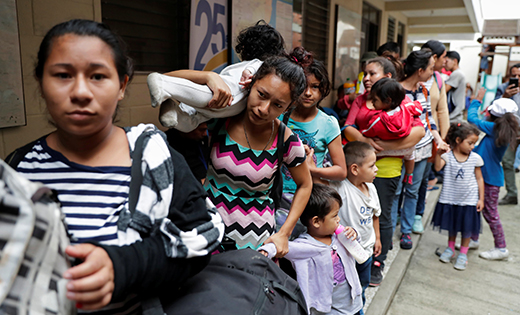
Honduran migrants, who are part of a caravan trying to reach the U.S., wait in line Oct. 17 to enter a shelter in Guatemala City. This year’s annual interfaith program “Breaking Bread Together,” sponsored by the Jewish-Christian-Muslim Dialogue of Southern New Jersey, is presenting a timely presentation on the issue of immigration titled, “From Refugee to Neighbor — Local Refugees Share their American Stories.”
Columns

Accompanying migrant populations can be mutually transformative

November 18, 2021
hands of a just married couple with the wedding rings and bouquet
Columns

Two human beings trying to share the journey of faith

March 17, 2026
Facebook Twitter Instagram LinkedIn Youtube RSS

No Result
View All Result

Latest News

Father Edward Heintzelman, longtime pastor in Mays Landing, dies

Bishop Williams urges Knights of Columbus: Be confident evangelizers

New Jerseyans urged to push for nonpublic school security funding

Faithful gather for spiritual renewal ahead of Pentecost

Father Naticchione celebrates first Mass in Ventnor

Latest Videos

View Ordination of Nickolas B. Naticchione in Cathedral

The legacy of Pope Francis

Pope Leo’s first Easter message

See livestream of Bishop Williams celebrating annual Chrism Mass

Pope Leo XIV’s first Palm Sunday

Around the Diocese

  • The Diocese of Camden
  • Talking Catholic Podcast
  • Catholic Charities
  • Advertise
  • Catholic Cemeteries
  • VITALity Healthcare Services
  • Housing Services
  • Camden Deacon
  • Camden Priest
  • South Jersey Catholic Schools
  • Man Up South Jersey
  • Catholic Business Network

Additional Resources

  • New Jersey Independent Victim Compensation Fund
  • Quick Guide to Reporting Sexual Abuse
  • List of Credibly Accused Priests and Parish Resources
  • Bishop’s Commission Report on Catholic Schools

Reorganization of the Diocese

  • Chapter 11 Claims filing info
  • Chapter 11 Prime Clerk Filing

© All Rights Reserved | May 24, 2026 | Catholic Star Herald of the Diocese of Camden

En español/Sa Tagalog

Add the Catholic Star Herald to your home screen

For Android users(Chrome) tap the at the top right vertical 3 dots then tap “Add to Home Screen”

For iPhone tap:at the bottom and then tap “Add to Home Screen”

  • This field is for validation purposes and should be left unchanged.

If you need assistance with submitting your subscription, please call Neal Cullen at 856-583-6139, or email Neal.Cullen@camdendiocese.org

No Result
View All Result
  • News
    • From Bishop Williams
    • Parish Life
    • Diocesan News
    • Sports
    • Columns
      • From Bishop Sullivan
    • Obituaries
    • World/Nation
  • Catholic Schools
  • Español
  • Features
    • Special Supplements
      • Thank You Bishop Sullivan
      • Welcome Bishop Williams
      • Jubilarians
    • Entertainment
      • Movie Reviews
    • Photo Galleries
    • Talking Catholic
    • Latest Videos
    • Health and Wellness
  • Advertise
  • More
    • Classified
    • Subscribe
    • Contact Us

© All Rights Reserved | May 24, 2026 | Catholic Star Herald of the Diocese of Camden