







Following are some of the questions that have come to the Office of Catholic Schools since the Diocese of Camden announced closure of our school buildings. We will continue to provide updates if anything changes. For questions related to a specific school, please contact the school’s principal or teachers.

How long will school buildings be closed?
Our school buildings are temporarily closed for a minimum two-week period that began March 16. We will continue to monitor the COVID-19 pandemic and follow directives established by state or local government and public health officials to determine when it is safe to resume school on-site. In the meantime, school is in session for grades K-12 through remote learning.
How are principals and other key personnel communicating with families?
All schools have implemented remote learning plans so that instruction and learning can continue despite building closures. Schools may be using any combination of website, social media pages, group emails, texting apps, and phone communication to provide ongoing community updates. All teachers and principals are reachable directly via email.
How does remote learning work?
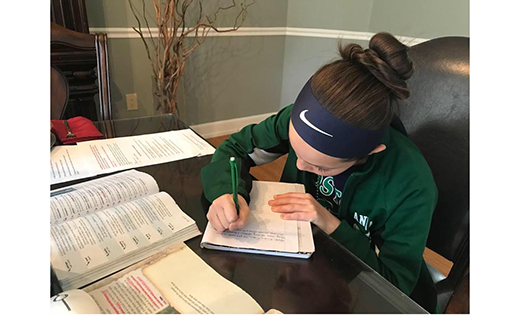
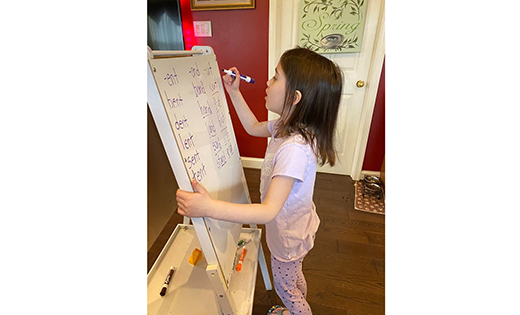
Every school has a plan in place to deliver four hours of learning experiences to all students each day. Teachers are using tools such as online video presentations, educational websites, interactive digital assignments, textbooks, worksheets, and independent reading and writing assignments to support the curriculum. Instruction and learning experiences are scaled appropriately for grade, age and subject matter. Most students are already used to working with online resources in the classroom. While they are learning remotely, students and those supporting them at home can contact the teacher for help or additional support. Teachers are responsible for monitoring students’ work, researching and preparing additional assignments, giving feedback on assignments and being available to students and parents.
What is the role of parents in the process?
Parents are not expected to fill in as teachers. We do ask that parents or caregivers help students get organized, access their assignments, maintain a routine, and check that work has been completed. At the same time, we recognize that even minimal involvement is difficult for some families based on work responsibilities, day care challenges, language differences and other factors. And younger students likely require more oversight than older students. Parents and caregivers are encouraged to reach out to school principals or teachers with any questions or concerns. Above all, we want the remote school experience to be rigorous, but reasonable.
What about students who don’t have access to technology at home?
Remote learning is not limited to digital resources. Students took all textbooks and other supplies and materials home on Friday, March 13, in anticipation of a possible closure, or picked them up on Monday, March 16, once the closure was announced. Teachers and principals will continue to be in close contact with families who might require alternative materials and resources during the time when school buildings are closed.
Do all schools have the same plan in place?
Our diocesan schools are working with guidelines for remote learning developed by Superintendent of Schools Dr. Bill Watson and our school principals. Provided they continue to cover the curriculum requirements, also established by the Diocese of Camden, schools and teachers have significant flexibility when it comes to choosing resources, for example, textbooks, digital materials, interactive online programs, reading selections and writing assignments.
Will students be learning new material during this time?
It depends on the subject and the teacher’s assessment of readiness. For example, Religion, Social Studies and Science are content-based subjects in which teachers may introduce new content if the grade, specific content and readiness of the students call for it. Other subjects, like Math, might be better suited for review, using new and different tools to reinforce concepts and develop mastery in the subject. Just as they do in the classroom, teachers will continue to assess whether students are ready to move on to new material.
Is anyone presently working at the schools?
Our plan is for principals and the school secretary to spend at least three hours a day at the school. Teachers may come in during that time to get resource materials, record videos, plan lessons or use their classrooms and equipment in any way that will help them facilitate remote learning. Presence at the school site is subject to change based on guidance provided by the Department(s) of Health and Human Services or other government directives.
Can teachers be contacted during the day?
Yes. All teachers are continuing to work during the school day and may be contacted in a variety of ways (e.g., by email, video chat, phone). Teachers are responsible for monitoring students’ work, researching and preparing additional assignments, giving feedback on assignments and being available to students and parents.
Is it possible the school year will be extended?
We do not plan to extend the school year at this time. Our commitment to a minimum four hours a day of instructional time is intended to keep our students on track for the scheduled 180-day school year. We will continue to monitor the situation as we move forward.
Will students who qualify still be able to get free or reduced price meals?
Yes. Principals whose students receive free or reduced price meals are working with public school districts and program providers to ensure that all students continue to receive the meals for which they are eligible.
What is happening with the SATs and Advanced Placement exams?
SATs are offered several times a year. The May 2 exam date has been canceled by the College Board. The June 6 date is still on the calendar at this time. Advanced Placement exams are still scheduled during the first two weeks June, and high school AP instructors continue to prepare their students to take the exams.




 at the bottom and then tap “Add to Home Screen”
