

Click Here to Subscribe

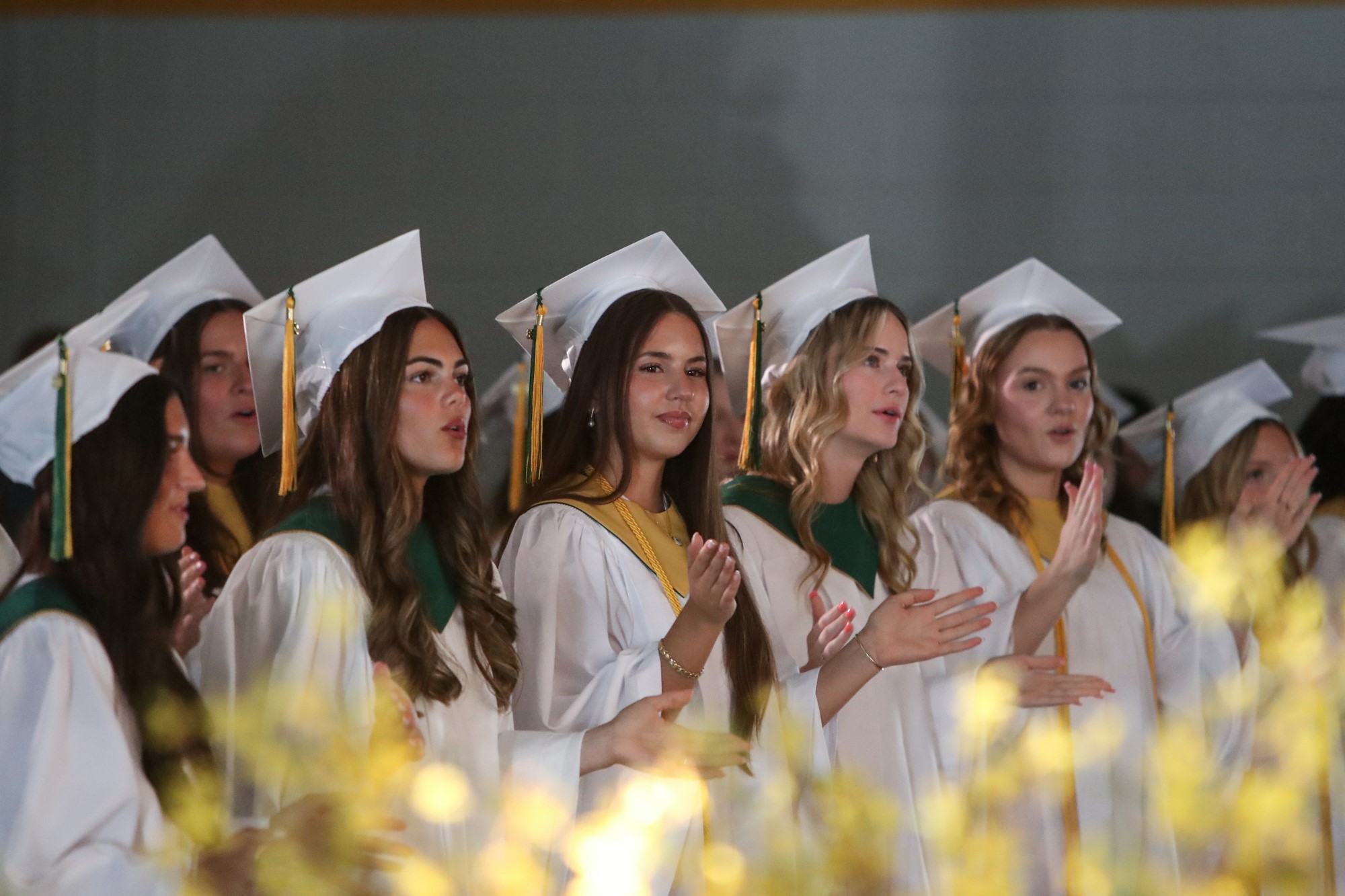
Photo Gallery: OLMA Graduation

Bishop's Schedule

The Bishop’s Schedule, May 26 – June 2

by Staff Reports
May 21, 2026
0
ShareTweet

Featured

New Jerseyans urged to push for nonpublic school security funding

by David Karas, Correspondent
3 days ago
0
ShareTweet

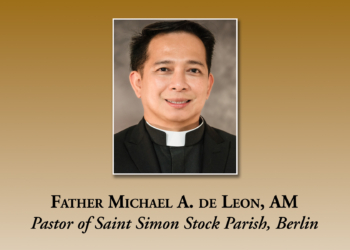
The Ascension, like death, not a departure, but a lifting

by Father Michael A. de Leon, AM
3 days ago
0
ShareTweet

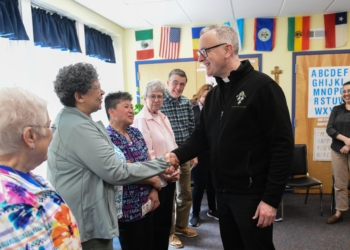
Bishop connects with staff, mission at SSJ Neighborhood Center

by Staff Reports
5 days ago
0
ShareTweet
  • Contact
  • Advertise
  • Subscribe
  • Home
Sunday, May 24, 2026
Catholic Star Herald
  • News
    • From Bishop Williams
    • Parish Life
    • Diocesan News
    • Sports
    • Columns
      • From Bishop Sullivan
    • Obituaries
    • World/Nation
  • Catholic Schools
  • Español
  • Features
    • Special Supplements
      • Thank You Bishop Sullivan
      • Welcome Bishop Williams
      • Jubilarians
    • Entertainment
      • Movie Reviews
    • Photo Galleries
    • Talking Catholic
    • Latest Videos
    • Health and Wellness
  • Advertise
  • More
    • Classified
    • Subscribe
    • Contact Us
  • News
    • From Bishop Williams
    • Parish Life
    • Diocesan News
    • Sports
    • Columns
      • From Bishop Sullivan
    • Obituaries
    • World/Nation
  • Catholic Schools
  • Español
  • Features
    • Special Supplements
      • Thank You Bishop Sullivan
      • Welcome Bishop Williams
      • Jubilarians
    • Entertainment
      • Movie Reviews
    • Photo Galleries
    • Talking Catholic
    • Latest Videos
    • Health and Wellness
  • Advertise
  • More
    • Classified
    • Subscribe
    • Contact Us
No Result
View All Result
Catholic Star Herald
No Result
View All Result
Home Columns

The task of making Christ’s story understandable

Michael M. Canaris by Michael M. Canaris
August 27, 2020
in Columns, Latest News
Reading Time: 4 mins read
0
0
VIEWS
Share on FacebookShare on Twitter
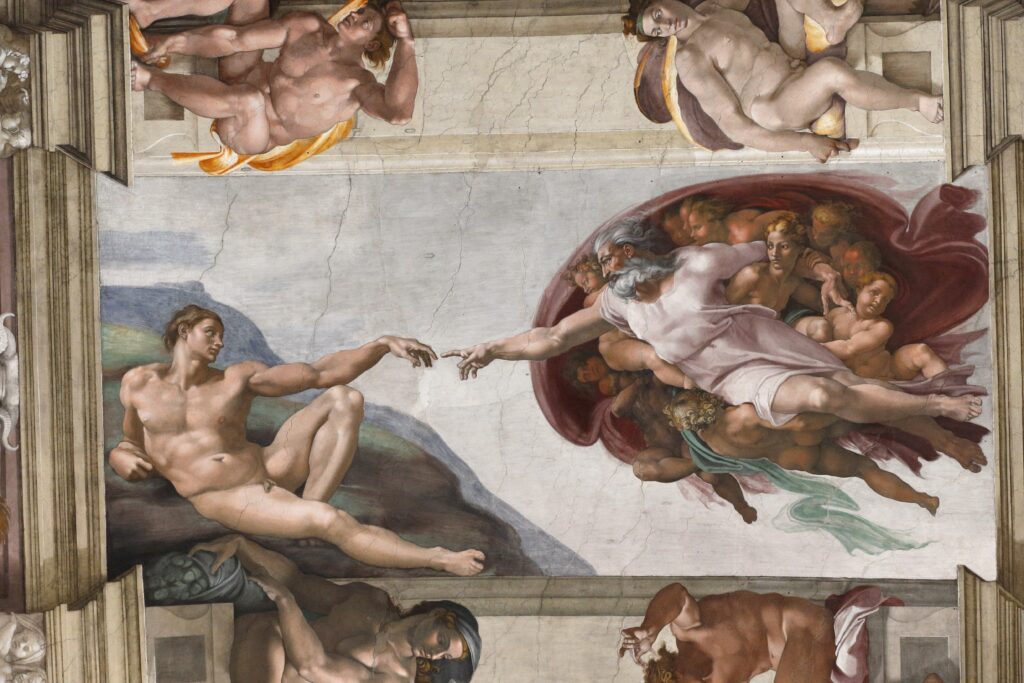
“The Creation of Adam” by Michelangelo Buonarroti is pictured in the Sistine Chapel in the Vatican Museums in this Feb. 21, 2020, file photo. The Vatican announced March 8 that the Vatican Museums will be closed until April 3 as a precaution against spread of the coronavirus. Also closed for the same duration are the necropolis under St. Peter’s Basilica, museums at the pontifical villa at Castel Gandolfo, and the museums of the papal basilicas. (CNS photo/Paul Haring)

The term “code-switching” is used frequently in sociological circles today to discuss the adjustments in speech, behavior, and modes of expression that human beings make when navigating between different social, interpersonal, and professional settings. It is often used in particular to describe the way minority populations around the world present themselves to those of the dominant culture, and to one another in private.  And while there are drawbacks in terms of psychological well-being that must never be deemed acceptable, the “translation” that takes place regarding linguistics or attitudes when one is fluent in the different codes, is one that can teach us monumental lessons, both intellectually and theologically.

First, let’s be clear that code-switching is not inauthentic, dishonest or crafted. It is a necessary survival strategy for oppressed peoples, and in some sense for everyone who would “present” differently on a job interview than they would at a watering hole with their friends or in a bedroom conversation with their spouse.  

Second, all successful education, as well as all effective pastoral ministry, manifests elements of code-switching; that is to say, of distilling centuries’ worth of philosophical, theoretical and practical knowledge into “digestible” understandable bites for those audiences with whom we co-journey in the classroom, in the church, and in life. 

The entire Christian intellectual tradition is one of re-framing and re-translating our approach to decisions, both profound and miniscule, in light of the teachings, mission, death and resurrection of Christ. As Plato’s allegory attempted to explain, all learning, whether secular or sacred, involves the re-training of our eyes to see beyond the flickering shadows of what we mistakenly believe to be the Real and the Ultimate. But the responsibility remains not to flee from the darkness but to risk returning to lead others to the light.

Michelangelo’s artistic achievements are little else than translating the world of first century Palestine into the “language” of Renaissance Italians. His work is beautiful, and makes manifest the transcendent in profound ways, and I love it, but it has no more intrinsic connection to the imagery of creation or the Fall or the Last Judgement than does Ethiopian or Korean or American postmodern attempts to tell that story to their own respective audiences. He was basically “code-switching” between the scriptural stories and the fascination with Greek humanism that was percolating around the European artisan workshops of his day.

When I am in the classroom, I constantly strive to take Ignatius of Loyola’s strategy seriously — to meet students where they are, entering into their lives through their own very particular doors, so that you can lead them out in a way through yours. 

This is not to belittle or negate their experiences from which I consistently learn a tremendous amount, nor to duplicitously smuggle my perspectives or opinions into our conversations, so much as it is to strive to put those life experiences in touch with the nameless and unfathomable One, the triune God who always exceeds all the avalanches of words written about an authentic encounter with that Alpha and Omega.

That is what lies at the heart of transformative education, literally “drawing forth from” the vast stockpiles of potential that constitute each and every human life.

Theological education, wherever you receive it — whether kneeling next to a parent before bed, or from a pulpit on Sunday morning, or in a classroom at any level, or in reading works of literature, or in life’s great lessons — is, at its core, code-switching.

As David Tracy argues, such a position “implies that systematic theologians, by definition, will understand themselves as radically finite and historical thinkers who have risked a trust in a particular religious tradition. They seek, therefore, to retrieve, interpret, translate, mediate the resources — the questions and answers, form and content, the subject matter — of the classic events of understanding of those fundamental religious questions embedded in the classic events, images, persons, rituals, texts and symbols of a tradition.” 

We are together engaged in this interpretive endeavor, and need to make sure that the least among us, the forgotten people and excluded voices, are included in that grand narrative, the re-telling of Christ’s story, and of our own.

Originally from Collingswood, Michael M. Canaris, Ph.D., teaches at Loyola University, Chicago.
Previous Post

In difficult times, we should put our trust in God

Next Post

Sacraments are both personal and collective experiences

Related Posts

Bishop Joseph Coffey, auxiliary bishop for the Archdiocese for the Military Services, celebrates Mass at Saint Elizabeth Ann Seton Church in Absecon, Sunday, May 3, 2026.
DOC Homepage

Military Services’ bishop shares journey, talks mission to support veterans

May 24, 2026
DOC Homepage

Father Edward Heintzelman, longtime pastor in Mays Landing, dies

May 22, 2026
Columns

When the Spirit sends forth witnesses

May 23, 2026
Photos by Lori M. Nichols
Diocesan News

Bishop Williams urges Knights of Columbus: Be confident evangelizers

May 22, 2026
Facebook Twitter Instagram LinkedIn Youtube RSS

No Result
View All Result

Latest News

Military Services’ bishop shares journey, talks mission to support veterans

Father Edward Heintzelman, longtime pastor in Mays Landing, dies

Bishop Williams urges Knights of Columbus: Be confident evangelizers

New Jerseyans urged to push for nonpublic school security funding

Faithful gather for spiritual renewal ahead of Pentecost

Latest Videos

View Ordination of Nickolas B. Naticchione in Cathedral

The legacy of Pope Francis

Pope Leo’s first Easter message

See livestream of Bishop Williams celebrating annual Chrism Mass

Pope Leo XIV’s first Palm Sunday

Around the Diocese

  • The Diocese of Camden
  • Talking Catholic Podcast
  • Catholic Charities
  • Advertise
  • Catholic Cemeteries
  • VITALity Healthcare Services
  • Housing Services
  • Camden Deacon
  • Camden Priest
  • South Jersey Catholic Schools
  • Man Up South Jersey
  • Catholic Business Network

Additional Resources

  • New Jersey Independent Victim Compensation Fund
  • Quick Guide to Reporting Sexual Abuse
  • List of Credibly Accused Priests and Parish Resources
  • Bishop’s Commission Report on Catholic Schools

Reorganization of the Diocese

  • Chapter 11 Claims filing info
  • Chapter 11 Prime Clerk Filing

© All Rights Reserved | May 24, 2026 | Catholic Star Herald of the Diocese of Camden

En español/Sa Tagalog

Add the Catholic Star Herald to your home screen

For Android users(Chrome) tap the at the top right vertical 3 dots then tap “Add to Home Screen”

For iPhone tap:at the bottom and then tap “Add to Home Screen”

  • This field is for validation purposes and should be left unchanged.

If you need assistance with submitting your subscription, please call Neal Cullen at 856-583-6139, or email Neal.Cullen@camdendiocese.org

No Result
View All Result
  • News
    • From Bishop Williams
    • Parish Life
    • Diocesan News
    • Sports
    • Columns
      • From Bishop Sullivan
    • Obituaries
    • World/Nation
  • Catholic Schools
  • Español
  • Features
    • Special Supplements
      • Thank You Bishop Sullivan
      • Welcome Bishop Williams
      • Jubilarians
    • Entertainment
      • Movie Reviews
    • Photo Galleries
    • Talking Catholic
    • Latest Videos
    • Health and Wellness
  • Advertise
  • More
    • Classified
    • Subscribe
    • Contact Us

© All Rights Reserved | May 24, 2026 | Catholic Star Herald of the Diocese of Camden