






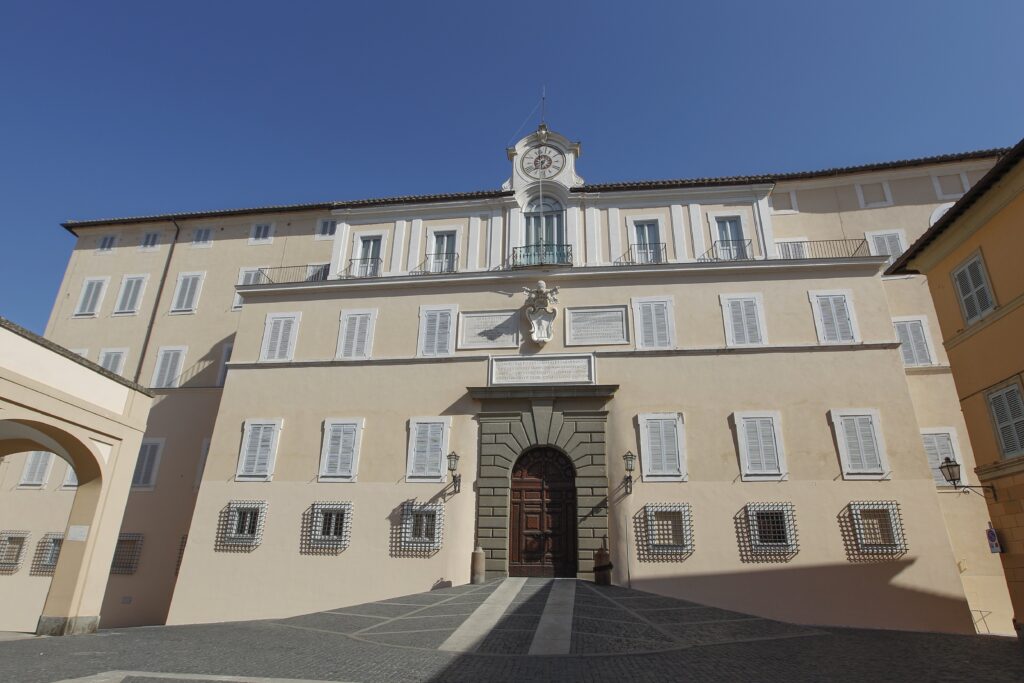
In the hills southeast of Rome lie the Castelli Romani, a number of towns in the Alban hills where the ubiquitous local white wine Frascati is made. It is a special region to me personally, as I proposed to my wife in one of these towns, Castel Gandolfo, on Thanksgiving in 2017, a normal November Thursday in Italy, so we were alone in the piazza and on a private walk through the papal summer residence and gardens. A local bartender overheard us calling our parents to share the news and brought us a few glasses of prosecco on the house.
In the town of Albano Laziale, about three kilometers away, there once existed a now-diminished devotion to a local martyr from one of the many waves of persecutions of the early church. Given the outsized role that politics are playing in most of our daily lives today, it seemed worth pondering this mostly forgotten figure, Saint Senator, in this season, especially given his recent feast day on Sept. 26.
Saint Senatore d’Albano (in Italian) appears on the Vatican’s register of Ancient and Modern Martyrs — called a martyrology, of which there are a good number — and is often closely connected with the veneration of Saint Perpetua. An ancient source claims that due to the intervention of these and other figures who suffered for the name of Christ, “great works” occurred along the ancient Via Appia, the still-extant road on which most scholars believe Peter and Paul entered the city sometime before Nero’s persecutions in the 60s AD. It meanders close to the Castelli Romani.
Whether “Senator” was actually the martyr’s given name or simply a term of respect remains a mystery. The word itself (still unfortunately fitting in all too many cases) comes from the Latin senex, meaning “old man.” Of course, like so many other terms such as basilica, curia, consecration and pontifex, Christians were familiar with the pagan use of the terms and subsequently adopted them in creative ways to fit the blossoming religion arriving in the city from its roots in the Levant on the far shores of the Mediterranean.
Ancient Rome’s senators played an indispensable role in the government of the city and empire, as evidenced in classical historian Barry Strauss’s masterful recent exploration titled “Ten Caesars: Roman Emperors From Augustus to Constantine.” If any connection existed between Saint Senator and the influential legislative body, it is lost to history, but such a bond nevertheless remains highly unlikely.
Yet, he certainly contributed to Tertullian’s famous claim that the blood of the martyrs is the seed of the church. As early rulers sought to extinguish the faith through tortures and executions, the willingness of the disciples to die for their beliefs drew curiosity, then fascination and finally respect, paradoxically causing the religion to mushroom exponentially.
The unthinkable became the reality as, for good or for ill, Christianity toppled the existing social order and became the dominant political, economic and cultural power in the West for the next millennium and a half.
Whether the model of Christendom, with its attendant colonization and pervasive civil authority, was the most authentic lived expression of the Gospel remains a debated theme. But the selfless witness of largely anonymous women and men like Saint Senator who placed their loyalty to Christ’s call above all else has much to teach our world today — from politicians to the powerless, and everyone in between.
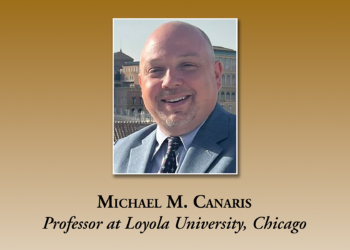
Originally from Collingswood, Michael M. Canaris, Ph.D., teaches at Loyola University, Chicago.



 at the bottom and then tap “Add to Home Screen”
