





We have begun the diocesan stage of what is popularly called the synod on synodality.
It is important to recall that the word synod is a Greek compound of the preposition συν (with) and the noun όδός (way/path); the compound is understood to mean “on the way or path together” or more literally, “on the path with.”
The Latins used the word concilium for synod, coming into English as council. Therefore, synod on synodality can be best understood as having a council on being on the path together. This begs the question: the path to where?
In order to answer this question, it is important to note that this synod on synodality is rooted in the understanding of the Church as the People of God. This understanding is highlighted in the documents of the Second Vatican Council, such as chapter two of “Lumen Gentium.” The Church as the People of God is rooted in Scripture, particularly 1 Peter 2:9. While not as Christologically rich as the Church as the Body of Christ or pneumatologically rich as the Church as the Temple of the Holy Spirit, the Church as the People of God highlights certain aspects of the Church, aspects which, hopefully, the synod process might strengthen. The Church understood as the People of God, while hierarchal in her structure, highlights that the Church is not the pope and the bishops, nor is it the instructional structure, but rather all the baptized. The hierarchal and institutional existing for the purpose of building up the people.
The Church as the People of God is rooted in the Old Covenant, as found in the Pentateuch, particularly the books of Exodus and Deuteronomy. The Exodus is central to the understanding of the Church as the People of God. God, with mighty hand, called his people from slavery in Egypt, understood to be the world and sin, forming them into his people by the Sinai Covenant – a covenant renewed yearly during the Passover celebration and partaking in the sacrifice of the pascal lamb. It is the covenant that forms Israel as a people; it is the covenant with God that gives the people purpose and identity.
For Christians, by his sacrifice on the Cross, his Resurrection and Ascension, Jesus Christ brings about a new Exodus, calling us forth from the world and sin, forming us by a new covenant, made in his blood for the forgiveness of sins. This New Covenant is renewed daily in the celebration of Mass. Like the Old Covenant, the New Covenant comes with a law – the law of charity. Again, like the Old Covenant, the New Covenant forms the Church to be the People of God; it is this covenant with God that gives the Church, her members, purpose and identity.
During his pontificate, Pope Francis has often spoken and written about encounter and accompaniment. First and foremost, each of us must encounter Christ Jesus, particularly in his Church, in her proclamation of the Gospel, in her teachings, in the sacraments and in her members. Each of the baptized is to manifest Jesus to others, by word and deed. It important for the baptized to form a deep relationship with Christ, for he will accompany them through their trials and in their weakness into the mystery of the Most Blessed Trinity. Jesus will lead the baptized to live a Godly life in the Spirit.
Pope Francis’ invitation to come together allows the baptized to encounter one another – to share both their faith and their struggles. The Holy Father desires that the baptized listen to one another, so to better accompany the other on the way that leads to Jesus. This is incumbent on all the members of the Church – both the shepherds (bishops) and the sheep (people) entrusted to them. We find examples of this type of dialogue in the Acts of the Apostles Chapter 10; the people brought a need to the Apostles, who after prayerful discernment, had the people prayerfully name seven men for ministry; these seven are traditionally known as deacons.
The Apostles, having listened to the people under the guidance of the Holy Spirit, discerned how best to minister to the people, so to strengthen the bonds of charity between believers. The strengthening of charity, rooted in faith and hope, allows for the Church to be a more visible presence of the love of God in the world.
This leads to the answer to the question stated earlier: the path to where? The path leads to Jesus, who is “the way, the truth and the life” (John 14:6). By sharing our experiences of the Church, of our faith and struggles, we assist one another on the way and in living the truth, both of which lead to the fulness of life, the joyful bliss of union with God. The members of the Church are to minister to one another so that “all meet into the unity of faith, and of the knowledge of the Son of God, unto a perfect man, unto the measure of the age of the fullness of Christ” (Ephesians 4:13).
Coming to the fullness of Christ (Church as Mystical Body) and being filled with the Holy Spirit (Church as Temple) will make manifest the Church as the People of God – a people whose identity and purpose are rooted in Christ Jesus for the salvation of the world.
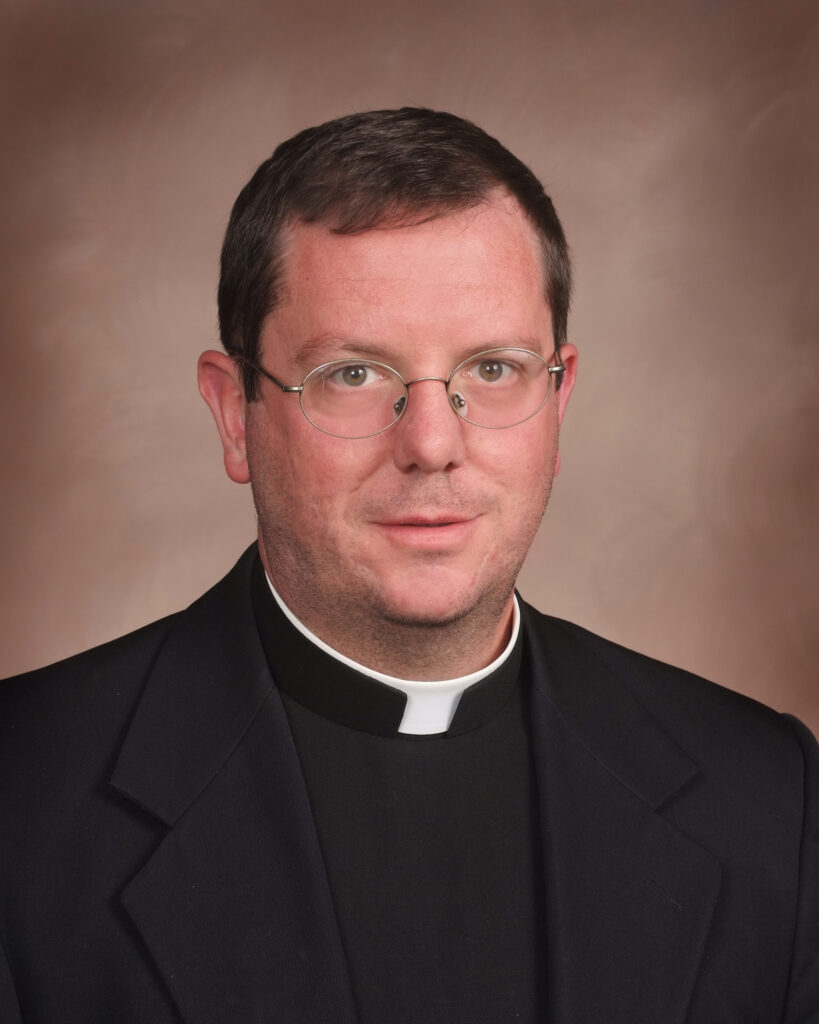
Father Jason Rocks is priest secretary to Bishop Dennis Sullivan and adjutant judicial vicar for the Diocese of Camden.




 at the bottom and then tap “Add to Home Screen”
