



Click Here to Subscribe

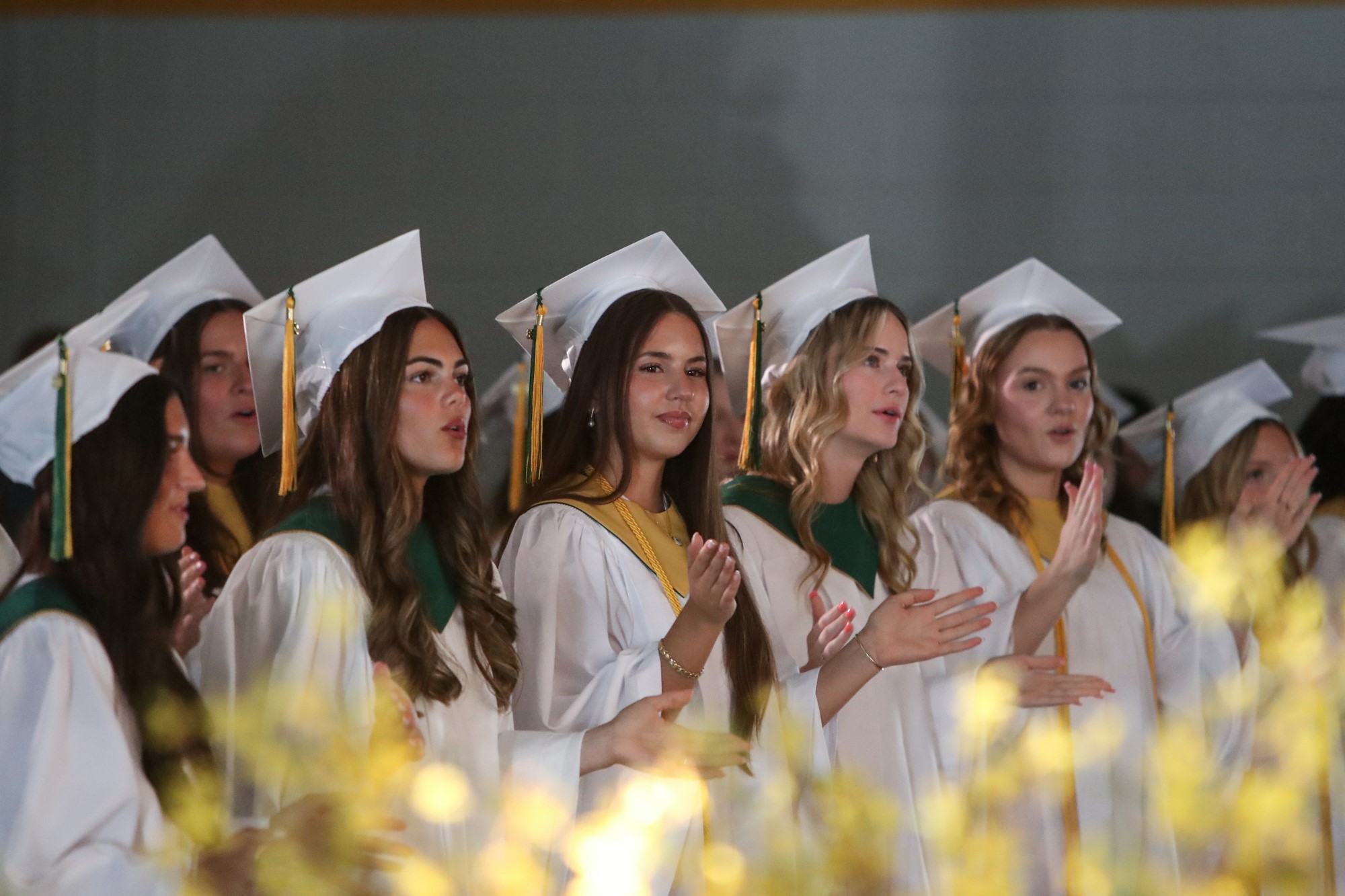
Photo Gallery: OLMA Graduation

Bishop's Schedule

The Bishop’s Schedule, May 26 – June 2

by Staff Reports
May 21, 2026
0
ShareTweet

Featured

New Jerseyans urged to push for nonpublic school security funding

by David Karas, Correspondent
3 days ago
0
ShareTweet

The Ascension, like death, not a departure, but a lifting

by Father Michael A. de Leon, AM
3 days ago
0
ShareTweet

Bishop connects with staff, mission at SSJ Neighborhood Center

by Staff Reports
5 days ago
0
ShareTweet
  • Contact
  • Advertise
  • Subscribe
  • Home
Sunday, May 24, 2026
Catholic Star Herald
  • News
    • From Bishop Williams
    • Parish Life
    • Diocesan News
    • Sports
    • Columns
      • From Bishop Sullivan
    • Obituaries
    • World/Nation
  • Catholic Schools
  • Español
  • Features
    • Special Supplements
      • Thank You Bishop Sullivan
      • Welcome Bishop Williams
      • Jubilarians
    • Entertainment
      • Movie Reviews
    • Photo Galleries
    • Talking Catholic
    • Latest Videos
    • Health and Wellness
  • Advertise
  • More
    • Classified
    • Subscribe
    • Contact Us
  • News
    • From Bishop Williams
    • Parish Life
    • Diocesan News
    • Sports
    • Columns
      • From Bishop Sullivan
    • Obituaries
    • World/Nation
  • Catholic Schools
  • Español
  • Features
    • Special Supplements
      • Thank You Bishop Sullivan
      • Welcome Bishop Williams
      • Jubilarians
    • Entertainment
      • Movie Reviews
    • Photo Galleries
    • Talking Catholic
    • Latest Videos
    • Health and Wellness
  • Advertise
  • More
    • Classified
    • Subscribe
    • Contact Us
No Result
View All Result
Catholic Star Herald
No Result
View All Result
Home Growing in Faith

The ‘gift of Yahweh’ who was chosen to replace Judas

admin by admin
May 19, 2011
in Growing in Faith
Reading Time: 4 mins read
0
0
VIEWS
Share on FacebookShare on Twitter

As we move through Eastertide and approach the feast of the Ascension of Our Lord, we continue to celebrate the early days of the nascent Christian movement, when the disciples were trying to understand the momentous events which had just unfolded. Although the prophetic words of the Old Testament had prepared them in some sense for the long-awaited Messiah, the radicality of what we now refer to as the Incarnation, Passion, and Resurrection left them with confused and conflicted emotions. St. Matthew describes their reaction as simultaneously “afraid, and yet filled with joy” (Mt 28:8, cf. also the Epilogue to Pope Benedict’s recent Jesus of Nazareth Volume II). Luke’s Acts of the Apostles also deepens our understanding of both this historical period, and the tumultuous (and sometimes even seemingly contradictory) feelings that define our lives.

The opening chapter of Acts recounts the disciples coming to understand that Christ’s calling of the Twelve had an ontological significance that transcended mere convention or convenience. The New Israel that was to be the universal church, open to every nation of the world, had its origin and self-identity in the original twelve tribes of Jewish Israel, with whom God had had a special covenant throughout history. Therefore, Judas, the one destined to be lost (cf. Jn 17:12), needed to be replaced to keep that perfected number intact.

Peter, already assuming a leadership role, interpreted the psalms to demand another to take Judas’ office, and so sought to call on one of the original disciples who had been witnesses to Jesus’ entire mission from the time of his baptism in the Jordan through his Ascension. Two men met this qualification, Joseph called Barsabbas and Matthias. (In this historical era, men were the only juridical witnesses allowed in Jewish courts and thus reliable official witnesses, and so women were excluded, even though some may have met these qualifications. Much ink has been and continues to be spilled over Jesus’ decision to call only men to the Twelve and whether this was a “historically conditioned” or “revelatory” choice — see Ordinatio Sacerdotalis, then-Cardinal Ratzinger’s discussion of the 1989 Profession of Faith,” and Francis A. Sullivan’s afterword to his book “Creative Fidelity”).

The disciples prayerfully cast lots, realizing that God knew the hearts of all, and would lead them on the right path in their apostolic ministry (Acts 1:25). The vocation came to Matthias, literally “gift of Yahweh,” and so he rounded out the Twelve. Tradition holds that as the disciples spread out to take the gospel to the ends of the earth, St. Matthias preached in what was then known as Ethiopia, and into the Kingdom of Kush, southward into Africa along the Nile valley.

Interestingly, this legacy has a very vibrant descendent in the Coptic African church to this day. Before the spread of Islam, this fertile valley in Egypt, as well as throughout northern and eastern Africa was predominantly Christian due to the spread of Jesus’ message by followers such as Matthias. Today both Melkite and non-Chalcedonian branches of Christians continue to exist in this region of the world. The former accepted the decision at the Council of Chalcedon which described Christ as having two natures, one human and one divine “unmixed, unchanged, undivided, and inseparable.” The Non-Chalcedonian Copts are often described (whether unfairly or not is another question) with the adjectives miaphysite or monophysite (literally “one natured”), and while obviously Christian, as holding that Jesus only had a divine nature, largely as a reaction against the heresy of Nestorianism which over-emphasized Christ’s humanity to the detriment of his divinity. While sometimes complicated, these interesting controversies helped shape the faith in the way countless Christians around the world practice it today.

From the selection of Matthias, through the great councils battling heresies which usually sought balance between two extreme and opposing positions on a particular issue, down to the present day, we continue to immerse ourselves ever more deeply in the mystery and contemplation of what exactly took place in that stable and on that executioner’s hill outside Jerusalem and in that nearby rock-hewn tomb, and more importantly, what relevance it has for us human beings and the cosmos at large.

All good theology combines these themes of balance and opposing impulses. Justice and mercy, love and pain, abandonment of self and personal fulfillment — all truly great religious men and women see these entities not as an “either/or,” but always as a “both/and.” Thus, we like Matthais can still profess that “We hold the death of the Lord deep in our hearts” without it sounding ridiculous or self-contradictory.

After Matthias’ martyrdom, his relics (along with many other important early Christian artifacts including pieces of the True Cross) were supposedly brought to Rome by Constantine’s mother, St. Helena. We recently celebrated his memory this month on May 14, a relatively recent change to bring his feast closer to that of the Ascension, when these events took place.

Michael M. Canaris of Collingswood is an administrator at Fairfield University’s Center for Faith and Public Life and is on the faculty for the Department of Philosophy, Theology, and Religious Studies at Sacred Heart University.
Previous Post

Pope’s teaching instructive on immigration

Next Post

There is no end to working for a safe environment

Related Posts

Statue of Santa Eulalia in historic city Merida, Spain
Columns

Teaching future generations to recognize roots of past

July 28, 2022
Pope Francis elevates the host as he celebrates Mass at the GSP Stadium in Nicosia, Cyprus, Dec. 3, 2021. On June 29, 2022, the pope issued issued an apostolic letter insisting Catholics need to better understand the liturgical reform of the Second Vatican Council and its goal on promoting the "full, conscious, active and fruitful celebration" of the Mass. (CNS photo/Paul Haring)
Columns

Pope Francis and the truth in sacramental signs

July 14, 2022
CNS photo/Luis Echeverria, Reuters


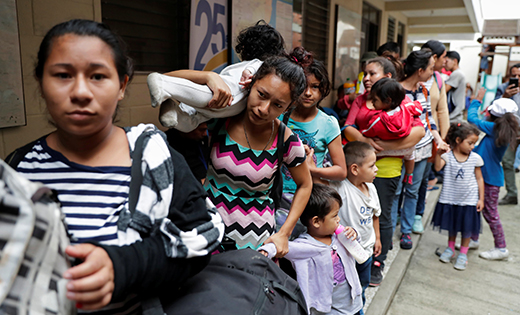
Honduran migrants, who are part of a caravan trying to reach the U.S., wait in line Oct. 17 to enter a shelter in Guatemala City. This year’s annual interfaith program “Breaking Bread Together,” sponsored by the Jewish-Christian-Muslim Dialogue of Southern New Jersey, is presenting a timely presentation on the issue of immigration titled, “From Refugee to Neighbor — Local Refugees Share their American Stories.”
Columns

Accompanying migrant populations can be mutually transformative

November 18, 2021
hands of a just married couple with the wedding rings and bouquet
Columns

Two human beings trying to share the journey of faith

March 17, 2026
Facebook Twitter Instagram LinkedIn Youtube RSS

No Result
View All Result

Latest News

Military Services’ bishop shares journey, talks mission to support veterans

Father Edward Heintzelman, longtime pastor in Mays Landing, dies

Bishop Williams urges Knights of Columbus: Be confident evangelizers

New Jerseyans urged to push for nonpublic school security funding

Faithful gather for spiritual renewal ahead of Pentecost

Latest Videos

View Ordination of Nickolas B. Naticchione in Cathedral

The legacy of Pope Francis

Pope Leo’s first Easter message

See livestream of Bishop Williams celebrating annual Chrism Mass

Pope Leo XIV’s first Palm Sunday

Around the Diocese

  • The Diocese of Camden
  • Talking Catholic Podcast
  • Catholic Charities
  • Advertise
  • Catholic Cemeteries
  • VITALity Healthcare Services
  • Housing Services
  • Camden Deacon
  • Camden Priest
  • South Jersey Catholic Schools
  • Man Up South Jersey
  • Catholic Business Network

Additional Resources

  • New Jersey Independent Victim Compensation Fund
  • Quick Guide to Reporting Sexual Abuse
  • List of Credibly Accused Priests and Parish Resources
  • Bishop’s Commission Report on Catholic Schools

Reorganization of the Diocese

  • Chapter 11 Claims filing info
  • Chapter 11 Prime Clerk Filing

© All Rights Reserved | May 24, 2026 | Catholic Star Herald of the Diocese of Camden

En español/Sa Tagalog

Add the Catholic Star Herald to your home screen

For Android users(Chrome) tap the at the top right vertical 3 dots then tap “Add to Home Screen”

For iPhone tap:at the bottom and then tap “Add to Home Screen”

  • This field is for validation purposes and should be left unchanged.

If you need assistance with submitting your subscription, please call Neal Cullen at 856-583-6139, or email Neal.Cullen@camdendiocese.org

No Result
View All Result
  • News
    • From Bishop Williams
    • Parish Life
    • Diocesan News
    • Sports
    • Columns
      • From Bishop Sullivan
    • Obituaries
    • World/Nation
  • Catholic Schools
  • Español
  • Features
    • Special Supplements
      • Thank You Bishop Sullivan
      • Welcome Bishop Williams
      • Jubilarians
    • Entertainment
      • Movie Reviews
    • Photo Galleries
    • Talking Catholic
    • Latest Videos
    • Health and Wellness
  • Advertise
  • More
    • Classified
    • Subscribe
    • Contact Us

© All Rights Reserved | May 24, 2026 | Catholic Star Herald of the Diocese of Camden