




Editor’s note: An occasional series focusing on churches across the Diocese of Camden.
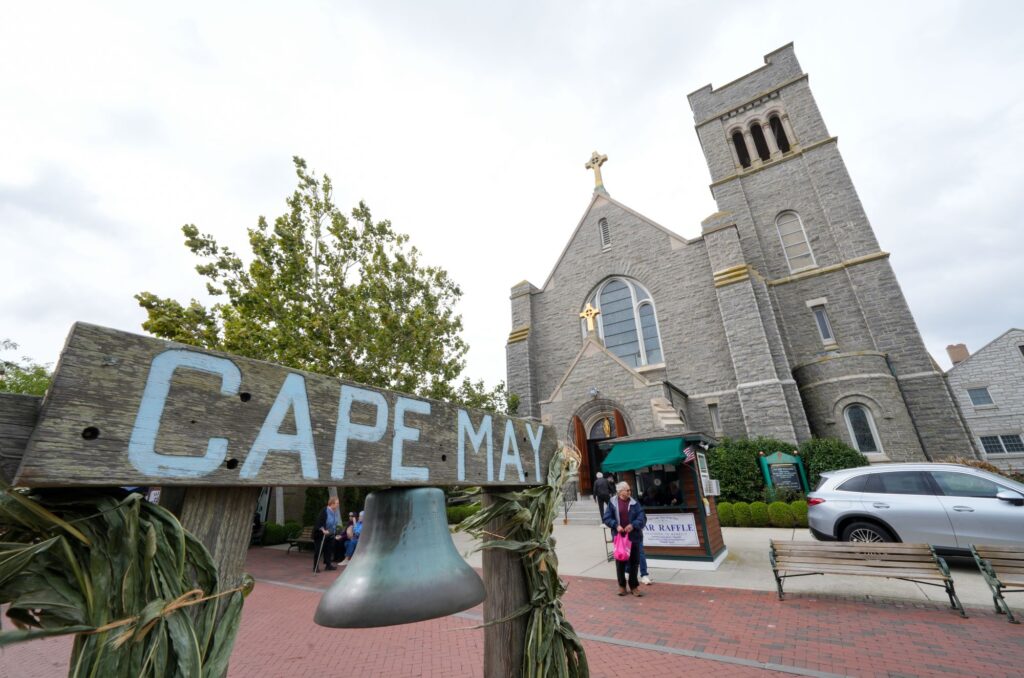
What is a typical day like for a church that sits along a busy outdoor mall in a seaside resort town?
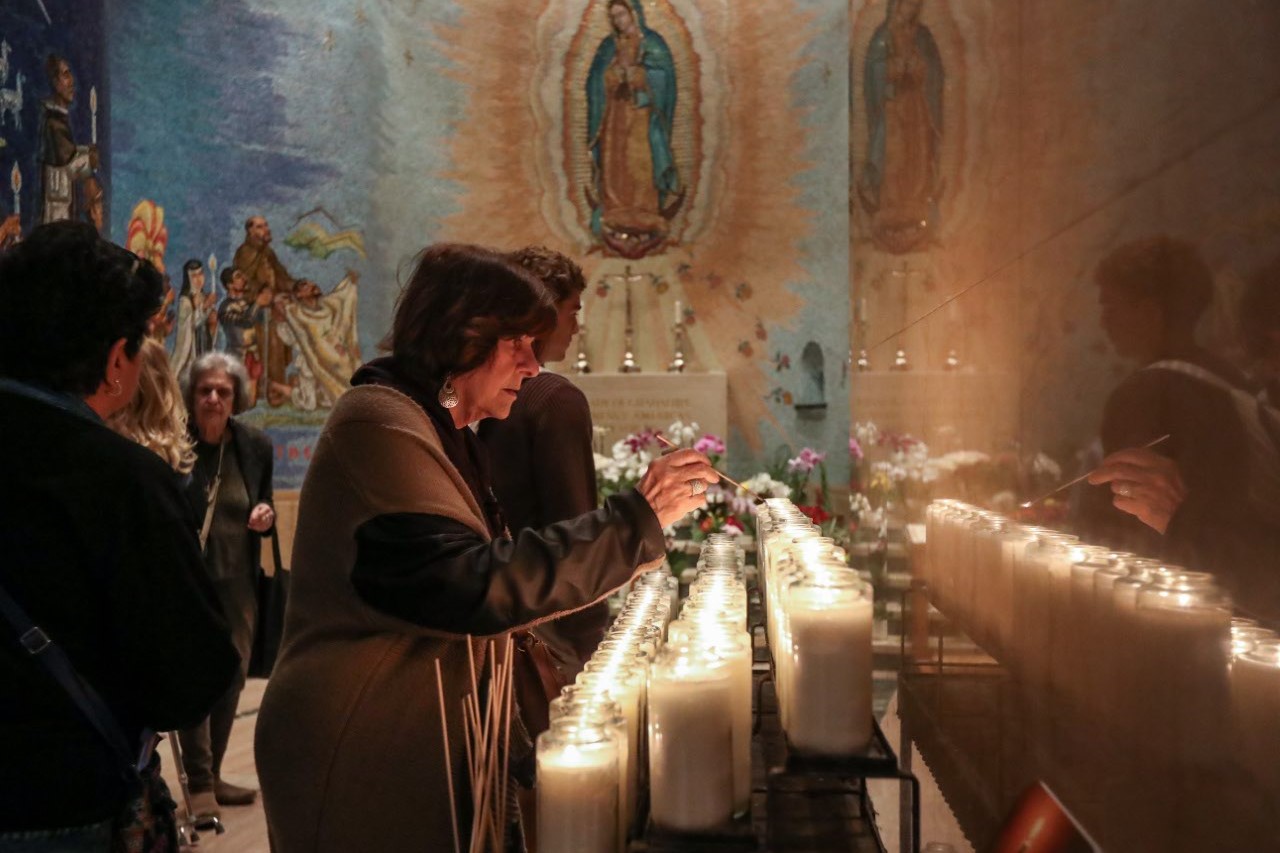
There is a constant flow of people through the doors. Some are looking to say a prayer, light a candle or attend Mass, while others just want to take a few photos.
“It’s all day, every day. We have visitors come through the church all the time, which is a blessing,” said Terry McGarvey, parish administrator of Our Lady Star of the Sea at 525 Washington St., Cape May. “That’s what we’re here for. That’s what we want.”
Father John Dolan, OSFS, who has been parish pastor for the past three years, believes the location of the church was all in God’s plan. “He put this church right here, which eventually became an anchor for the mall.”
Outside the church’s front door, the pedestrian traffic is continuous. Visitors walk past the century-old doors on their way to the more than 75 establishments nearby, which include restaurants and specialty shops.
“We’re right here in the heart of this,” Father Dolan said.
Inside, the church offers something entirely different – a quiet space from the hustle and bustle of the mall.
A Rich History
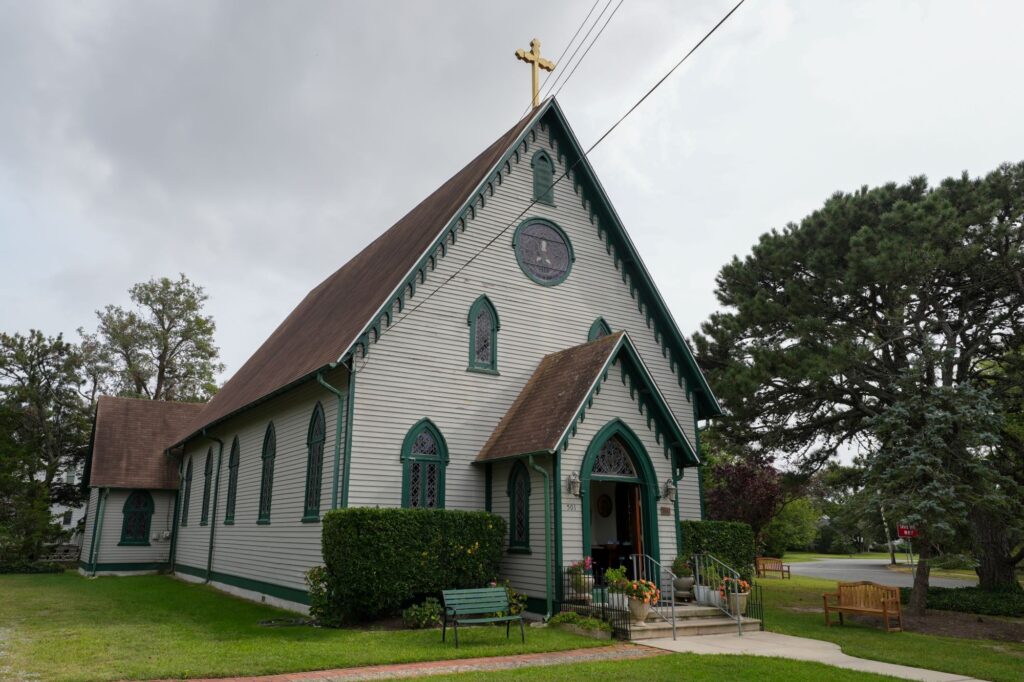
The church, as it exists now, has a long history. It began as a mission, Saint Mary’s, a small wooden-frame structure located on the other side of the street from the present-day church.
On July 23, 1848, Father Edward Waldron blessed and opened Saint Mary’s, the first Catholic church in Cape May County.
In January 1878, the church received its Certificate of Incorporation and was officially known as the Church of Our Lady Star of the Sea, where Masses were celebrated until 1913. It was left unscathed in November of the same year, when the Great Fire of Cape May destroyed much of the town. (A replica of Saint Mary’s can be found in Cape May Point at Saint Agnes Church. Masses are celebrated there in the summer.)
Land was later purchased to relocate the church across the street; improvements were made that included a steeple and a 650-pound bell. In 1911, a contract was awarded to build the new church for the cost of $44,048. The final cost was approximately $60,000.
In June 1913, the Church of Our Lady Star of the Sea was consecrated. Work wasn’t finished, however, as final touches continued for another five years.
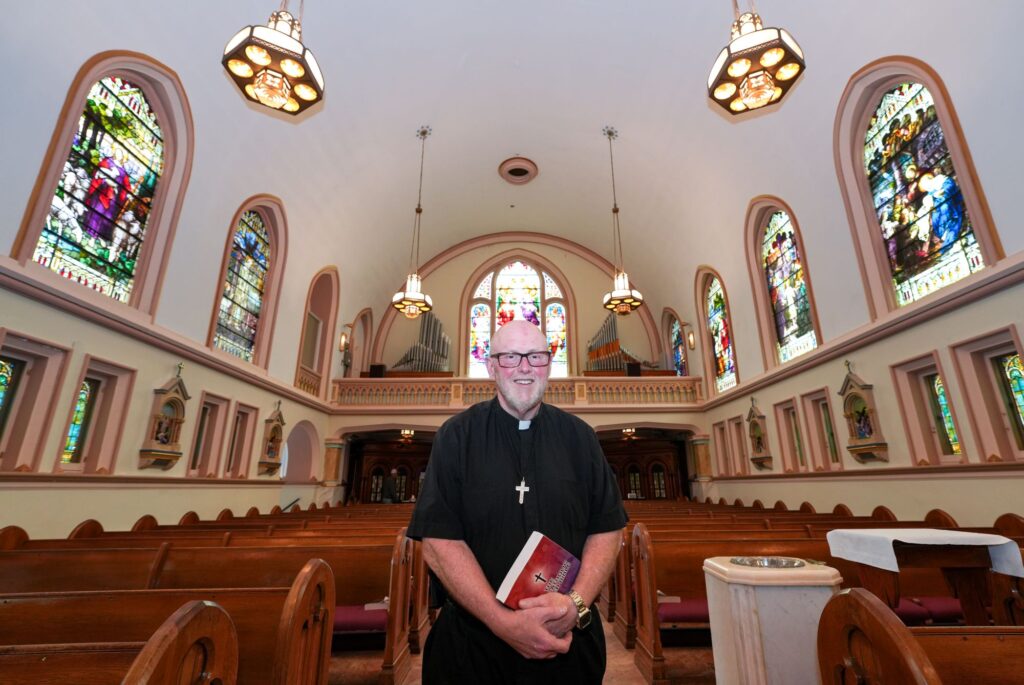
Among the construction: three altars carved from Carrera Marble out of Italy. (The marble was mined from the same quarry that was used by Michelangelo.) More than 40 stained-glass windows were imported from Munich, Germany. Twenty-two of the windows encircle the main seating area and sanctuary. The ceiling is built inverse of old sailing ships.
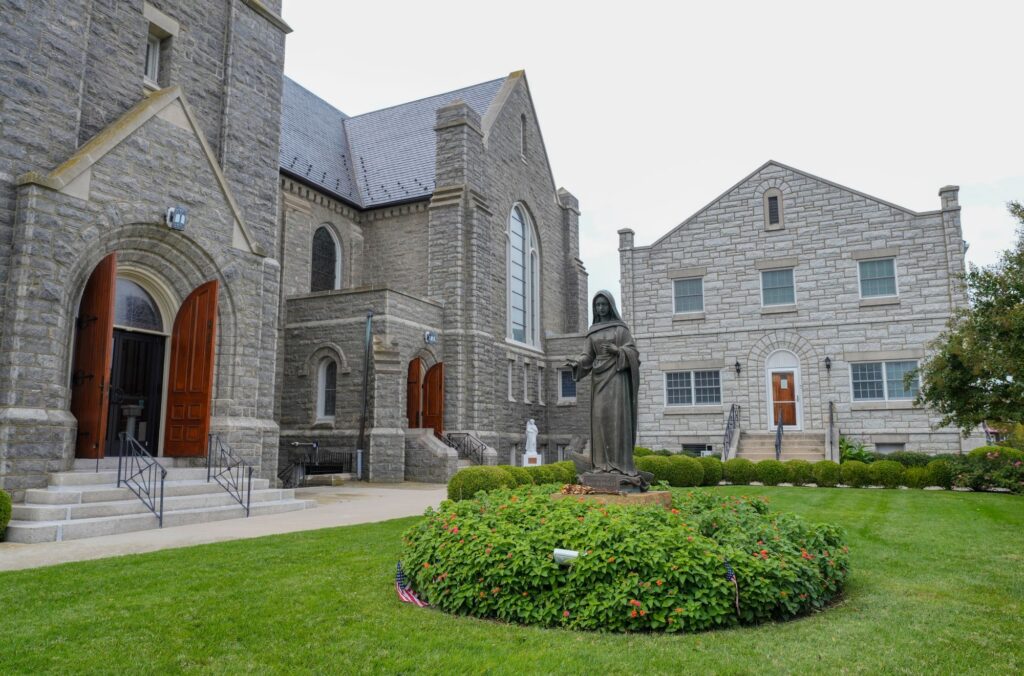
The church’s exterior is Gothic in style with Romanesque influences. The bell tower stands more than 80 feet in height and houses the original bell.
Father Dolan believes the church’s greatest beauty isn’t in the granite, marble or stained glass, however.
“The real beauty is the people,” he said.
Father Dolan oversees an estimated 1,800 households for nine months and approximately 900 households year-round.
Beauty Meets Devotion
For more than 15 years, the Oblates of Saint Francis de Sales have served at the parish. In 2015, a statue of Saint Francis de Sales was installed.
The history behind the statue is twofold.
Father Frank Danella, OSFS, thought that it would be fitting to have a statue of Saint Francis de Sales in the church. With the help of a generous parishioner, the idea was one step closer to becoming a reality.
But that was only half the battle.
McGarvey said they wanted the statue to match the four other statues and altar that were installed when the church was first constructed. That meant finding marble from the same quarry in Italy.
They eventually found a company in Atlanta that had a contact for the marble they were looking for.
About 18 months later, the statue arrived and was put into place. Before it was installed, the floor had to be inspected to determine if it was structurally sound and would support the approximately 1,200-pound piece.
The statue sits on a pedestal overlooking the middle pews, where both visitors and parishioners gather for Mass. Of all those pews, what is the best seat to see and hear a Mass? According to McGarvey, the best seat is no longer there.
High above, in the choir loft, there was once a small opening with a little pew that could hold two or three people. This seat was so popular that two brothers used to run down to the church to get to Mass early so that they could be the first to the choir loft.
“So that they had the best seat in the house for Mass,” McGarvey said.
The seats gave the faithful a different perspective. The whole sanctuary was visible where they could watch everything unfold.
The little pew in the choir loft may have offered the best view of the church, but it wasn’t the only unique place people gathered to worship.
Below the church is a smaller chapel mainly used during the winter months and as overflow space when additional seating is needed. It seats 300 people with three additional altars.
Overall, Father Dolan believes the church’s history and beauty brings people in to pray and draws people closer to God.
“Praying here is so easy to really help your heart to commune with God somehow.”
Tim Hawk is a freelance photographer for the Catholic Star Herald.




 at the bottom and then tap “Add to Home Screen”

