





Sometime over the course of the next 12 months, experts say India will surpass China as the most populous nation on earth. Even though it’s less than one-third of the geographic size of the United States, the southeastern Asian nation has well over triple the number of people, coming close to 1.4 billion. Delhi and Mumbai alone approach 50 million people in their combined metropolitan areas.
For a frame of reference, Philadelphia’s metro area, which includes all of South Jersey and roughly half of Delaware, has about 6 million. It is then indubitable that our children and grandchildren will experience a very different flavor of Christianity than the one marked by Irish, Spanish, French, German and Italian contours that dominated the United States and Canada. Demography tells us that in 22nd century Catholicism, there will be less churches called Saint Patrick and Saint Anthony, and more called Saint Devasahayam Pillai and Saint Euphrasia Eluvathingal.
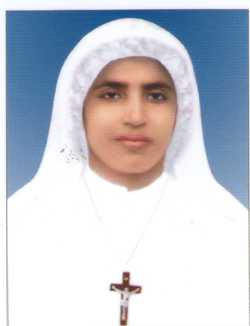
Over the summer, Pope Francis named one such hero, Sister Celine Kannanaikal, an Ursuline mystic nun, to the status of Venerable, one step closer to an eventual canonization. She was born in 1931 in Kundanoor on the southwestern coast of India in the Kerala region. She entered the religious life at a young age, joining the novitiate in 1954 and taking her religious vows a few years later.
From her earliest times in the convent, Sister Celine suffered physical, emotional and mental anguish, which she sought to endure for the sake of the Cross. She reported having visions of both Jesus and Saint Therese of the Little Flower, who encouraged her to continue to abandon her will to the Lord in emulation of his own Passion.
Though raised in a situation of near desperate poverty in an agrarian culture, Sister Celine demonstrated incredible intellectual capacity and spiritual wisdom. Her terrible physical ailments impacted her ability to exercise, eat and sleep. There are reports that she vomited blood after digesting any food for long periods of time. And yet, her fellow nuns repeatedly attested to her joyful and serene spirit in the midst of what can only be described as hellish anguish.
Almost immediately upon her death at the young age of 26, locals began to report miraculous healings and other answered prayers through her intercession. One account claims that vandals once desecrated the cemetery where she was buried, and yet her grave remained undefiled. When the culprits were caught, they allegedly confessed to the crime but supposedly told authorities that they could not move or break the cross over her tomb, giving no indication whether this was a physical or some sort of spiritual internal issue of conscience preventing them from following out the act. Though Pope Francis’ recent declarations are bringing her story to wider audiences, Sister Celine is particularly venerated in the Syro-Malabar Catholic Church, a “sui iuris” particular church in full communion with the pope and global Catholicism, though one that doesn’t employ the Latin heritage of the West. This branch of our shared Catholic faith should not be confused with the Syro-Malankara Catholic Church, as they have different liturgies, leaders and traditions.
The Syro-Malabar Church uses the East Syriac or Chaldean rite, whereas the Syro-Malankara Church is more closely tied to the Maronite Church in Lebanon and its heritage in Antioch. But they are all as Catholic as anyone in our more familiar Roman Church.
All of this brings to mind the inherent pluralism that stretches back to the earliest days of Christianity, where Greek and other Eastern Mediterranean cultural and linguistic influences rivaled the Latin ones with which we are so familiar. India has had Christians for at least as long as Italy, since Thomas the Apostle supposedly arrived there about the same time Peter and Paul were on their way to be executed in Rome.
Sister Celine’s story gaining traction in the Vatican is one more testimony to the recognition of the “world Church” that transcends a dominant Euro-centric exportation of ideas, thought-patterns and governance models to foreign shores, and argues once again for a dialogical understanding where those routes of spiritual exchange travel in both directions.
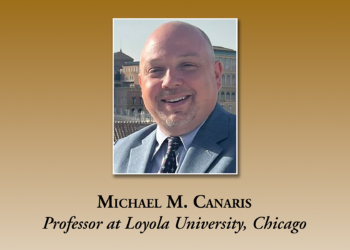
Originally from Collingswood, Michael M. Canaris, Ph.D., teaches at Loyola University, Chicago.



 at the bottom and then tap “Add to Home Screen”
