






The season of Lent directs us to recall our own baptism and prepare for the celebration of the paschal mystery of the Passion, Death and Resurrection of Christ. It is a time of prayer, fasting and almsgiving, and it helps us grow closer to Jesus.
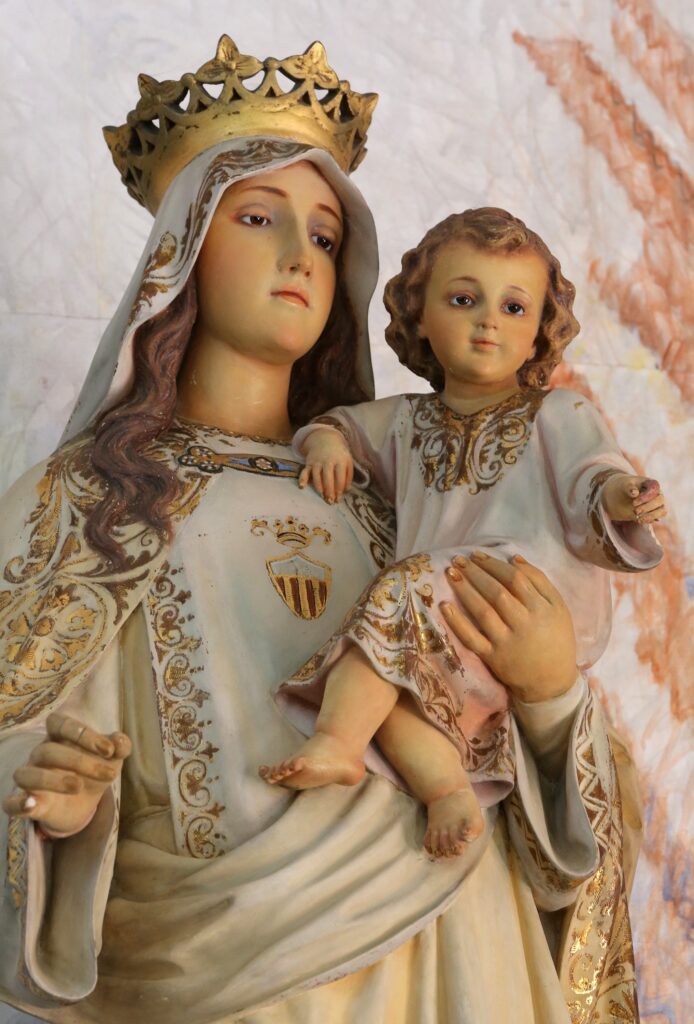
In celebrating Lent and in every season of the liturgical year, it is good to recall the teaching of the Second Vatican Council, that the “Church honors with special love the Blessed Mary, Mother of God, who is joined by an inseparable bond to the saving work of her Son.”
“In her,” the council fathers wrote, “the Church holds up and admires the most excellent fruit of the redemption, and joyfully contemplates, as in a faultless image that which she herself desires and hopes wholly to be.” (“Sacrosanctum Concilium,” No. 103)
Mary is the perfect companion for Lent, and Lent is a perfect time to deepen our love, knowledge and veneration of the Mother of God. Lent is also a season of conversion, and here, too, we receive great help from Mary who, as the Mother of Mercy, points us to her divine Son, Jesus Christ, who came into the world to reconcile sinners to himself. (cf. Lk 5:31-32)
Pope Francis, in his Lenten message prepared for March 5, reflected on the episode from Saint Luke’s Gospel in which Mary and Joseph lose Jesus during a pilgrimage and search anxiously for him for three days before finding him in the Temple.
“Throughout this journey, the Virgin is a pilgrim of hope, in the strong sense that she becomes the ‘daughter of her son,’ the first of his disciples,” the pope’s text said, emphasizing that Mary, though chosen as the mother of God, had to undertake her own journey of faith.
And in his general audience on Ash Wednesday in 2014, Pope Francis also highlighted the special protection and help of the Blessed Virgin for the journey of Lent: “On this journey, we want to invoke with special trust the protection and help of the Virgin Mary: May she, who was the first to believe in Christ, accompany us in our days of intense prayer and penance, so that we might come to celebrate, purified and renewed in spirit, the great paschal mystery of her Son.”
In his Angelus address for the second Sunday of Lent in 2006, Pope Benedict XVI highlighted Mary as the model of believers who listen attentively to God: “The Virgin Mary herself, among all human creatures the closest to God, still had to walk day after day in a pilgrimage of faith, constantly guarding and meditating on in her heart the Word that God addressed to her through holy Scripture and through the events of the life of her Son. … This is the gift and duty for each one of us during the season of Lent: to listen to Christ, like Mary. … To listen to him in the events of our lives, seeking to decipher in them the messages of Providence.”
As our spiritual Mother, Mary not only leads us to Christ, but she also protects and guides us from sin.
One of the oldest known prayers to Mary is known as the “Sub Tuum Praesidium” (“Under Thy Protection”), which goes back to the third or fourth century. One translation of it reads: “We fly to Thy protection, O Holy Mother of God; Do not despise our petitions in our necessities, but deliver us always from all dangers, O Glorious and Blessed Virgin. Amen.”
Lent is a time to deepen our prayer life, and Mary provides the best example of prayer in her canticle, known as the Magnificat. (Lk 1:46-55) This canticle expresses the attitudes of praise, gratitude and humility that are at the heart of all authentic prayer to God. Saint Paul VI speaks of Mary as “the virgin in prayer” who “praises the Lord unceasingly and intercedes for the salvation of the world.” As our spiritual mother, Mary not only teaches us how to pray, but she prays for us “now and at the hour of our death.”
Because Lent points to Holy Thursday, Good Friday and the Easter Vigil, Mary as Our Lady of Sorrows assumes particular importance. But even under the Cross, Mary remains a teacher and a model. She shows how all of the faithful, like her, can unite their sufferings to the Passion of Christ for the redemption of the world.
Mary’s “unique contribution to the Gospel of suffering” (described by Pope Saint John Paul II in “Salvific Doloris”) shows us that suffering is not meaningless. Lent is a special time to remember the sorrows of Mary and to join ourselves to her in offering her divine Son “in atonement for our sins and those of the whole world.” (Chaplet of Divine Mercy)
By Robert Fastiggi




 at the bottom and then tap “Add to Home Screen”
