



The term “code-switching” is used frequently in sociological circles today to discuss the adjustments in speech, behavior, and modes of expression that human beings make when navigating between different social, interpersonal, and professional settings. It is often used in particular to describe the way minority populations around the world present themselves to those of the dominant culture, and to one another in private. And while there are drawbacks in terms of psychological well-being that must never be deemed acceptable, the “translation” that takes place regarding linguistics or attitudes when one is fluent in the different codes, is one that can teach us monumental lessons, both intellectually and theologically.
First, let’s be clear that code-switching is not inauthentic, dishonest or crafted. It is a necessary survival strategy for oppressed peoples, and in some sense for everyone who would “present” differently on a job interview than they would at a watering hole with their friends or in a bedroom conversation with their spouse.
Second, all successful education, as well as all effective pastoral ministry, manifests elements of code-switching; that is to say, of distilling centuries’ worth of philosophical, theoretical and practical knowledge into “digestible” understandable bites for those audiences with whom we co-journey in the classroom, in the church, and in life.
The entire Christian intellectual tradition is one of re-framing and re-translating our approach to decisions, both profound and miniscule, in light of the teachings, mission, death and resurrection of Christ. As Plato’s allegory attempted to explain, all learning, whether secular or sacred, involves the re-training of our eyes to see beyond the flickering shadows of what we mistakenly believe to be the Real and the Ultimate. But the responsibility remains not to flee from the darkness but to risk returning to lead others to the light.
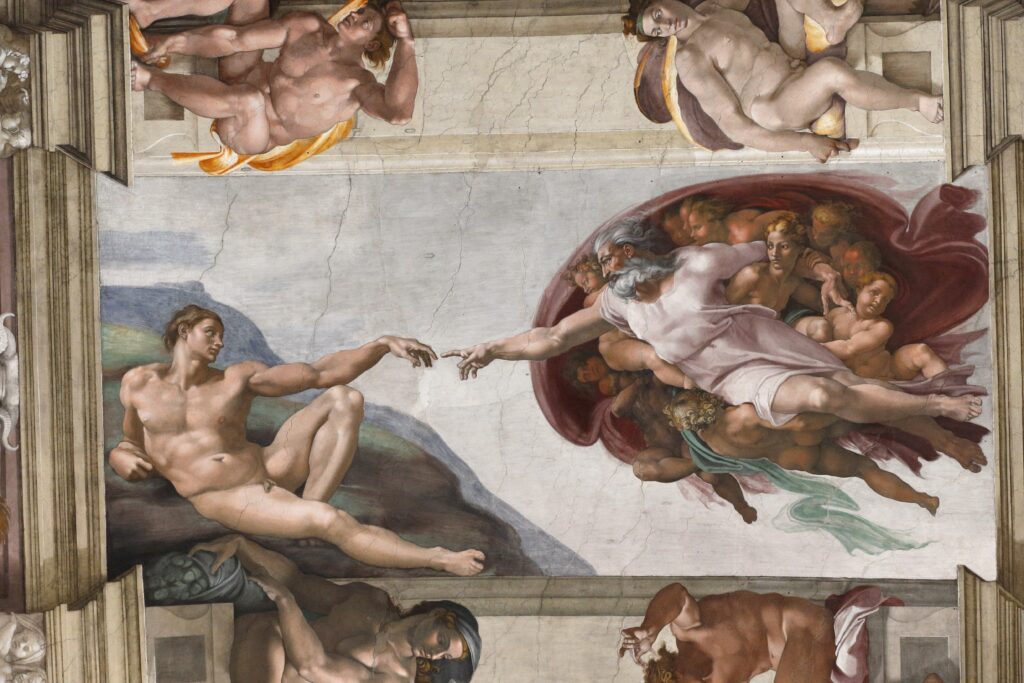
Michelangelo’s artistic achievements are little else than translating the world of first century Palestine into the “language” of Renaissance Italians. His work is beautiful, and makes manifest the transcendent in profound ways, and I love it, but it has no more intrinsic connection to the imagery of creation or the Fall or the Last Judgement than does Ethiopian or Korean or American postmodern attempts to tell that story to their own respective audiences. He was basically “code-switching” between the scriptural stories and the fascination with Greek humanism that was percolating around the European artisan workshops of his day.
When I am in the classroom, I constantly strive to take Ignatius of Loyola’s strategy seriously — to meet students where they are, entering into their lives through their own very particular doors, so that you can lead them out in a way through yours.
This is not to belittle or negate their experiences from which I consistently learn a tremendous amount, nor to duplicitously smuggle my perspectives or opinions into our conversations, so much as it is to strive to put those life experiences in touch with the nameless and unfathomable One, the triune God who always exceeds all the avalanches of words written about an authentic encounter with that Alpha and Omega.
That is what lies at the heart of transformative education, literally “drawing forth from” the vast stockpiles of potential that constitute each and every human life.
Theological education, wherever you receive it — whether kneeling next to a parent before bed, or from a pulpit on Sunday morning, or in a classroom at any level, or in reading works of literature, or in life’s great lessons — is, at its core, code-switching.
As David Tracy argues, such a position “implies that systematic theologians, by definition, will understand themselves as radically finite and historical thinkers who have risked a trust in a particular religious tradition. They seek, therefore, to retrieve, interpret, translate, mediate the resources — the questions and answers, form and content, the subject matter — of the classic events of understanding of those fundamental religious questions embedded in the classic events, images, persons, rituals, texts and symbols of a tradition.”
We are together engaged in this interpretive endeavor, and need to make sure that the least among us, the forgotten people and excluded voices, are included in that grand narrative, the re-telling of Christ’s story, and of our own.
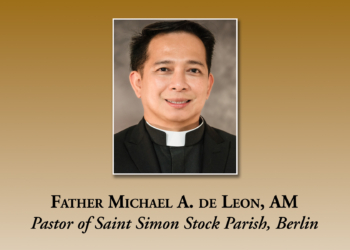
Originally from Collingswood, Michael M. Canaris, Ph.D., teaches at Loyola University, Chicago.



 at the bottom and then tap “Add to Home Screen”
