




South Jersey Catholic Schools have been back in session for just over two weeks, following carefully developed plans to teach in the classroom and remotely. As students and teachers settle into academic pursuits amid new routines, many people want to know “how it’s going” with COVID-19.
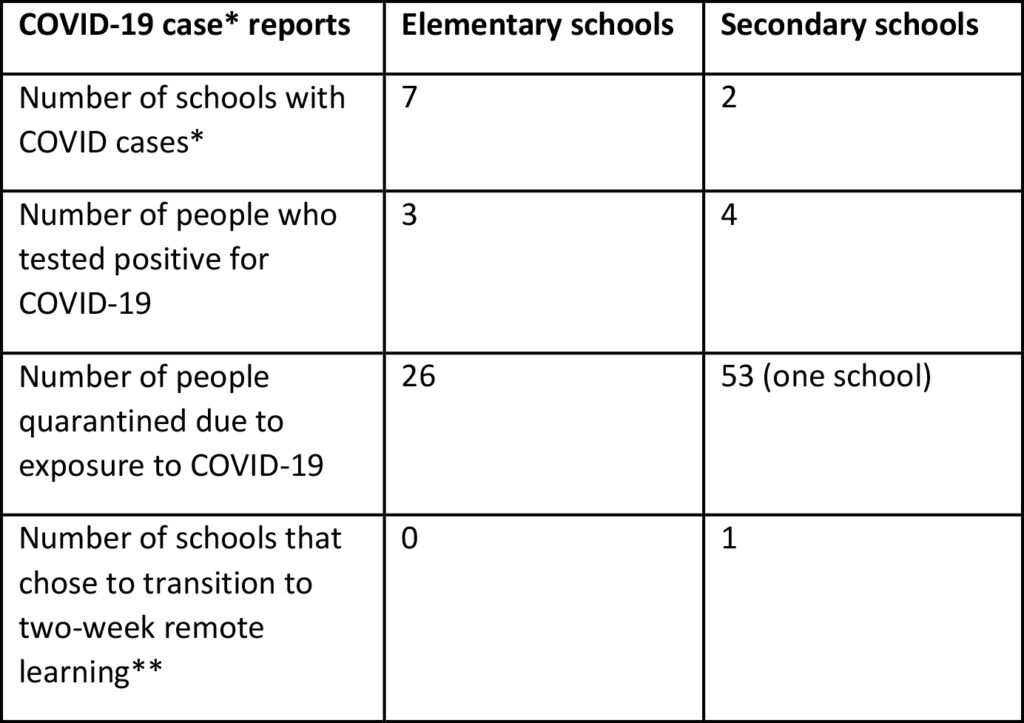
As of Sept. 22, seven individuals in South Jersey Catholic Schools have tested positive for COVID-19. Nine schools, including the schools of those seven individuals, have had “cases” of the virus.
A case does not necessarily mean the presence of COVID-19 in a given school.
Cases include situations where someone in the school community needs to quarantine because of exposure to the virus. That exposure could be in the school or through contact with someone outside the school community – for example a student or teacher living with an individual (e.g., parent, sibling, spouse) who tested positive for COVID-19.
“Given that COVID-19 exists in the communities our schools serve, we anticipated that we might see cases in the schools. So a large portion of our planning was dedicated to protocols for managing the risk and spread of the virus,“ said Catholic Schools Superintendent Dr. Bill Watson.
When someone in a school community is exposed to or tests positive for the virus, schools coordinate with their local health department to determine next steps. Cases to date have involved schools in Camden and Atlantic counties.
“The process is working so far,” said Watson. “Local health department officials have guided us step by step. They are invaluable. There are always unique circumstances, so no two situations are the same.”
Watson elaborated by describing a situation in a high school. When an individual tested positive, two more people related to that individual and connected with the school turned out to be positive as well. To be safe, the school quarantined 53 school community members considered to be “close contacts” and transitioned those members to remote learning for two weeks. Generally, close contact means being within six feet of someone who has COVID-19 for 10 minutes or more. Another school with one positive case decided — with health department guidance — to transition to school-wide remote learning for two weeks because of the unique challenge of contact tracing in that specific case.
“It comes down to contact tracing — identifying who else was in close contact with a person who tests positive. The contact tracing dynamics of each school and situation are different, so we have to determine the safest response in coordination with the local health department each time,” said Watson.
He described another situation in an elementary school, where the health department quarantined a group until they could do the contact tracing more specifically, and then determined that most of the people could come back.
“It really reinforces the importance of social distancing and hygiene,” said Watson. “Because everyone was keeping their distance and respecting hygiene requirements, the health department found very few people were actually at increased risk. They weren’t considered to be in close contact with the person who had tested positive. I can’t stress enough the importance of maintaining all those protocols.”
When teachers are out for COVID-19 reasons, new challenges arise, primarily the need for substitute teachers.
“It’s especially important for teachers to make sure they maintain distance from each other, not just from students. We don’t want a domino situation where one teacher tests positive and then multiple members of the faculty have to quarantine because they were within six feet of their colleague for longer than 10 minutes,” said Watson.
There are also protocols for communicating with school families. For example, all parents and guardians receive notification from their child’s school if a teacher, student, staff member or other person who is regularly in the school tests positive for COVID-19. Individuals who are deemed to have had close contact receive a second communication with additional information and, in most cases, a request to quarantine for a prescribed number of days. If a teacher needs to quarantine because he or she is a close contact of someone who has tested positive for the virus, the school will notify the parents in that class.
“We have anticipated many possible scenarios for communication purposes and continue to refine that process as situations arise. Our local health departments have offered great guidance and support in the communication area as well,” said Watson.
He also commented on the diocese’s ability to “monitor and remain flexible.”
“We can have individuals quarantine, a class quarantine or a school quarantine, if needed, depending on the needs of a specific case, and always in collaboration with the health departments,” he said.
Watson added, “Our school communities are doing a great job — from leaders, to teachers, to students and families, to staff members. There is a wonderful spirit in being together again and we hope to keep it that way. … That means staying vigilant, in and out of school. Stay home if you feel sick, wear your mask, maintain distance and wash your hands.”




 at the bottom and then tap “Add to Home Screen”
