






In this 2020 that has seen so many changes, count among them the college selection process.
In pre-pandemic years gone by, a high school student’s junior year and beginning of senior year would be filled with SAT testing in classrooms packed with fellow test-takers; weekend college visits; and college fairs in high school gyms, with representatives under their own school banner hawking their institution’s new freshman dorm, its proximity to the bustling city or myriad student organizations.
Today’s youth on the cusp of college, for the last few months, have been navigating a new reality: socially-distanced SAT testing, delayed SAT results, virtual Zoom meetings with college representatives, and in the cases where physical college visits aren’t possible (due to distance and/or restrictions), virtual self-guided tours.
And their guidance directors and counselors have been with them every step of the way.
“This year has been unique and different, a new way of doing things,” says Jeff Cordner, guidance director at Gloucester Catholic High School.
The traditional college fair has been replaced with virtual information sessions with college representatives, held in the school science lab.
Two weekends ago, Gloucester Catholic once again hosted SAT testing for students. Due to social distancing requirements, the school could only accommodate 67 youth, compared to the 150-plus numbers in the past.
Another change he has seen brought on by the pandemic is more students thinking about a two-year community college close to home rather than a four-year university out of state.
“Their attitude is, why spend the money now” for four-year learning, when the threat of lockdowns and quarantines still loom, he explains. At the end of two years, when the pandemic will, everyone hopes, be in the rear-view mirror, students could then consider the university option.
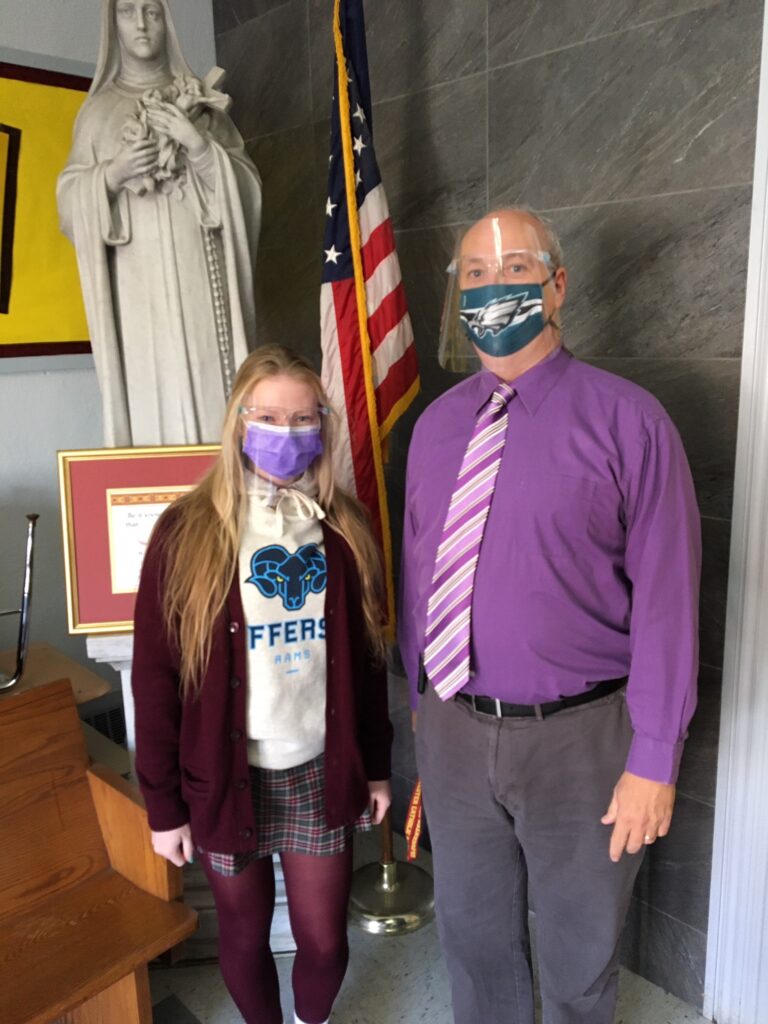
One of his charges, senior Lauren Wethman, is one of those looking to be closer to home, with schools such as Villanova or Widener in her sights.
“The biggest thing for me” when choosing a college, she says, “was being able to visit the campus physically,” and she was able to accomplish that with her two top choices.
“Physically,” in this case, meant only touring the college grounds with campus administration and current students. Restrictions prevented her from entering campus common areas, classrooms or dorm rooms.
Her counterparts at Paul VI High School (Haddonfield) and Holy Spirit (Absecon) agree with Wethman about the importance of seeing a prospective college in-person.
“The physical visits have played a role, for sure,” says Paul VI’s Nate Warren, who was able to visit a few colleges last year before the pandemic, including Drexel and University of Maryland (where his brother attends), but none since.
“I want to see the area, experience the people and environment” before committing, says Kayla Kelly of Holy Spirit. So far, she has only been able to visit the University of Delaware, but hopes soon to be able to go up the turnpike to visit Seton Hall University in South Orange.
That old high school tradition, the SAT, has not been unaffected by the pandemic, either. Tests have been cancelled, re-scheduled and had limited participation due to distancing restrictions.
Philipp Seeger of Holy Spirit took the test for a second time last October, but at the last minute his testing site was switched. Instead of the usual two weeks it takes to get his scores back, it took four.
COVID-19 has made the college process “frustrating,” he says.
He has his hopes on attending Oregon State for crew. He was able to visit the campus last winter and have a Zoom chat with coaches and student-athletes more recently.
For high school students and college admissions, the SAT over the years has become an important marker of acceptance. Dedicated SAT prep textbooks and courses help students achieve the highest possible score, to gain admittance into their top choice.
Now, for this year, “almost all colleges are SAT test-optional,” and will place more emphasis on such factors as school grades, volunteer work, extracurriculars and athletics, says Lauren Connor, Holy Spirit’s director of guidance.
She calls the past two academic years “terrible” for the SAT, with cancellations and reschedulings that were difficult to navigate.
Another old reliable, the college fair at the high school, has morphed into virtual gatherings, where students and their families can look at an institution’s offerings in the comfort of their own home. High school students in the Diocese of Camden have taken part in the virtual fairs from the National Association for College Admission Counseling and others that have focused on Catholic centers of higher learning.
“We’ve helped families navigate these virtual programs, so they still have the experience” of searching for colleges together, says Nicole Barry, guidance director at Camden Catholic High School (Cherry Hill).
At Wildwood Catholic Academy, senior Aidan Bradley should be on college stages right now, singing, dancing and performing monologues — all part of the traditional audition process for a musical theatre major hopeful.
Instead, COVID-19 has necessitated live virtual auditions from his home, with college leadership.
“Everybody’s trying to make the most of it,” he says
Louise Fourney, director of guidance at the Wildwood high school, knows these are strange and challenging times, but praises the “patience and resilience” of her student body. Out of this pandemic fire, strong leaders from the Class of 2021 are being forged.
“They’re plugging away, doing what they have to do.”




 at the bottom and then tap “Add to Home Screen”
