




Frederick Buechner once famously stated that “vocation is the place where our deep gladness and the world’s deep hunger meet.” And while too many Catholics are conditioned to think of vocation as being only related to the ordained priesthood, every Christian is in fact “called” to a life of service and holiness by virtue of his or her baptism.
The Second Vatican Council attempted, among other goals, to revivify a pneumatological theology of charisms inspired by the Scriptures and the earliest Christian communities. What this means in practice, is that the church began to (re-)realize that the unquenchable fire of the Holy Spirit ignites the “holy, faithful People of God” (a definition that Pope Francis has confessed he “really likes”) for mission in a variety of modes and manifestations, sometimes in fruitful tension with the hierarchical “office.”
This is not a strict bifurcation, as the blessing of structural realities enable the community to transmit the Good News with efficiency and efficacy to every generation.
But, as with so many other realities in life, expanding our lens to have a wider vista around a particular notion can provide some helpful insights.
If Christians are “called forth” which is the literal meaning of both vocation and church (Iglesia, Chiesa, Ekklesia) in languages other than ours, then we have to be engaged in the formative work of attuning our ears to discern God’s invitations and mandates in unexpected voices, resonances and echoes.
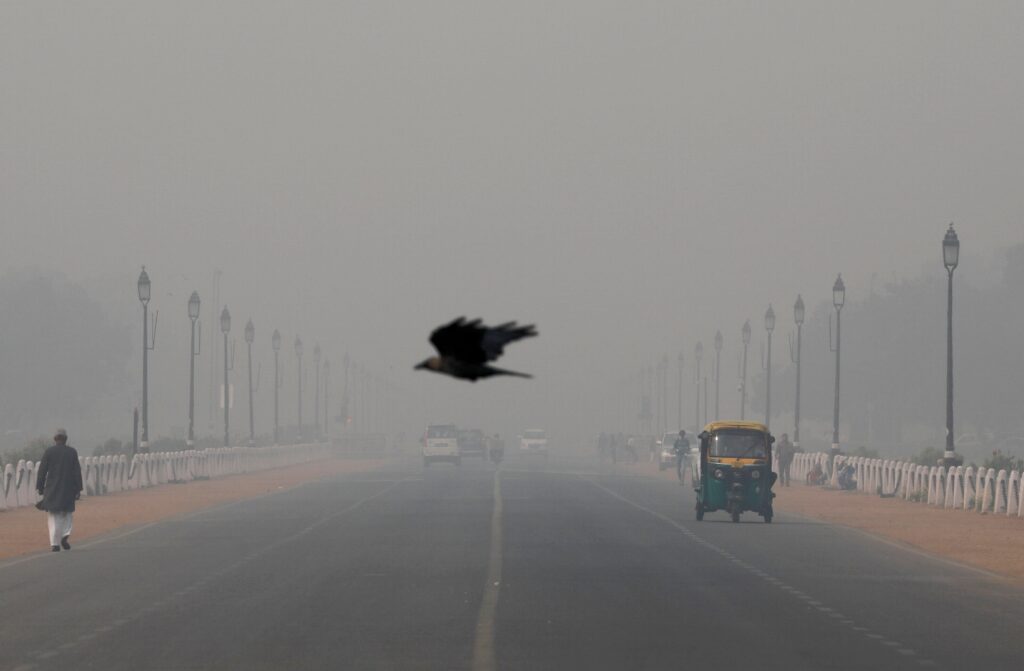
Today one such aspect of vocation lies in the demand to reject ecocidal practices which turn the perennial tendency of human beings to attack one another now toward the earth itself. It is not only Cain, the tiller of soil, who offers an unacceptable offering to the Lord. When the wheat and wine of the earth are poisoned, and raised with hands that suffer from bioaccumulation of toxic pesticides at the molecular level, we know that we have failed in our calling to be stewards of God’s gift of creation.
Doubtless we can find the divine in an elaborate cathedral or chaotic urban slum as well (or, for some better) than in a flowering meadow or a beachside sunset. But a balanced and harmonized appreciation for the peril that faces our “common home” should today inform our contemporary visions of vocation, repentance and eschatology.
We have realized over the last year with devastating clarity that human life and environmental microscopic biochemistry (including but not limited to viruses) are interrelated in profound ways. We must take seriously our calling to live as creatures, recognizing our mutual interdependence with the world, both visible and invisible, bestowed upon us by a loving God, in which we “live and move and have our being.”
Our vocation to witness a covenantal relationship with the triune Creator, Redeemer and Sanctifier demands that we reassess what it means to live in community with those around us, learning in particular from the poor, the excluded, and the precarious communities who disproportionately shoulder the burden of ecological devastation.
We are learning with more urgency than ever before that the wider world’s “deep hunger” might in fact be in some ways a Eucharistic fast, as the planet has been increasingly starved of any authentic “thanksgiving” (“eukharistia”) toward it, even from those who supposedly proclaim it as a gift from a loving Father. Reimagining our vocation to include respect for the only home humanity has ever had will be one of the most important tasks for 21st century believers, if there are to be any 22nd century ones.
Originally from Michael M. Canaris, Ph.D., teaches at Loyola University, Chicago.




 at the bottom and then tap “Add to Home Screen”
