






When Pope Leo XIV released his encyclical “Magnifica Humanitas: On Safeguarding the Human Person in the Time of Artificial Intelligence,” I read it not simply as a Catholic communicator, but as someone who has spent a great deal of time rather fixated on the ethical-use-of-AI conundrum.
I write that as an AI user, I am not afraid of LLMs, VLMs, GenAIs, etc. I find science and emerging technologies fascinating, useful and, in the right circumstances, capable of helping people do good work more clearly and efficiently … which is precisely why Pope Leo’s encyclical matters.
He doesn’t ask us to run from technology. His encyclical is asking us to remain human while using it, both in supporting our fellow humans and protecting the whole of God’s creation.
In “Magnifica Humanitas,” Pope Leo wisely offers two biblical images: the Tower of Babel and the rebuilding of Jerusalem. One is a story of human pride, uniformity and power detached from God. The other is a story of shared responsibility, patience, listening and rebuilding for the common good.
AI can become Babel very quickly. It can tempt us to believe that faster is always better, that ability is equivalent to wisdom, and that people can be reduced to data points, content segments or audience profiles. AI can produce polished language without compassion, confident answers without truth, and images without memory, consent or conscience.
But AI can also help us rebuild, if we use it in service to others. It can help a case worker simplify complicated FEMA language for a family in crisis. It can help an overwrought comms specialist draft a clear holding statement during a disaster. It can help a small Catholic newsroom transcribe interviews, organize notes, translate basic information or brainstorm headlines when deadlines are tight and resources are limited.
The question is not whether AI can be useful. It can be. The question is whether it serves the dignity of the human person. That has been my guiding principle in conversations about AI within Catholic media and Catholic Charities circles.
Earlier this year, I co-presented a session for Catholic Charities USA’s Applied Institute for Disaster Excellence on the use of AI in disaster response communications. One of our central points was simple: AI is a tool, not a decision-maker.
I believe that even more strongly after reading Pope Leo’s encyclical.
In disaster communications, trust is everything. People remember who was earnest, who was accurate and who did not overpromise. One careless post, one misleading image, one unverified AI-generated statement can damage credibility built over years. Catholic communications, especially in moments of suffering, cannot be automated into existence. It requires judgment, empathy, prudence and presence.
The same is true in journalism. As associate publisher of the Catholic Star Herald and as a board member of the Catholic Media Association, I was grateful to have a hand in the CMA’s updated Fair Publishing Practices Code, including its new section on artificial intelligence and ethics. That section recognizes both the promise and the danger of AI. It can help communicators focus more energy on verification, storytelling, community impact and truth-telling. But it also raises serious concerns about misinformation, privacy, bias, copyright, vulnerable people and the future of newsroom jobs.
Those concerns are not abstract. AI does not “know” truth. It predicts language. It can be confidently wrong. It can erase nuance. It can repeat bias. It is certainly not morally responsible. Those burdens rest solely on us mere mortals.
I’m a firm advocate on the use of guardrails related to AI. We should never allow AI-generated content to bypass human review. More importantly, especially within our Christian communities, we should never outsource pastoral judgment.
“Magnifica Humanitas” also instructs that AI is not as invisible as it feels. Every prompt, every generated image, every automated workflow depends on real infrastructure: electricity, water, servers, land, rare materials and human labor. The digital world is not separate from creation. It rests on creation. The real-world effects of AI use must be met with wisdom, purpose and accountability.
Pope Leo’s encyclical reminds us that technological progress is not the same as human progress. A smarter tool does not automatically make us wiser. A faster workflow does not increase faith. A more polished message does not make it more truthful.
For us as Catholics, this is another moment of responsibility and opportunity. We can model a better way. We can be neither naïve enthusiasts nor fearful critics. We can be discerning practitioners. We can use AI where it helps us communicate with clarity and compassion, while refusing to use it where it diminishes truth, dignity or trust.
Technology has changed over the millennia. Mission has not.
Pope Leo is asking the Church and the world to choose what kind of future we are building. Another Babel, impressive but hollow? Or a Jerusalem rebuilt together, with God at the center and the human person never pushed to the margins?
As Catholics, if we choose to use AI, our answer should be clear. Learn the technology. Ask hard questions. Build policies. Protect the vulnerable. Tell the truth.
But above all, remain human, in service to God and our neighbors on this planet.
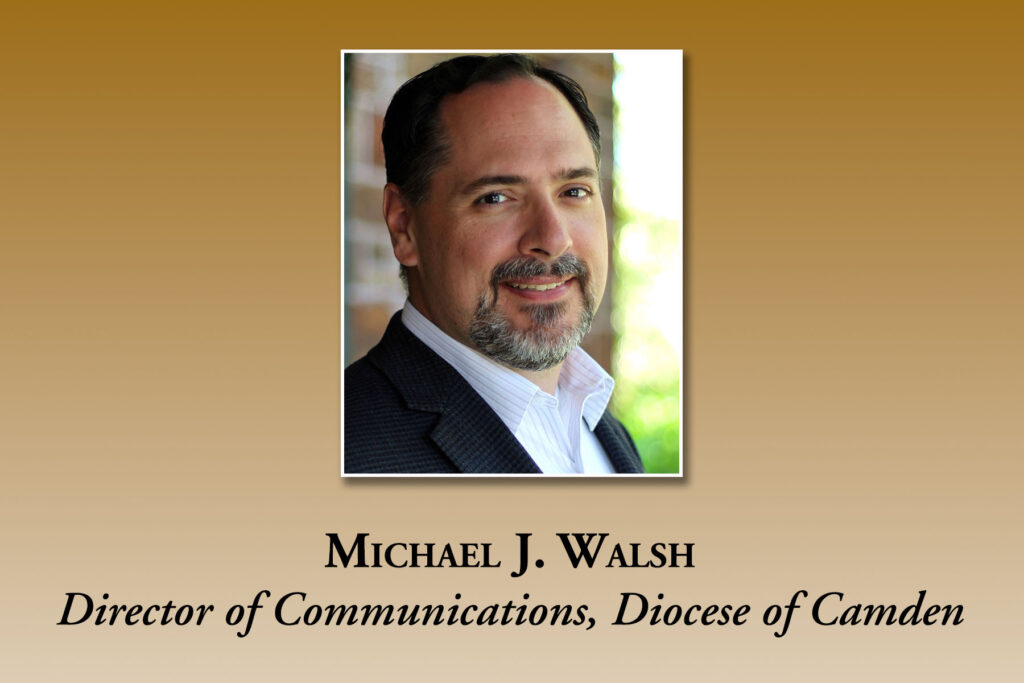
Michael Walsh is diocesan Secretariat for Communications and associate publisher of the Catholic Star Herald.




 at the bottom and then tap “Add to Home Screen”
