





Romeo, Juliet and Toughy are getting a home makeover at Christ the King Regional School in Haddonfield. The trio of Eastern box turtles has been in residence for six years, enjoying a leafy, shaded habitat on the school grounds.
Middle school students will submit design ideas in the coming school year that include landscaping, flowing water and edible plants native to New Jersey. Students will work collaboratively to refine the chosen design and map out a plan for installation.
The turtle habitat project is part of Christ the King’s Science Technology, Engineering and Math (STEM) program, and just one example of project-based learning programs being utilized in South Jersey Catholic Schools.
This type of learning, said Dr. Robert Lockwood, diocesan director of curriculum and assessment, aids students in critical thinking, creativity and collaboration skills.
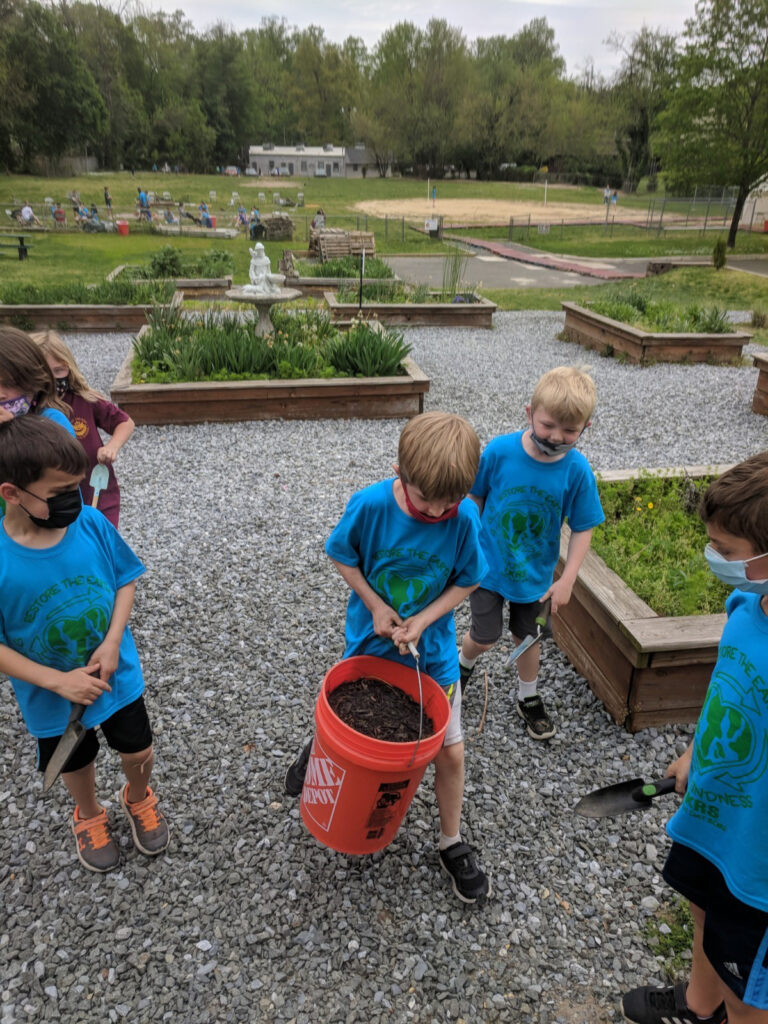
“It’s a way to experience and master the curriculum and help prepare students for how they’ll tackle many situations in higher education and careers,” he said. “We’re really excited about the work being done in this area throughout the Diocese.”
In addition to STEM, he adds, “Some schools use the acronym STREAM to include religion and the arts. Other subjects, like social studies, could come into play as well. For example, part of a project-based experience could be to explore the social implications of a new product or initiative intended to improve the environment.”
In Vineland, science teacher Patty Barse is looking forward to the reopening of Saint Mary School’s STREAM lab, which was closed last school year due to COVID-19 restrictions. Barse welcomes the opportunity to work with teachers in multiple subject areas to create project-based learning experiences.
“I get an idea, but how it’s executed is based on collaboration with other teachers,” Barse says. “I’m amazed by what they come up with.”
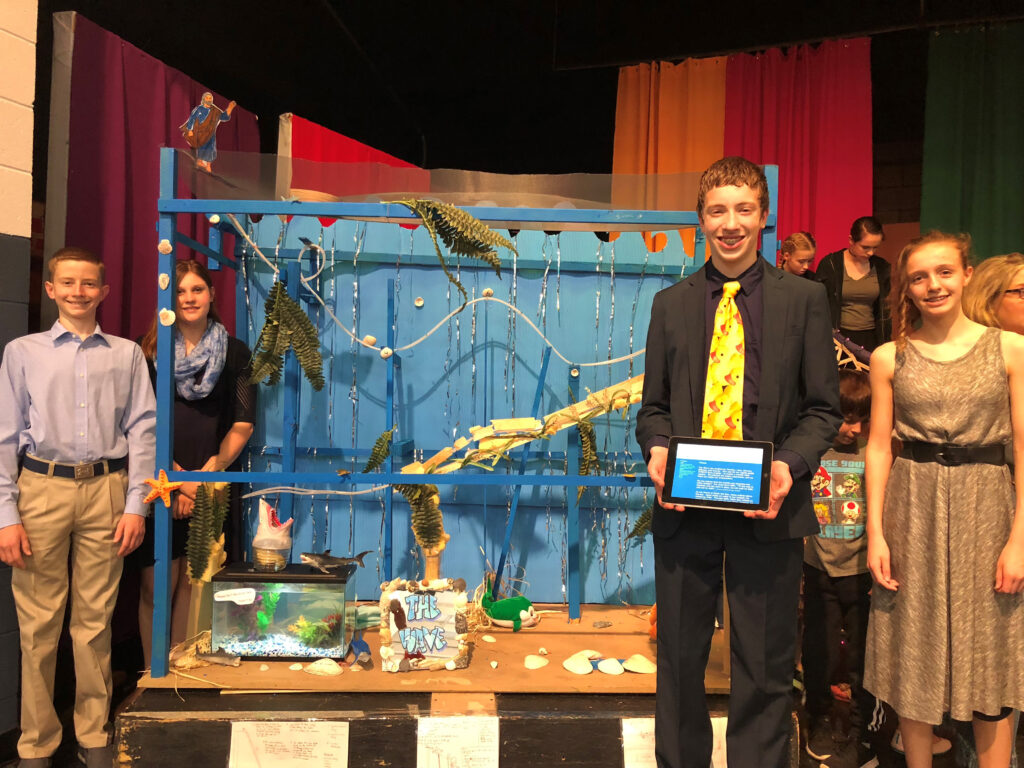
Barse said one favorite STREAM project is the creation of roller coasters as a way to learn about force and motion, part of the diocesan science curriculum for eighth-graders. For this project, students use engineering and math to design their structures. Technology is essential for research, and students create a website to showcase their work and provide educational resources and links. The project has a significant language arts component, with a written report and oral communication. Art and music are incorporated as students experiment with visually creative design elements and choose music to play while showcasing their creations.
“The students had to incorporate their faith through imagery and word,” Barse said.
The work is done in groups, an approach Barse believes is essential for preparing students to face real-world challenges.
“Different people bring different strengths. They learn from each other… and learn to speak up for themselves. They adjust, adapt and overcome obstacles. These are good life lessons,” she said.

At Holy Angels School in Woodbury, science teacher Matt Tornese takes a similar approach with students who participate in SeaPerch, an underwater robotics competition.
“We bill it as a company and create jobs,” he said. “You don’t have to design or build. You could be an editor, photographer or webmaster.”
Tornese said it’s a great way to include students whose strengths lie in areas other than science or engineering, since a big part of the competition is creating a written report and making a formal presentation. “It’s how people work in business and real life,” he said.
Because of COVID-19, the most-recent SeaPerch could not be held in person, so students were tasked to create their vehicle using computer-aided design, adding to their skillset in this area. Tornese and students look forward to the return of the live competition.
Meanwhile, students at Camden Catholic High School, Cherry Hill, will learn more about computer-aided design as the school gets ready to unveil its new Innovation Lab, with stations for a 3D printer, vinyl cutter, workshop building and robotics competition area. A new robotics course will be offered along with an after-school robotics program.
“The lab is part of a five-year strategic plan to flesh out problem-based learning with a STEM mindset,” said Angelo Milicia, the school’s first director of innovation.
Part of Milicia’s role is to work with each department at the school to create interdisciplinary assignments.
“The idea is to design a project around a problem,” he said, identifying major steps as understanding and defining the problem, brainstorming ways to address it and then testing solutions.
Camden Catholic has launched a new theme – Imagine. Create. Innovate. – to highlight the lab and the school’s shift to more problem-based learning.
“There’s definitely a buzz about it,” said Milicia, who heard students talking about it at college boot camp his first week at the school.
Lockwood isn’t surprised. “Using project-based learning to solve real-world problems makes learning so much more fun and engaging,” he said. “Think about the turtles. Will students learn more about habitats and ecosystems by talking about them or by creating them?”
Want to learn more about the hands-on learning going on in South Jersey Catholic Schools? Check out related video on youtube.com/catholicstarherald.




 at the bottom and then tap “Add to Home Screen”
