




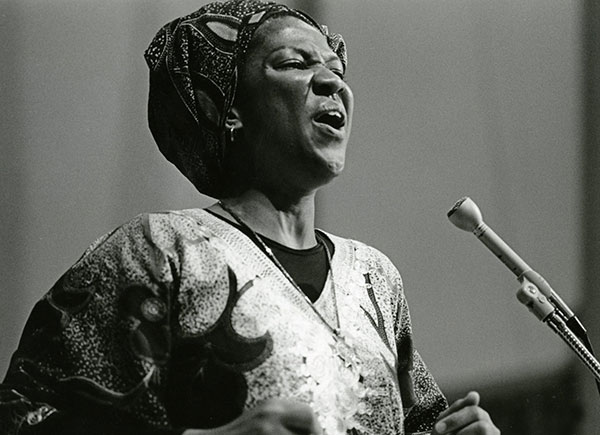
For the past several weeks, The Catholic Community of Christ Our Light, Cherry Hill, has been holding a series on Sister Thea Bowman – the first U.S. Black Catholic woman to be on the road to canonization.
The third annual One Book, One Christ Our Light Committee – born from the parish’s Justice and Outreach Commission – chose to reflect on “Thea Bowman, Faithful and Free” by Father Maurice J. Nutt, C.Ss.R., for the series. The first gathering was Sept. 30; the next discussion group is set for Oct. 21, at 7 p.m.
The series will conclude Nov. 7 with an 11 a.m. Mass and Gospel music, followed by a presentation by Brother Mickey McGrath, O.S.F.S., author, retreat leader and liturgical artist who has a studio in Camden. Brother Mickey, who was inspired by Sister Thea to be an artist, will give a presentation on her life.
“We chose a book that would encourage discussion and examination of race relations in our Church and country,” said Deb Celhar, a member of the parish Justice and Outreach Commission. “Sister Thea had such faith, joy and commitment. Solving racial inequity through celebration of culture, music and education is a welcome approach.”
Jeanne Sundberg, a member of the One Book, One Christ Our Light Committee whose master’s thesis concentrated on Sister Thea, addressed the September meeting and spoke on Sister Thea’s background.
Sister Thea was born Bertha Elizabeth in 1937, the granddaughter of slaves and only child of well-educated parents. Growing up in Mississippi, the youngster did not thrive in the segregated school system until the Franciscan Sisters of the Perpetual Adoration, an order from La Crosse, Wis., opened a Catholic school. The Franciscan sisters so inspired Bertha that she converted to Catholicism at the age of nine, though her parents were Methodist and Episcopalian. At 15, she announced her intention to discern a vocation, moved to Wisconsin and later became the first African-American member of the Franciscan sisters, Sundberg explained.
She went on to earn master’s and doctorate degrees from the Catholic University of American in Washington, taught at the elementary, secondary and college levels, and later became director of the Office of Intercultural Awareness in the Diocese of Jackson, Miss. She worked tirelessly to improve inter-racial relations and to foster self-help programs in African-American schools. Music was a key factor in helping to incorporate Black life and culture within the Church, and she became a national speaker.
She was diagnosed with cancer in 1984. In 1989, just months before her death, she addressed the U.S. Conference of Catholic Bishops, challenging them to understand what it meant to be Black and Catholic. She ended up leading the bishops in singing “We Shall Overcome” with their arms linked in solidarity.
For more information about the series, contact Deb Celhar at 609-932-4507.




 at the bottom and then tap “Add to Home Screen”
