



Editor’s Note: In the Catholic Church, November is traditionally dedicated to the holy souls in purgatory and remembering those who have left this earthly plane. Throughout November, the Catholic Star Herald is featuring articles related to death and dying and how “death is not the end, but rather the door through which we must pass to gain eternal life.”
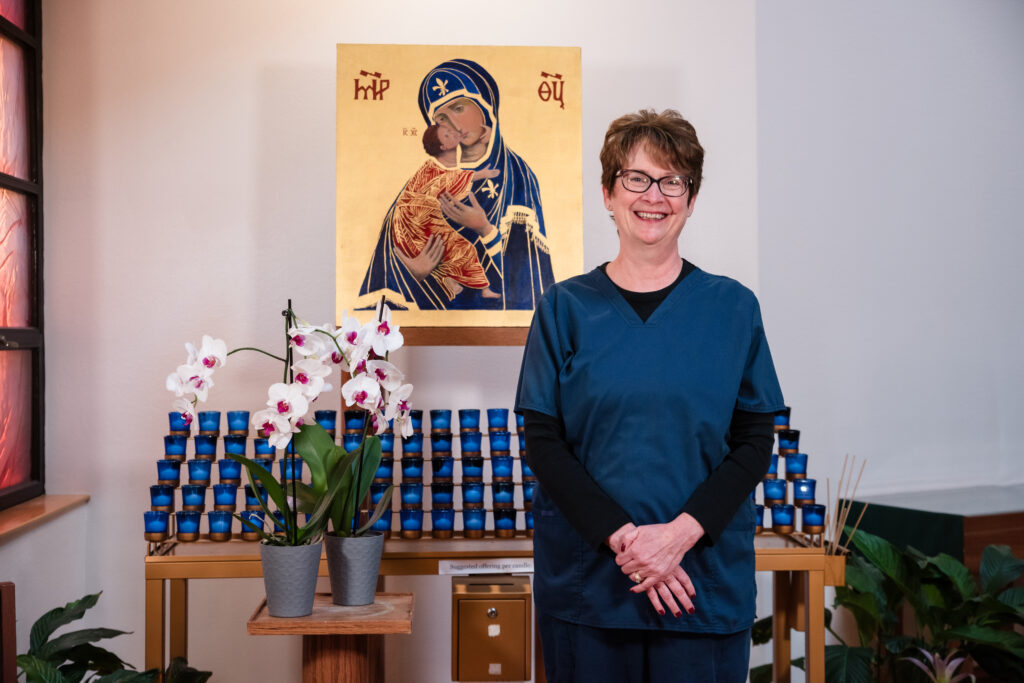
CHERRY HILL – Dipping her french fry into a dish of brown gravy, Sue Baratta sat at a local diner and explained what’s resonated with her during the past 18 years as a hospice nurse.
“Eat the chocolate, drink the wine,” she says, referring to a sign in her kitchen. “We don’t know how long we’re going to be here, so make the most of life.”
A certified hospice and palliative care nurse since 2010, Baratta – of Saint Mary Parish in Cherry Hill – earned her associate’s degree in nursing from the Helene Fuld School of Nursing in Blackwood. She is also a member of the National Hospice and Palliative Care Organization. For the past five years, she has been a palliative care nurse liaison at Samaritan in Marlton, working as part of a clinical team assisting patients with managing symptoms related to their disease, or treatment for it.
The Hospice Foundation of America defines hospice as, among other things, “medical care for people with an anticipated life expectancy of six months or less, when cure isn’t an option, and the focus shifts to symptom management and quality of life.”
What it’s not, Baratta clarifies, is a job that “hastens anything; we don’t make anything go faster or slower; we allow people to pass peacefully, in a natural way.” The goal, she says, is “making sure the patient is comfortable in their last days, and helping family and loved ones cope with that.”
Reconciliation and acceptance
Baratta realized early on that she was capable of providing this kind of care, knowing she was comfortable having difficult conversations. “End-of-life is a hard thing to talk about. It’s very intimate. You hear and see things with people that you wouldn’t otherwise.”
A lifelong Catholic, she says she never forces her beliefs on others, but is open to bringing God into the conversation when patients and loved ones desire so, especially when questions arise about the sacraments.
Initial conversations with patients or families, she says, can begin with, “What do they want from their life? Do they have advanced care planning? What are their wishes at the end of life? If they can’t make a decision, who do they want making those decisions?”
Often, these beginning chats will open a deeper discourse. “There’s a time of reflection, where they ask themselves, even if they’re not a believer, ‘What did I do with my life? How did I help people?’”
Baratta finds that some patients “want to be reconciled to God, and they want their families to be OK.”
Aiding individuals in this latter desire, she acts as “a bridge between [patients and families] so they can say hard things to each other. Is there someone they haven’t talked to in a while that they need to talk to? Do they need to tell someone that they love them?”
“I give people the opportunity to reconcile with each other, so patients can have closure, and families can have closure,” she says.
For some with faith – and those without it – the need to ask and discuss the bigger questions, and receive the sacraments, can be strong. “It’s wonderful to see people want the Anointing of the Sick,” she says, and for her to be able to organize that for them.
She has encountered Catholic priest patients in her work, as well, and calls it “an honor to make sure they receive the sacraments and have their Rosary beads.”
Enduring through the pain
Baratta admits that it can be difficult to see how issues such as heart failure, cancer, or lung or kidney disease affects a person not only physically, but mentally.
She believes, though, that suffering “can bring people closer to Jesus” united on the Cross with an understanding of His salvific plan.
One memorable encounter involved a faith-filled young male patient “who had a terrible disease and was in a lot of pain. … He said to me, ‘This is not my body, it is Jesus’. If this is the suffering this body has to have, then I’ll endure it,’” Baratta recalls.
With a catch in her throat, she says she is still deeply affected by his witness. “He surrendered his autonomy to God. He knew that it wasn’t for him to decide how his body should die.”
Baratta’s vocation has offered her the opportunity to form longtime relationships with patients and their families. She has attended the funerals of those she has cared for, and has stayed in touch with some family members.
Amidst the pain and hardship she has seen, she considers her profession an opportunity to do God’s work. “I am His instrument.”
Prayer, the Virgin Mary and the Rosary, she says, “keep me balanced, keep it all in perspective, and give me the strength to help others who are in suffering and pain. … This work affirms my faith; I bring His presence into every encounter I have. It’s a real privilege to be this intimate in the faith with those at the end of their lives. I see people at their most vulnerable, and I see God there.”
In the times before death, Baratta has seen life – and its lessons – shine through. “Don’t take things for granted, and remember everything is a blessing. We can be called anytime.”
So drink the wine and enjoy the brown gravy-coated french fry, she says. “Make the most of today. This life is a gift, and we’re here for a reason.”


 at the bottom and then tap “Add to Home Screen”
