



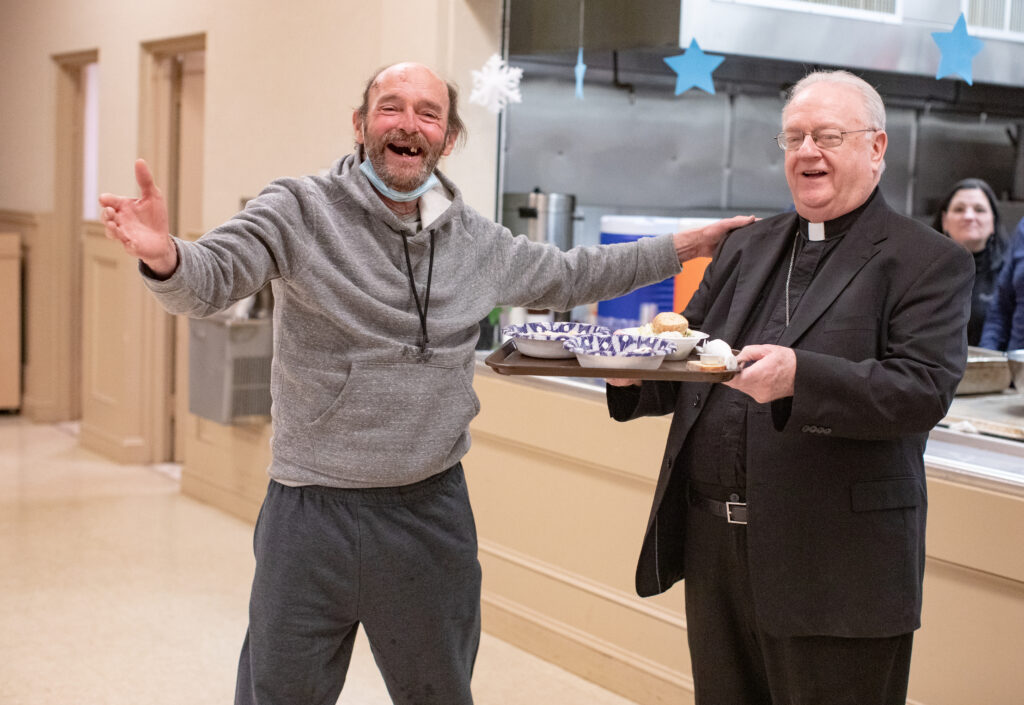
In celebration of his 20th episcopal anniversary, Bishop Dennis J. Sullivan sat down with the hosts of the Talking Catholic podcast to discuss his days as a priest in the Archdiocese of New York, being called to the episcopacy, the role of a bishop and much more. Listen to the podcast in its entirety at talking.catholicstarherald.org.https://talking.catholicstarherald.org./
QUESTION: You were a humble priest for 30 years in New York. Did you think in those early years that you might one day wear the pectoral cross?
BISHOP DENNIS SULLIVAN: Never. In fact, when I received the phone call from the papal nuncio, I said, ‘Archbishop, I think you have the wrong Sullivan!’ … I was shocked, to say the least.
QUESTION: When you got the call, what were among your first thoughts?
BISHOP SULLIVAN: I was frightened. I was very happy as a parish priest and pastor for many years. [I thought] ‘What is going to be asked of me in this new role?’ It was troubling, and I said to the nuncio, ‘Can I say no?’ He said back to me, ‘Would you say no to the Pope?’
QUESTION: What were some of your favorite parts of being a pastor and priest before being called to be a bishop?
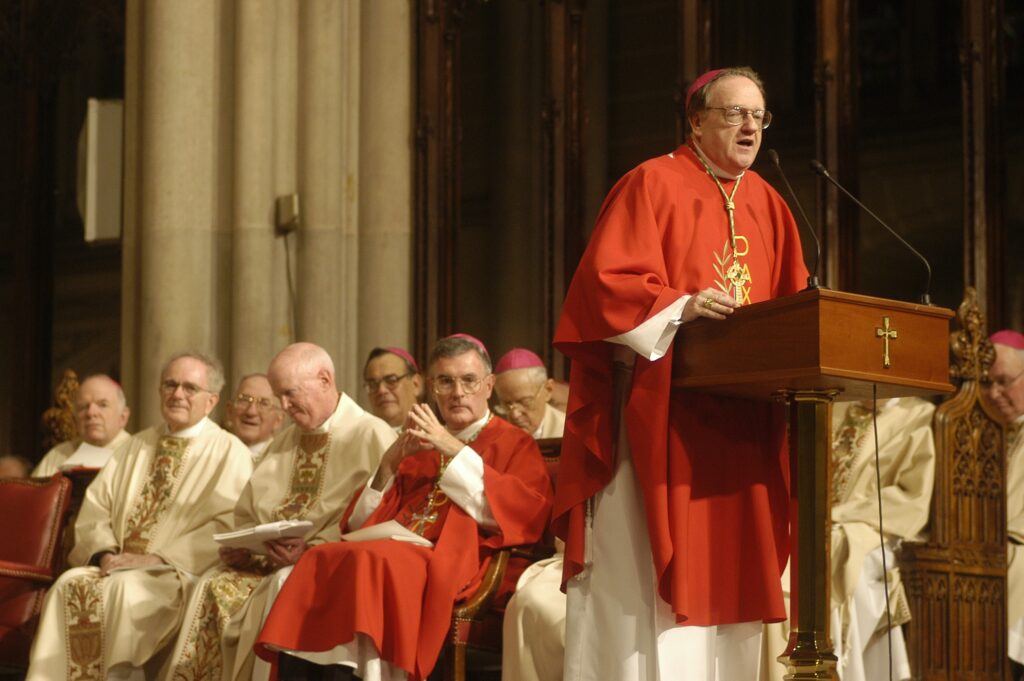
BISHOP SULLIVAN: I loved being a parish priest. That’s what I prepared myself for in the seminary. I enjoyed being with people and doing my best to bridge people to God – and they bridged me to God.
After I was ordained a priest, I was asked if I would learn Spanish. I was sent to Puerto Rico, to the Catholic University in Ponce. It was very intense language training. … You never saw a written word; it was all memorized and listening and repeating what you heard. That was a real workout.
After I did that, it was suggested to me that instead of staying in Puerto Rico, I go to Santo Domingo, the Dominican Republic. So I did, and I was there for about three months, in a parish where the pastor had just had an appendix attack. They had no other priest there. I went there and lived in a very humble rectory and took care of the parish church, town and village. That pastor had something like 19 chapels that were visited on a schedule. Two of the chapels, I had to get on a donkey to get there. In the way-out places, when the priest got into the village, the people would set off fireworks. That is how everybody knew the priest was in.
The work that was done, all the sacramental work, had been prepared by the catechists of the community. … I would arrive and the catechists would say, ‘We have 25 baptisms, three marriages … Since the priest was last here, 10 people died and you need to go to the cemetery with the families and pray over the burial places. Then we’ll have Mass.’ The catechists were critical.
When I left there, I have to say, I was very bold. I wrote back to the Archdiocese of New York, the director of priest personnel, that I think I should stay [in the Dominican Republic] for six months or more. I was growing in many, many ways there. He wrote me that I would … not get that request. I was then very wisely assigned to a parish in Manhattan, which was receiving many of the Dominican immigrants who were coming into New York at that time. So I was able to say, ‘Oh I was in your country a little bit.’ That created a connection immediately.
QUESTION: You are very much a bishop who considers himself a pastor first. You have spoken about that a lot. Those times in parish life, do you find they have and continue to inform your life as a bishop?
BISHOP SULLIVAN: Yes, I think so. The bishop is the pastor of the diocese; that’s his role, and I learned a lot about pastoring in the Heights, the Bronx, the Upper West Side and then Lower Manhattan. In each of those places, the people taught me how to be a pastor. The people showed me the love of God and helped direct my ministry. Because in each of those places, my ministry took on a different focus.
QUESTION: Right before you were named a bishop in New York, you were learning Mandarin because your parish was changing.
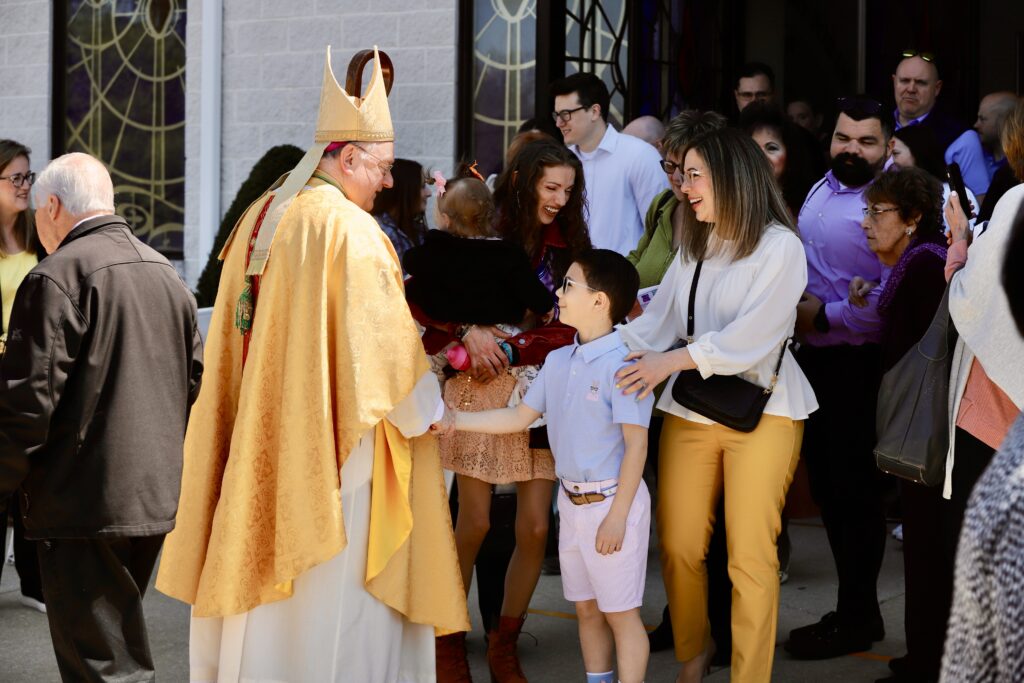
BISHOP SULLIVAN: I was sent to a parish on the border of Chinatown, and Mass was in [English, Spanish and] Cantonese. But the population was changing. The newcomers all spoke Mandarin. The priests did not speak Mandarin. In parish meetings, we would say, ‘How do we reach out to these Mandarin speakers?’ So I started studying Mandarin. It was very limited! On Sundays, I would go out in front of the Church so that the community could see I was there. I could pick up the singing … because I like to sing … and I would sing ‘Lord Have Mercy’ with them so that everybody felt included … like Christmas Mass was in four languages – English, Spanish, Mandarin and Cantonese. It was a wonderful place, and still is.
QUESTION: Looking back on 30 years as a priest and pastor, what has informed you to be a good bishop?
BISHOP SULLIVAN: The people. Work with the people. Love the people. Listen to the people. That’s what has informed me. That’s all I knew. I was not a canon lawyer; I was not a theologian. But I was a parish priest. That’s what I have brought to the ministry of bishop.
QUESTION: How do the people help you grow as a bishop?
BISHOP SULLIVAN: When you become an ordinary, the ordinary bishop means you are in charge of the diocese, there is much more of an attachment, a relationship to the people of the diocese. I feel that when I go to parishes and parish occasions. I feel the attachment of the people, the faith of the people, and that encourages my faith. That’s what the bishop’s ring is all about. You’re married to this Church. … The role of the ordinary … the bishop has to be among the flock, seen by the flock, followed by the flock and assisted by the flock.
QUESTION: Who have been some of your role models to help you grow in the faith?
BISHOP SULLIVAN: Certain professors of mine years ago in theology clearly helped me grow in the faith. I think particularly of a professor of liturgy I had and a very tough professor of Scripture. … I learned faith from my mother and father, and I have been encouraged in faith by the people I have served, particularly the poor. I learned a lot about believing in God from the simplicity of their belief.
QUESTION: What called you to the priesthood?
BISHOP SULLIVAN: That call came strongly in my life when I was in college. I was very lucky that one of the priest-chaplains at my school was somebody I spoke to and helped me deal with the call, which I kept turning off. Finally, I knew I had to do something. In one of our last conversations, he told me to go home and talk to my parish priest, which I did.
QUESTION: Of all your gifts, homilist may be chief among them.
BISHOP SULLIVAN: Thank you. I have always taken that ministry very seriously, and I remind priests that is the way you share your love for the people. Prepare … don’t waste their time. People are looking for good preaching, so I do work on my homilies and I encourage all the priests to do the same.



 at the bottom and then tap “Add to Home Screen”
