


If one thing became clear during the recent synod conversations across all continents and settings, it was that the Church needs to continue to consider the role and contributions of women more carefully.
Women consistently lag behind men in statistics related to income, literacy, property ownership, and even many health indicators across the globe. Yet the Church teaches clearly that “every kind of social or cultural discrimination in basic personal rights on the grounds of sex [and other categories] must be curbed and eradicated as incompatible with God’s design.” (“Gaudium et Spes,” 29) Pope Francis has continued to make the connected themes of lay agency and the indispensable insight of women cornerstone elements of his pontificate.
This was evidenced in a recent announcement when three non-bishops were, for the first time, named members of the Dicastery for Divine Worship and the Discipline of the Sacraments: Abbot Jeremy Driscoll, OSB, along with Professors Mary Healy and Donna Orsuto. All three had previously served as consultants before being named to join the Dicastery in a more formal way, alongside its slate of bishops and cardinals.
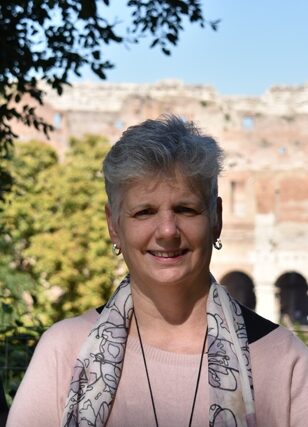
Dr. Orsuto and I have been friends for nearly 15 years, and co-authored a book on a spirituality of joy together in 2017. Most people know her as the founder and director of the Lay Centre at Foyer Unitas, both an intentional community and a sort of think tank on lay leadership in Rome, which has become an institution over the last four decades. While she has recently handed over the directorship to Dr. Filipe Domingues, she remains involved in their work alongside her position as head of the Department of Moral Theology and Spiritual Theology at the Pontifical Gregorian University. I spoke with her, and she shared some thoughts about this unique moment in the Church.
“The major theme that contributes to greater lay participation in the Church emerged early in the pontificate of Francis with ‘Evangelii Gaudium’ 120, where the pope names all the baptized as missionary disciples,” she said. “Though this passage explicitly highlights the involvement of lay people in the Church’s mission of evangelization, I think it also gives insight into the significance of baptism for a ‘full, active and conscious participation’ of laity in the Church. We have a long way to go because we are not doing enough to offer lay people the formation they need to be equipped for full participation in the Church and to create spaces for them to exercise their gifts. The aspects of community and fidelity to, as the pope puts it elsewhere, the tasks of charity, catechesis, and the celebration of the faith remain anchor points in the Christian life and need to be cultivated in lay people of every generation.”
When I asked her about the heroes or heroines from whom she draws sustenance in her work, she told me: “I would be remiss not to list Dorothy Day as among my own personal heroines in this work. She was a woman of great spiritual depth who served, lived with, and befriended the urban poor. She lived her faith without compromise, which is why she inspires me.
“I also find inspiration in the lives
and writings of the four women doctors of the Church: Saint Teresa of Avila, primarily because of her teaching on prayer; Saint Catherine of Siena, because of her commitment to speaking the truth in love; Saint Thérèse of Lisieux, because of her courage and trust; and Saint Hildegard of Bingen, for her tenacity and creativity.”
“I don’t want to exclude male saints and figures,” she continued. “I will mention three: Saint Benedict, because of the harmony and balance in his rule; Saint Gregory the Great, for sharing with us how he dealt with the struggle of integrating prayer and action. And of course, Saint Ignatius of Loyola, who founded the university, originally known as the Gregorian Roman College, where I teach. His spiritual exercises have had a significant impact on me throughout my life.”
When I asked what was the most profound aspect of liturgy or collective expressions of the faith that draws her into the life of the Church, she replied: “Someone recently gave me a holy card with a quote by Saint John Vianney that said, ‘If we really understood the Mass, we would die of joy.’ The Eucharist really is the ‘font and summit of the Christian life.’ I know, at least, that I experience it as the font and summit of my life. It is the most incredible privilege and joy to actively participate in the Mass, whether in our little chapel at the Lay Centre, in the nearby basilica of San Clemente with a small congregation in the early morning, with international students at the Gregorian University Chapel, or joining thousands from all over the world at a Papal Liturgy.
“At the same time, I am also cognizant of many who do not have this possibility, and I pray for them in these moments. I will also include all those of the Diocese of Camden in these prayers in the days and months ahead. Perhaps I will see some of them here in Rome during this special Jubilee year!”
An alumnus of Camden Catholic High School, Cherry Hill, Michael M. Canaris, Ph.D., teaches at Loyola University, Chicago.




 at the bottom and then tap “Add to Home Screen”
