





Every bishop is called a shepherd. The Lord is called a shepherd. Abraham and Isaac were called shepherds. Jacob and David were called shepherds.
Bishop Eustace, Bishop McCarthy, Archbishop Damiano, Bishop Guilfoyle, Bishop McHugh, Bishop DiMarzio and Bishop Galante have been our shepherds over the past 75 years. Bishop Dennis Sullivan is our new shepherd as we face another 75 years.
The Lord is my shepherd (Psalm 23) is surely the most popular of all the psalms. It is a song of love for God. It is a song of trust in God. It is a song of hope in God.
Shepherds are mentioned often in the Bible. Shepherds were guided by a star. They left their sheep that night. They were the first believers in the mystery of the Incarnation. They were the first to announce the good news to the world. And Jesus would later proclaim himself as shepherd (Luke 2:15).
Sheep were the only animals acceptable for sacrifice in the temple. Once each year the lamb was killed. The lamb was eaten the same time each year by thousands of Jews.
Sheep farming is a big industry in Ireland. It makes a significant contribution to the Irish economy. In fact, there are roughly 10 million sheep grazing on the hills and in the valleys. At the same time there are less than 4 million people living on the island.
I grew up on a sheep farm in the western part of Ireland. It was on that farm that I first learned about the habits and the behaviors of sheep. It was there I learned about the great amount of time, energy, commitment, sacrifice, skill and dedication that go into being a good shepherd.
In a sense, I could say my dad was a shepherd. He had many other roles on the farm.
Nevertheless, he gave a considerable amount of his time to attending and caring for the sheep.
Daily, along with his collie sheep dog, he attended to the sheep. The sheep dog was an invaluable assistance when it came to rounding up the sheep. They were rounded up for sheering and dosing and injecting for liver fluke and other diseases and viruses.
As a shepherd, my dad would go in search of the lost sheep and the sick sheep and the dying sheep. As a shepherd, he would spend hours at any one time attending to the straying sheep and scattered sheep. He would do everything possible to protect the sheep from foxes, gray-crows, hawks and wild dogs.
As a shepherd, he truly valued the sheep. He valued their wool. He valued their meat. He valued their milk for the lambs. He valued that they could be fed rather cheaply on the plentiful and luscious green grass. He valued the financial profits that came from selling the lambs at the local markets.
As a shepherd, he knew the sheep’s needs and wants. He could lead them to good pastures of green grass. He could lead them to the fresh water streams. These sites were especially valuable in the cold winter months as well as during the lambing season.
As a shepherd, he knew those sheep with the tender hoofs. He knew the ewes that cared for their lambs and those who were weak and fragile. He knew the needy sheep as well as the sheep that required extra attention and care.
My growing up experiences on the sheep farm contribute greatly to my understanding of what Jesus had in mind when he used the imagery of sheep and the shepherd in St. John’s Gospel. His description of himself as a shepherd and the people of God as his flock of sheep is easy for me to relate to.
Jesus sees himself as the Good Shepherd, and like the good shepherd, he knows the sheep (John 10-11). Jesus sees himself as owning the sheep. He guards the sheep. He will never abandon them.
Jesus, like the Good Shepherd, calls the sheep by name. The sheep follow him. He lays down his life for the sheep. He is the way and the truth and the life for the flock.
Jesus, like the Good Shepherd, says to all of us; “I knew you even before I shaped you in your mother’s womb. I knew you from the beginning of creation. I knew you long before you were in the mind and heart of your parents. I knew you long before you were born. I knew you long before you saw the light of day.”
Jesus, like the Good Shepherd, knows our names. He knows our needs. He knows our wants. He knows our thoughts even before we speak them. He knows our actions even before we perform them. He knows every hair on our heads.
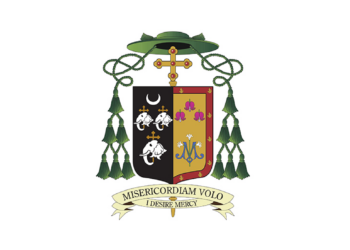
Jesus, like the Good Shepherd, loves us first and loves us last. He loves us even when we do not feel we deserve to be loved. He loves us when we are poor and when we are rich. Bishop Dennis Sullivan comes to us as the good shepherd. He comes with the traits, the characteristics, and the virtues of a good shepherd. He comes among his new flock of sheep with a rich background of pastoral leadership and pastoral administration and pastoral care.
Bishop Dennis Sullivan comes among us like the Good Shepherd. He comes “to lay down his life for the sheep” (John 10; 11). And, the sheep of South Jersey rejoice and gladly welcome their new shepherd.
Msgr. Thomas J. Morgan is retired pastor of St. Thomas More Parish and St. Mary Parish, Cherry Hill.





 at the bottom and then tap “Add to Home Screen”