




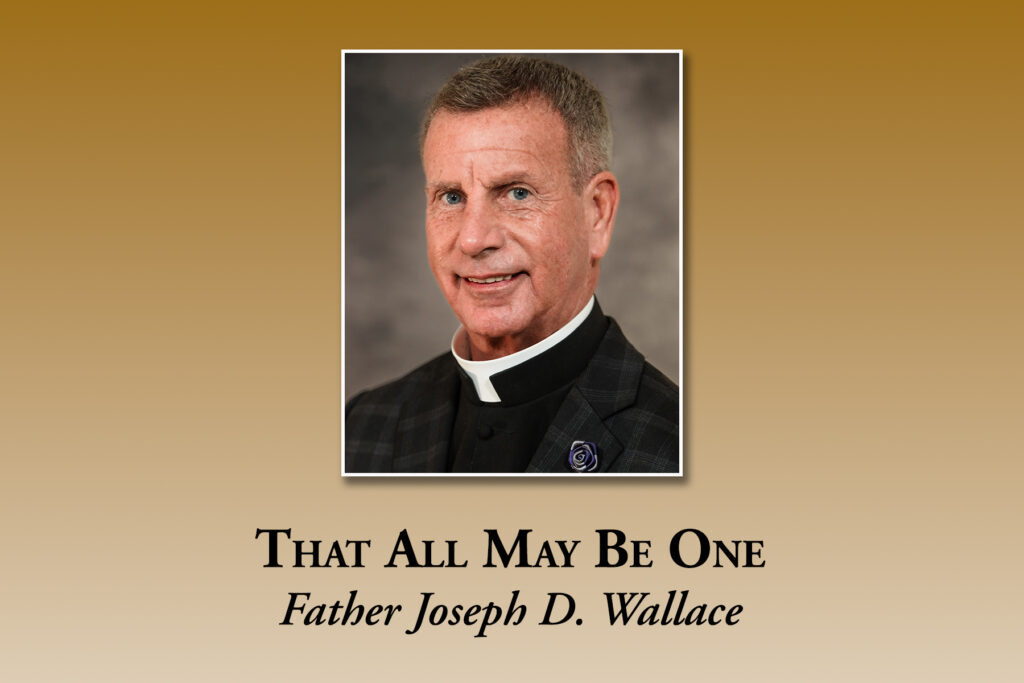
I was recently asked to explain how the Society of Saint Pius X differs from mainstream traditional Catholics who seek to preserve certain pre-Second Vatican Council practices in dioceses around the world, including our own.
Catholics who attend the Traditional Latin Mass do so with the Church’s permission and remain in full communion with the Roman Catholic Church and the Holy Father. By contrast, the SSPX, founded in 1970 by Archbishop Marcel Lefebvre, rejects the teachings of the Second Vatican Council.
Archbishop Lefebvre (1905–1991) was a French Catholic bishop and missionary who became a prominent leader in the Church’s traditionalist movement. Opposed to the liberalizing reforms of the Second Vatican Council, he founded the Priestly Society of Saint Pius X. In 1988, he and the four bishops he consecrated without Pope John Paul II’s approval were excommunicated. Sadly, on July 1, the SSPX again acted against the will of the Bishop of Rome, Pope Leo XIV, by ordaining four more bishops, once more incurring the automatic, self-imposed, excommunication for the ordaining bishops, the newly ordained bishops, and the clergy and lay faithful members of the SSPX’s schismatic church.
On the eve of the episcopal ordinations in Écône, Switzerland, Pope Leo appealed to SSPX leaders with deep concern: “With Christian affection, I plead with you and ask you with all my heart: please turn back!” In a letter to the SSPX leadership and faithful, he warned that the unauthorized ordinations would deprive SSPX members of the licit – and, in some cases, valid – reception of the sacraments. Despite the Holy Father’s appeal, the SSPX proceeded with the ordinations. The Vatican quickly declared the group to be in schism and excommunicated the bishops, priests and lay adherents.
The central reason for the Vatican’s excommunication was the SSPX’s rejection of the reforms of the Second Vatican Council. Their principal objections focus on the council’s teachings on religious liberty and ecumenism. The SSPX argues that these reforms contradict traditional Catholic doctrine, encourage religious indifferentism and weaken the Church’s historic claim to be the one true faith. In opposing the Second Vatican Council’s declaration on religious freedom, they contend “Dignitatis Humanae” conflicts with Pope Pius IX’s “Syllabus of Errors,” which condemned the view that each person is free to embrace and profess any religion. In effect, they maintain that heads of state have a duty to favor the Catholic Church and restrict public expressions of what they regard as false worship.
The SSPX also rejects modern ecumenical dialogue with other Christian communities. It argues that such outreach compromises the unique truth of the Catholic faith by treating other Christian denominations as broadly legitimate, thereby obscuring the necessity of the Catholic Church for salvation. The SSPX views ecumenism as a modern error that wrongly suggests that the Holy Spirit uses separated, non-Catholic communities as valid means of salvation. For this reason, they reject the Second Vatican Council documents on ecumenism, “Unitatis Redintegratio,” and on non-Christian religions, “Nostra Aetate.”
Having devoted much of my priestly ministry to Christian unity and interreligious harmony, I find this painful rupture within our Catholic family especially sorrowful. I pray that the SSPX will soon be reconciled with the Catholic Church.
Father Joseph D. Wallace is diocesan director of Ecumenical and Inter-religious Affairs and pastor of Christ the Redeemer Parish, Atco.



 at the bottom and then tap “Add to Home Screen”

