





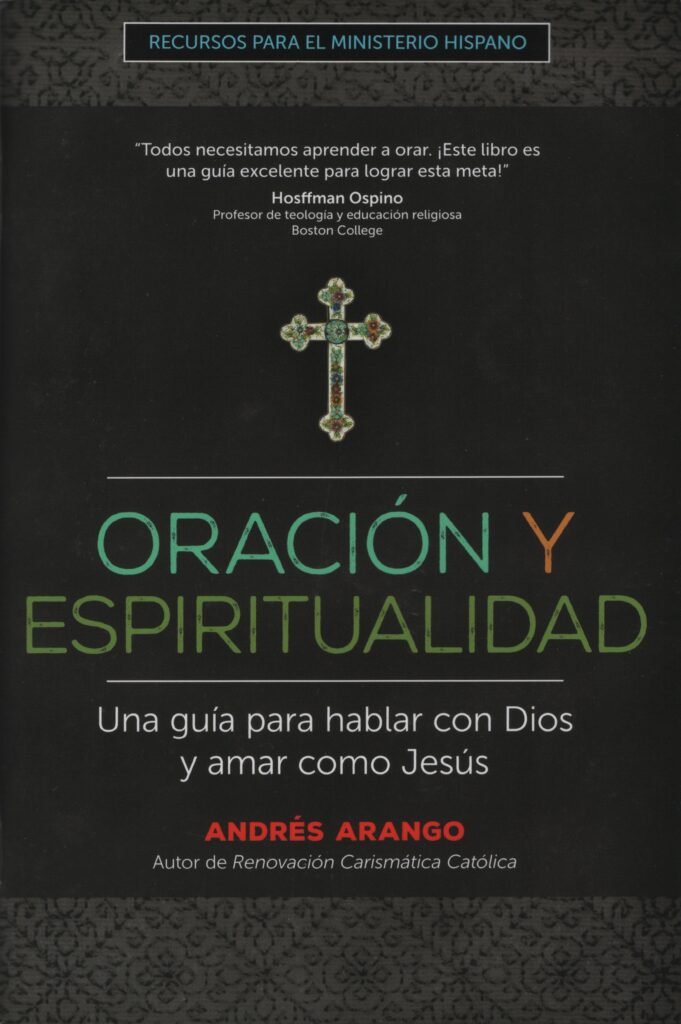
Seeing a need for more Spanish-language spiritual resources for Catholics, Andrés Arango has written a new book, “Oración y Espiritualidad” (“Prayer and Spirituality”).
“This book is for everyone who wants to grow in their personal relationship with God – anyone who wants to know how to pray and live like Jesus,” said Arango, Bishop’s Delegate for Hispanic Ministry and director of evangelization for the Diocese of Camden.
In the book, Arango speaks of the importance of nurturing one’s prayer life and maintaining a constant dialogue with God. Each chapter offers lessons and practical advice on the types of prayer, the stages of spiritual life, the universal call to holiness and how to be a missionary disciple.
Geared for Spanish-speaking Catholics, this book is filled with many cultural references particularly present in the Hispanic community, such us the special devotion to the Virgin Mary, the way to participate in the Eucharist, the role of popular religiosity and the spirituality of the ecclesial movements.
“It’s important for Latino Catholics to read a book written from their own cultural experiences that shapes their spirituality,” Arango said.
A main focus of the book is understanding the difference between prayer and spirituality.
“Spirituality is a lifestyle – the lifestyle of Jesus. To forgive as Jesus, to love as Jesus, to serve as Jesus, to be moved by the Holy Spirit 24-7. Spirituality is how we grow in holiness,” he said.
Prayer is a main component of that, and requires more than talking. “A lot of Christians, we really don’t have a conversation with God,” Arango said. “I think very often when we go to pray, we speak. Prayer is a dialogue – we speak and we need to listen to God, too. And we need to learn how to speak with God in different moments – sometimes we need to ask for [intentions], but other times we need to go to God for thanksgiving and worship.”
“When we love somebody, and somebody loves us, we need to listen to that person,” he continued, explaining that contemplative prayer, Christian meditation and reading the Word of God were among the ways to do so.
“If we don’t grow in dialogue, our prayer life will just be routine. The goal is to grow,” he said.
In addition, the book discusses why Jesus is the perfect model of prayer, explaining how each part of the “Lord’s Prayer” can be meditated upon.
“It’s a very rich prayer,” Arango said, “because in it, Jesus shows us how to pray with God, our father. He uses the word ‘Abba,’ daddy, and knows that God will take care of him, that they are connected. But God is also our father. He loves us no matter our mistakes. So many of us, we don’t feel like we are sons and daughters of God. Instead we alienate ourselves because we don’t think we are worthy of God’s love.”
Another way Jesus is a model of prayer for the faithful – his ability to demonstrate different types of prayer. “In the Bible, he would pray with thousands of people, the 12 Apostles, two or three of his best friends, or alone,” Arango said. “In doing this, Jesus is teaching us that we can pray at Sunday Mass, in our prayer groups, with families … but that we also need our private moments, too.”
Those moments alone, he admits, are fleeting in today’s society. “We are not used to many moments of silence, and not just external silence, but also inner silence.”
Without this peace, one can’t truly dialogue with God, which prevents missionary discipleship.
“To be a missionary is not just to speak, but first to listen to God. Once you have that relationship, you are transformed. If you are in love with God, you want to share this person you’re in love with,” he said.
To fall in love with prayer and God and be called to discipleship, one must be moved by the Holy Spirit. “We cannot be holy by ourselves,” Arango said. “When we are being led by the Holy Spirit, we are going to be fulfilled and fulfill the things we need to do as Christians. Not because we have to do it, but because we are filled with the love of God.”






 at the bottom and then tap “Add to Home Screen”
