



This past year, the sixth edition of the “Program of Priestly Formation in the United States of America” (PPF) hit the presses. This has been something in the works for years, as the Church and her bishops in the United States have seen the fruit that has come from our seminaries while also paying attention to the men who are entering formation now. They have worked together in reforming the process by which a man is formed into a priest. The goal for every seminary is to form good men into priests who will one day serve the Church. They have taken into consideration many different factors that are facing the Church and her ministers in the world today and have made some changes that will help to bear good fruit in the future for the Church.
It is interesting to see how this process has changed even since I was a seminarian. We used to be able to distinguish or measure our journeys by our education level. Someone in first college would have about eight or nine years before ordination. Someone who entered with a four-year degree or above would enter pre-theology and have a journey of about six years before ordination. None of this was set in stone, and thankfully we have had good vocation directors who have worked with our men and helped to form them so that when it came time for ordination, they were ready to begin this journey and continue their formation as a priest of Jesus Christ. This model was used for many years, and it has produced a good number of the priests who now minister to our Diocese.
Looking at our world now, there are many challenges for men who want to become a priest. There are challenges when it comes to education, life experience, immigration status and diverse family issues. The value of formation, as any of our seminarians could tell you, is that it is a lifelong journey. We are not completely formed when we enter the seminary, and we are not completely formed when we leave the seminary and are ordained to the priesthood. Our formation continues through all of our assignments and responsibilities as we grow in our understanding of this great gift.
With this “Program of Priestly Formation,” the Church will now have four different stages to help form our men to be the missionary disciples we need in our communities: Propaedeutic Stage, Discipleship Stage, Configuration Stage and Vocational Synthesis Stage. All of these stages will have to be completed while a man is formed into a good candidate for the priesthood. This is a process that can be longer than what we were used to, as it will be different than anything before it. We will have some growing pains as we do our best to follow and implement this for our Diocese. However, even with all of these challenges, I believe we will see greater fruit come from all of this.
The different stages a man goes through helps him to grow in the four dimensions of the formation process. A man still needs to be formed in the human dimension, spiritual dimension, intellectual dimension and pastoral dimension. There will be different benchmarks or thresholds a man must reach in each of these dimensions before moving on to the next stage of formation. These four dimensions are essential to the process, and I believe we see how our seminarians have grown in each through the articles they have shared with us on the following pages.
Formation is a process that begins before seminary, in a man’s family. This is where he learns what it means to be a man and a father. As he grows, he encounters his second family in his parish community, where again he sees the life of a priest and the life of a community growing together and building each other up. Through the different ministries and diversity of parish life, a man hopefully falls in love with the Lord, who calls him to help sanctify the world. As a man grows in the spiritual and pastoral life of his parish, especially in his love of the Eucharist, a man will continue to grow and be formed by his religious education and his practice of the faith.
Our seminarians are all at different points of their journeys, and have all been formed by the people around them. From their families, to their schools and seminaries, and to their home parishes and assignments, there is a lot that goes into forming men for the priesthood. I am grateful for their openness to this formation, and I am also very grateful for the formation they have received from their seminaries and parishes. These are great gifts, and I know that God will continue to work through all of them to help form great priests for the future. We are in need of many more, so please pray not only for men to be open to this call, but for the perseverance of the men in formation. We pray they will endure and continue this great process, listening to the Lord who calls them to be His priests!
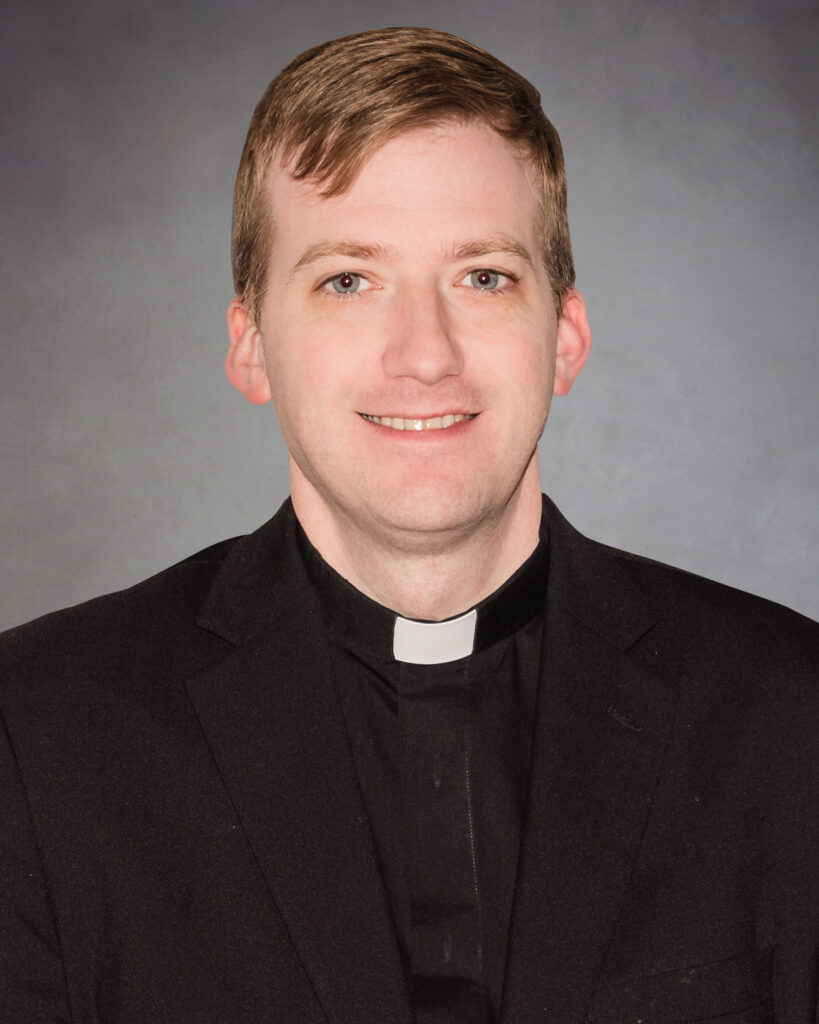
Father Adam Cichoski is director of vocations for the Diocese of Camden and rector of the Cathedral of the Immaculate Conception in Camden.





 at the bottom and then tap “Add to Home Screen”
