





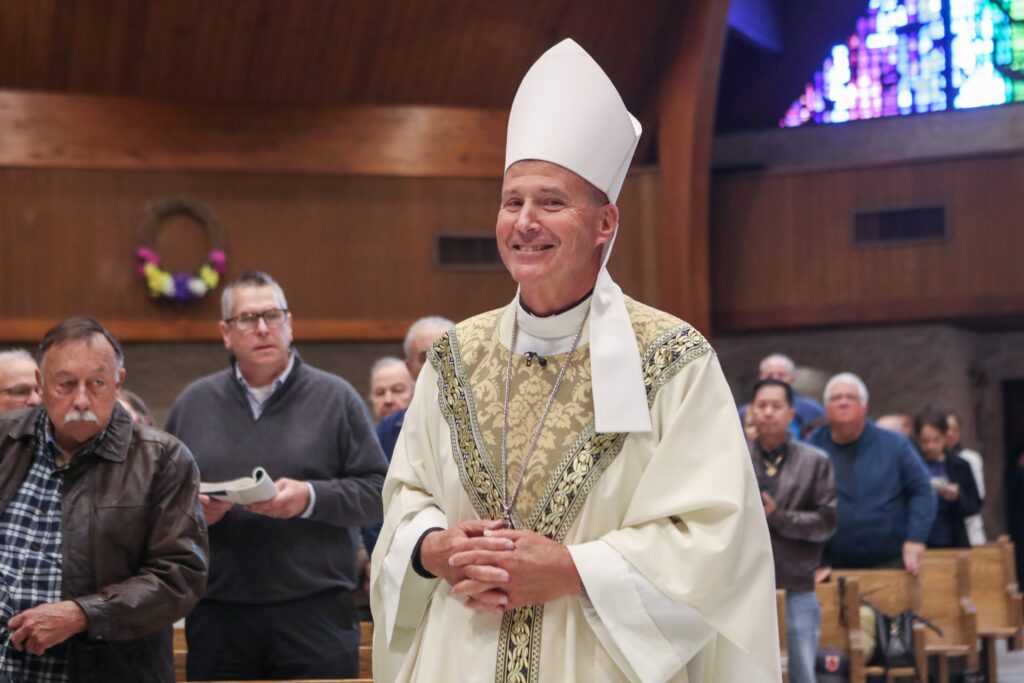
ABSECON – Bishop Joseph Coffey, an auxiliary bishop for the Archdiocese for the Military Services, recently visited South Jersey to discuss not only the role chaplains play in accompanying servicemembers, but the importance of caring for the country’s veterans.
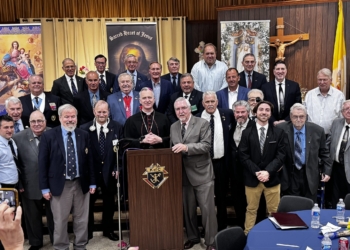
His visit to Saint Elizabeth Ann Seton Parish, sponsored by the Knights of Columbus Villa Marie Council 6342, began with the celebration of Mass. Afterward, he gave a talk on how the Catholic faith ministers to those in the military.
Born in Minnesota and raised in Philadelphia, Bishop Coffey is the fifth of nine children, and uncle to 46 nieces and nephews as well as 42 great-nieces and great-nephews.
He graduated from LaSalle University in 1982, which included a year studying abroad at the Sorbonne in Paris. His early career consisted of teaching grade school, working as a ski instructor in Switzerland, and spending five years in the automobile industry in Germany and Belgium.
In 1996, he was ordained to the priesthood. Having previously entered the U.S. Navy Chaplain Candidate Program and with the Navy Reserves, he went on to become an active-duty Navy chaplain. Among the places he served: Japan, Afghanistan, California, Missouri and aboard the USS Ronald Reagan.
Bishop Coffey delivered an almost hour-long address, blending humor, personal reflection and stories from decades of service. He described his current role, which includes pastoral visits to more than 150 Veterans Affairs hospitals across the country.
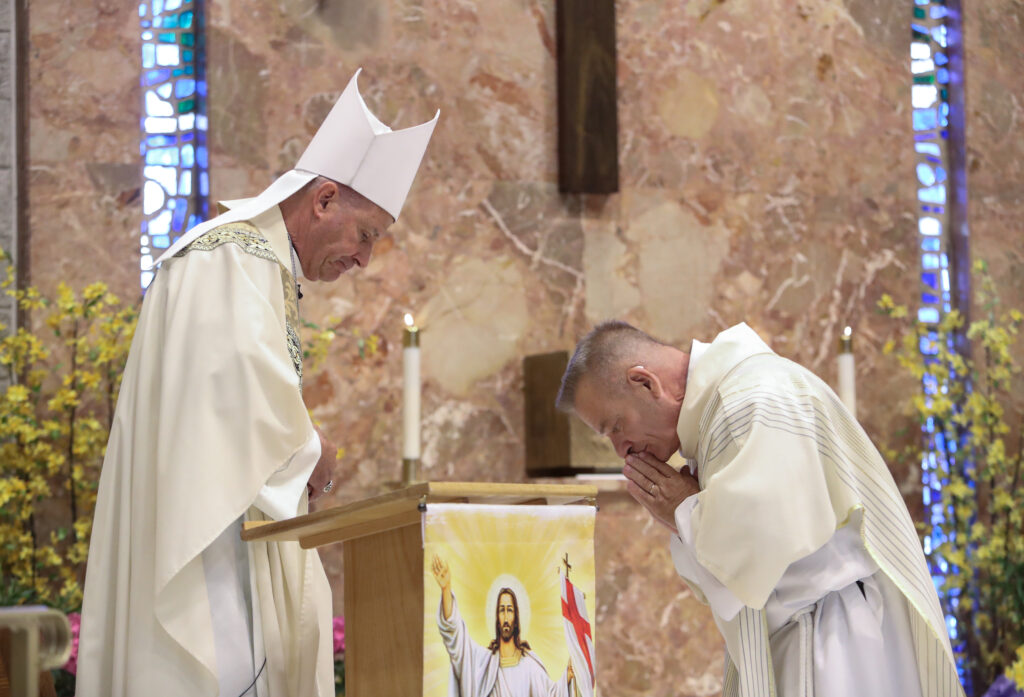
The bishop reflected on his journey to where he is today, beginning with his childhood summers in Margate. After college and several jobs abroad, he returned home in search of direction.
He recalled a moment of clarity that occurred during a retreat, explaining how he knelt down in front of a statue depicting Jesus kneeling in the Garden of Gethsemane.
“That’s when it hit me: ‘I think I’m supposed to become a priest,’” he recalled. “I’ll never forget that moment.”
His eventual decision to enter the seminary led to a parallel calling in military service. The bishop went on to describe deployments with Marines, including time in Okinawa and Afghanistan, where he faced the realities of combat.
“I worried about two things: getting shot by a sniper and the IEDs [Improvised Explosive Devices],” he said.
He later recounted the unexpected moment he was asked to become a bishop.
“It was the most bizarre thing I’d ever heard my whole life,” he said of the call from the Vatican. “I just couldn’t believe it … I remember sitting down and thinking to myself, ‘Did that just happen?’”
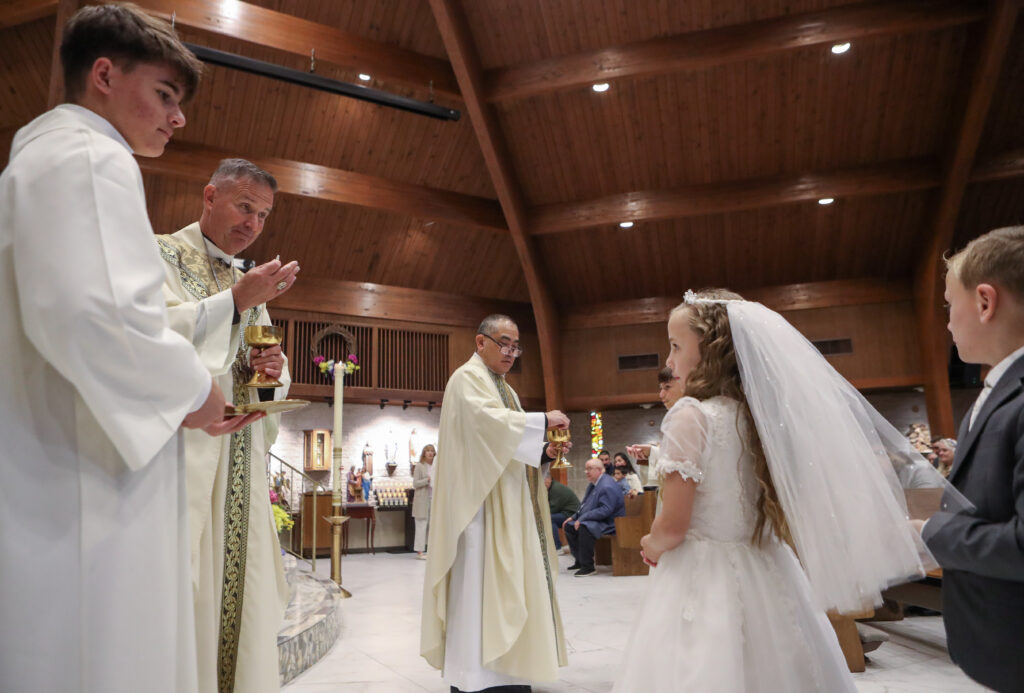
In a question-and-answer session that followed, Bishop Coffey addressed topics ranging from his work with veterans to the issue of suicide among former servicemembers.
“We’re losing about 17 a day nationally to suicide. That’s really tragic,” he said. “I can honestly say the VA is doing everything they can think of.”
Larry Lamaine, of the parish’s Knights of Columbus council, is a friend of the bishop and was instrumental in helping to organize his visit May 3. He explained that the Knights of Columbus are deeply invested in helping veterans. One way is through initiatives such as “Flags for Forgotten Soldiers,” a display where hundreds of flags are placed in honor of veterans who have died by suicide.
He also described how local members regularly volunteer at nearby veterans facilities, including the VA hospital in Vineland, providing resources such as computers and in-person support.
“The veterans can use all the help they can [get],” he said, adding that Bishop Coffey’s role as an auxiliary bishop places him in regular contact with VA hospitals nationwide.
John DeMarco, a past grand knight and the Villa Marie Council’s veterans chairman, said the “Flags for Forgotten Soldiers” is not only about remembrance, but also prevention.
Through the program, which began in 2017, volunteers install more than 600 American flags at schools, businesses and community sites, leaving them in place for about a month to raise awareness and connect veterans with available resources.
“Every one of these flags that we put in the ground represents a veteran who has taken his own life,” he said.
DeMarco mentioned the Veterans Crisis Line as a critical tool, noting that those who reach out often receive immediate help. He said 86.56% of those who call for help make a different choice, a statistic Veterans Affairs shared with him. As a Vietnam veteran, DeMarco said his own experience shaped his commitment to helping others.
“I’ve seen the effects of what wars have done to certain people,” he said. “While I’m OK, I want to try to help them.” He added that the goal is to honor those lost, support their families and ensure that struggling veterans know help is available.
“We want the families to know that their loved one is not forgotten… and we want to make sure that everybody’s aware that there’s help there for them,” he said.
Coffey echoed that message. He emphasized the role chaplains play in that support system.
“Our priests are part of that team … they’re leading support groups for the veterans at the various hospitals,” he said.






 at the bottom and then tap “Add to Home Screen”
