





WARSAW, Poland (OSV News) — Eighty years ago two of the world’s deadliest weapons were dropped on Hiroshima and Nagasaki, Japan, bringing near-total destruction.
But a Catholic monastery built in Nagasaki by a future martyr and saint survived and to this day brings a Franciscan message of peace to a place that could easily plunge into hatred and despair.
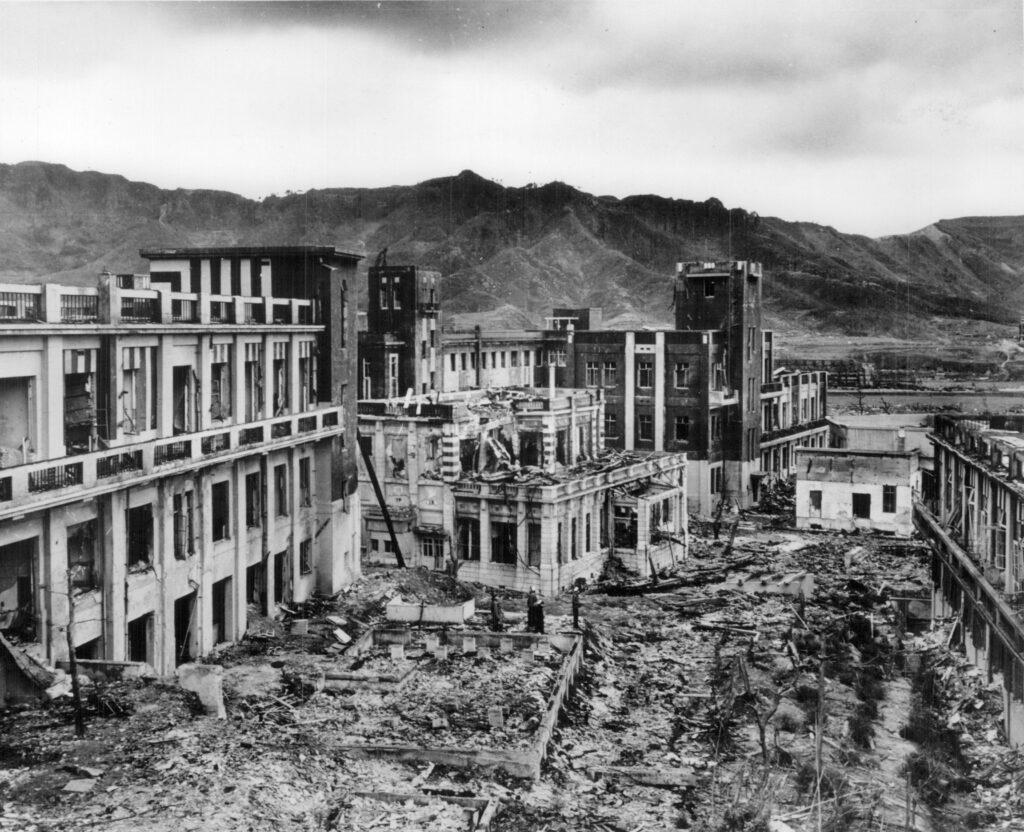
The Aug. 6, 1945, explosion in the first Japanese city, Hiroshima, instantly killed around 80,000. The number of victims doubled in the following days and months due to injuries and radiation-related diseases. On Aug. 9, 1945, the city of Nagasaki was the next one to be devastated by an atomic bomb.
An estimated 40,000 to 75,000 people were killed instantly by the blast, heat and radiation from the bomb. Thousands died following the blast after the drop of the “Fat Man,” the name of the bomb that followed Hiroshima’s destroyer, “Little Boy.”
The blast wiped out approximately 8,500 of the 12,000 parishioners at the Immaculate Conception Cathedral in Nagasaki — Japan’s most Catholic city.
Yet, on a hillside in the Hongouchi district, one building remained standing: a Franciscan friary established by Polish Franciscan Father Maximilian Kolbe.
In 1930, Father Kolbe, already well known for founding the international Militia Immaculata, or MI movement, in Italy and for founding Niepokalanów — the largest friary and Catholic media center in Poland with its several MI magazines, first Polish Catholic daily newspaper and first Catholic radio station — felt called to expand his mission eastward. He arrived in Japan with little more than his Franciscan habit and a dream to spread Marian devotion.
“Kolbe came to Japan in 1930 with almost nothing, not even knowing the language,” American consecrated virgin Annamaria Mix, who works at the Militia Immaculata Archive in Niepokalanów and is a Knight of the Immaculate herself, told OSV News.
“But his determination was incredible. When the bishop of Nagasaki allowed him to stay on the condition that he would teach in the seminary, Kolbe accepted without hesitation.”
The location of the friary was chosen not for convenience but for conviction. “Why build on a steep, difficult hill? Because it was cheap,” explained Mix.
“The decision was guided by Franciscan poverty. He purchased the land — about 4 hectares (9.8 acres) on the slopes of Mount Hikosan — for 6,800 yen ($46). It required enormous effort to level the ground for construction,” said the American archivist, who is originally from Waterbury, Connecticut.
The friary, named “Mugensai no Sono” (“The Garden of the Immaculate”), became the headquarters for Father Kolbe’s missionary work in East Asia. A Japanese-language version of the MI magazine called “Seibo no Kishi” — Japanese for “Knight of the Immaculata,” was launched, and a small religious community formed around the publishing apostolate.
While surveying the hillside in Hongouchi, Father Kolbe discovered a natural spring and envisioned transforming the spot into a replica of the Lourdes grotto of the French shrine.
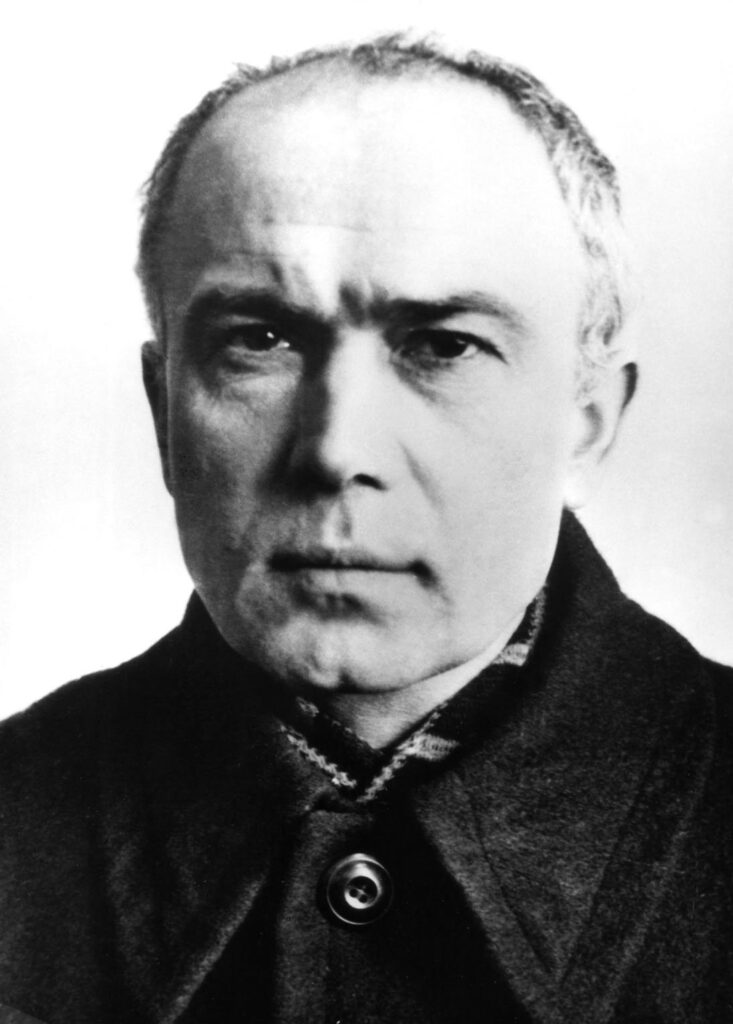
“Deeply devoted to Our Lady of Lourdes,” Mix told OSV News, Father Kolbe “saw the grotto as both a spiritual anchor and a symbol of healing. Years earlier, he himself had experienced healing through Lourdes water while studying in Rome.”
The grotto in Nagasaki, completed by the friars under his direction, remains intact to this day — a quiet place of prayer and Marian devotion, echoing St. Kolbe’s lifelong mission.
When the Second World War broke out in 1939, Father Kolbe — who at the time and due to deteriorating health had to go back to his native Poland from Japan for three years — continued to support his Japanese brothers.
Writing to a friend in Nagasaki after his return to Poland, he confessed, “I will never forget Japan; indeed, I always pray for it.”
For the future saint, the Japanese mission was more than a chapter in his apostolic journey — it carried a spiritual bond. He believed deeply in the openness of the Japanese people to divine truth, calling them “a people who really search for authentic religion.” That belief drove him to continue praying and sacrificing for their salvation, even from afar.
In a letter dated Sept. 10, 1940, written from Niepokalanów, Father Kolbe expressed joy at the resilience of the Japanese mission despite the challenges of wartime communication. He praised the friars’ work in hospitals, publishing and outreach to surrounding communities, emphasizing the importance of prayer and inner spiritual life.
“Prayer is the most powerful means to bring peace to souls, to give them happiness, because it brings them closer to God’s love. … Only through prayer can one reach the ideal of St. Augustine: ‘Love of God, even to the contempt of self.'”
He encouraged the Japanese friars to remain faithful to their mission despite wartime hardships, placing all in the hands of Mary: “May the Immaculata bless you always and everywhere in all things,” he said in his 1940 letter, emphasizing that the true renewal of the world begins in every heart through spiritual means.
“Prayer renews the world,” he wrote. “Prayer is the indispensable condition for the rebirth and life of every soul.”
Recently, stories have circulated suggesting the future saint had a prophetic vision of the atomic bomb and therefore chose the friary location to avoid destruction.
Mix, the American archivist, clarifies: “That story is not true. He did not foresee the bombing. The friary survived not because of a vision, but through Providence — and, we believe, because of the community’s 1942 consecration to St. Joseph.”
Indeed, while much of Nagasaki was obliterated, Mugensai no Sono — now called Seibo no Kishi — remained intact due to its location behind a mountain ridge that shielded it from the blast’s direct impact.
Today, the friary continues to function, housing friars, publishing the Japanese version of the “Knight of the Immaculata” magazine and welcoming pilgrims. A small museum commemorates St. Kolbe’s work in Japan.
St. Kolbe was captured by the German occupiers of Poland on Feb. 17, 1941 — first placed in the murderous Pawiak Gestapo prison — and transferred to Auschwitz on May 28 that same year. At the end of July, he offered to be locked in a death hunger cell to take the place of a man who had a family. The priest died on Aug. 14, 1941.
His “legacy is alive,” said Mix. “The mission Kolbe started didn’t end with his death in Auschwitz. It continues through the Militia Immaculatae, through the friars in Nagasaki, and through the faithful who visit the site.”
St. John Paul II canonized St. Kolbe on Oct. 10, 1982.
St. Kolbe’s missionary work influenced numerous individuals in Japan. Among them were Brother Zenon Zebrowski, who remained in Japan and engaged in charitable work for decades; Dr. Takashi Nagai, a Catholic convert and physician, who became a symbol of hope and peace after the bombing; and Satoko Kitahara,a laywoman influenced by MI spirituality and known for her work with the poor. Both Nagai’s and Kitahara’s sainthood causes are underway.
According to Mix, “Kolbe helped ignite what one might call ‘atomic bombs of love’ in these individuals, whose actions radiated spiritual strength long after the war.”
The friary’s museum in Nagasaki preserves artifacts from Father Kolbe’s mission and tells the story of a man who believed the world could be changed not by power or violence, but by love. His work in Nagasaki reveals a story of the patient labor of a missionary who built peace through prayer and work.
“Kolbe’s MI spirituality still speaks to us,” said Mix. “He reminds us that true peace begins not in politics or weapons, but in hearts surrendered to God through the Immaculata.”
Katarzyna Szalajko writes for OSV News from Warsaw, Poland.





 at the bottom and then tap “Add to Home Screen”
