




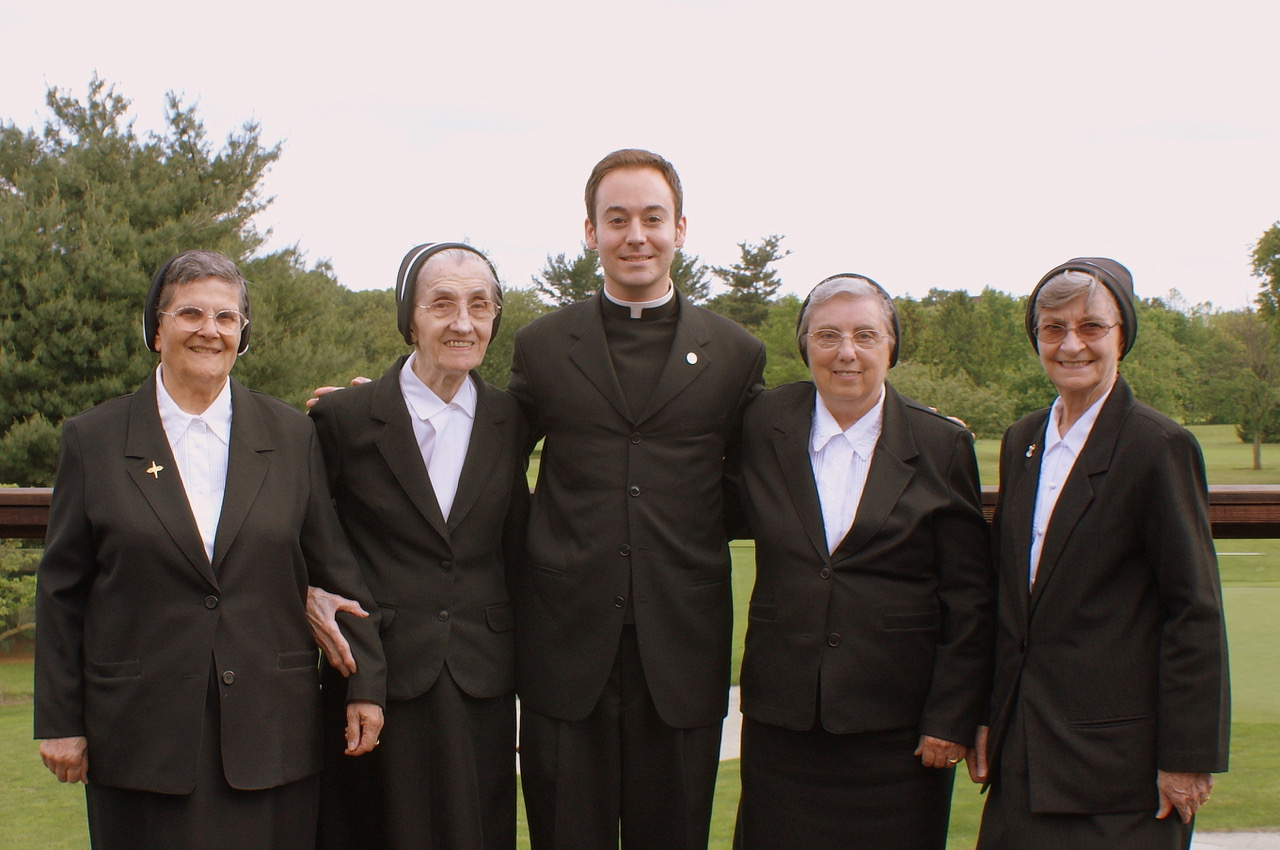
As the 350th anniversary year of the birth of their founder, Saint Lucy Filippini, continues to unfold, stories capturing the legacy of the Religious Teachers Filippini from the community’s beginnings in Montefiascone, Italy, to its arrival in the United States and around the world, abound.
Among the most venerable tales is that of the appearance of the Filippini “pioneers” – five dauntless sisters, who, records show, stepped off the steamship Saint Anne in New York in 1910 to begin their apostolate in Italian neighborhoods in New Jersey.
Over the decades, the number of sisters grew exponentially. Articles preserved by the Catholic News Archive of the Catholic Research Resources Alliance note that by 1960, when the Filippini sisters marked their 50th jubilee in the United States, the order here had grown to more than 600 sisters in 70 convents located in six archdioceses and 13 dioceses.
One of those dioceses was Camden, where the Filippini sisters settled in 100 years ago, bringing with them their formidable spiritual and educational gifts as well as their exceptional ability for community outreach.
“It is just powerful to think of the sisters, how much they love the Church, the priesthood, the Eucharist, teaching children,” said Father John Rossi, pastor of Saint Bridget University Parish, Glassboro, who was taught by the sisters in his youth.
In the beginning
Founded in Italy in 1692 by Saint Lucy Filippini and Cardinal Marcantonio Barbarigo, the community is a religious institute devoted to education. In the 17th century, Saint Lucy’s first mission was teaching Christian doctrine to impoverished Italian girls, accompanied by reading and lessons in domestic arts such as weaving and embroidery, which could help improve their economic circumstances.
Impressed with the success of Saint Lucy and her followers, Pope Clement XI invited them to open schools in Rome in 1707. In centuries to come, his invitation would lead to generations of Filippini sisters operating schools, hospitals and orphanages and engaging in other ministries in Albania, Brazil, Eritrea, India, Italy, Ireland, Switzerland, the United Kingdom and the United States.
Fast-forward to this past May 14 – some 315 years later – when Filippini Sister Ascenza Tizzano, Superior General of the Maestre Pie Filippini in Rome (maestre means teacher) – addressed an audience before Pope Francis and thousands of sisters, clergy, catechists and children from catechetical programs in Italy. Sister Tizzano, whose first mission was in Jersey City’s Holy Rosary School, served as the provincial superior in Villa Walsh, Morristown, until 2019, when she was elected the order’s general superior.
She spoke of Saint Lucy’s abiding desire to spread God’s love to every corner of the earth. Pope Francis said the foundress was successful in in her ability to teach so many because she “herself, never ceased to be a disciple of Jesus the Teacher and to stand before Him at the foot of the Cross.”
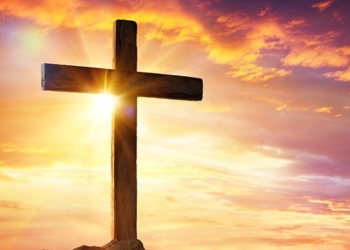
Reflecting on the fact that Saint Lucy very frequently appears in art pointing steadily at the cross, he said, “It will do you good to remember the image of Saint Lucy with the crucifix in her hand: the center belongs not to us, but to Him, and we will be good teachers if we remain disciples, called every day to serve, with joy!”
In our time
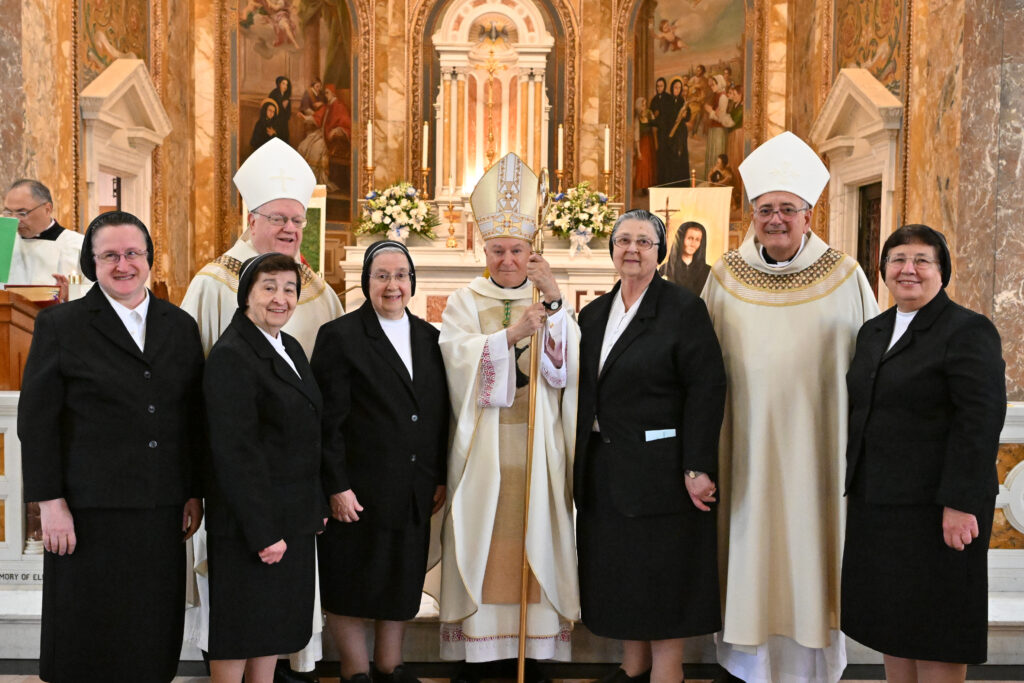
In the Diocese of Camden, faith-filled and inspirational are the first words often used by former students when they share memories of the Religious Teachers Filippini.
Other words soon follow: caring, accomplished, intelligent, disciplined, insightful and talented. And, they said, love in its best dimensions: Love of children, families, the Church, and above all, love of the Eucharist.
“My first introduction to the Religious Teachers Filippini occurred when I transferred in junior year to Saint Joseph High School in Hammonton,” said Amy Cordasco, who now works in campus ministry at Paul VI High School, Haddonfield. She offered a litany of sisters she recalled fondly, including: Sister Clarice Bucci, Sister Beatrice Ena, Sister Alma Blume, Sister Dorothy Di Cristofaro and Sister Jane Ann Franzese.
“Later in life, when I became a religion teacher and went to work at Paul VI High School, the Filippini sisters also graced those hallways. They were, she said, all “sisters I recall fondly.”
“What strikes me most about these women,” Cordasco said, “was that they were accomplished not just in their own field of study, but in other areas as well.”
She continued, “Sister Clarice not only taught science but wrote an entire high school science curriculum. Sister Mary Ann Grecina was a chemistry teacher and directed in the music department. Sister Theresa Gottuso taught business and religion – and baked an outstanding biscotti.”
“The Diocese, the schools, the parishes were all fortunate to have these talented and faith-filled women serve and witness to them over the last 100 years,” she said.
For Father Rossi, the link to the Filippini sisters goes back to his first days of life. “When I was a newborn baby, my mom and dad brought me to Saint Peter Church in Merchantville, where Sister Mary De Angelis announced, ‘Oh, your baby is special. I’m going to pray for him.’”
“That was my first contact [with the sisters]. I went to Saint Peter School, and she was my principal. When she was transferred, we kept in touch,” he said. “When I was ordained a priest [in 2009], I celebrated my first Mass at Saint Peter’s and she was there.”
He would later celebrate her funeral Mass in 2013, as she had earlier requested.
Of the Filippini sisters, he said, “I look at them as spiritual moms. They want the best for the children. In their view, they are educating the whole person, and they always find a way to tie God into it.”



 at the bottom and then tap “Add to Home Screen”
