



By Paul I. Martin
There has been significant growth in the rate in which people are choosing cremation over the burying of bodies of the deceased. There are many reasons given for this, with two of the more commonly cited as cremation being a less expensive alternative and having less environmental impact. With this national increase in interest, I’d like to take some time to share the Catholic Church’s teachings for cremation.
Through Vatican II in the mid-1960s and the “Instruction Ad resurgendum cum Christo” (“To Rise with Christ”) in 2016, the Catholic Church has worked to provide clarification regarding cremation and burial teachings. Yet, cremation is still misunderstood by many Catholics. Let’s discuss those teachings in an effort to clear up some misconceptions.
In the “Order of Christian Funerals,” the Appendix on Cremation states, “Although cremation is now permitted by the Church, it does not enjoy the same value as burial of the body. The Church clearly prefers and urges that the body of the deceased be present for the funeral rites, since the presence of the human body better expresses the values which the Church affirms in those rites.”
We should recall that through the sacraments, our bodies become a sacred vessel for the Eucharist and the Holy Spirit. As such, our bodies should be treated with respect and reverence, even after death. Everything else about what’s acceptable with cremation is an extension of this understanding.
The cremated remains of a body, commonly referred to as cremains, should be treated with the same respect given to the human body from which they come. Just as we wouldn’t separate parts of a deceased’s body during burial or entombment, we shouldn’t separate cremains. This means that “spreading ashes” or sharing cremains between family members doesn’t show the level of reverence for our deceased called for by our Catholic faith. This includes taking cremains to create a keepsake such as a vial on a necklace, or pressing cremations into a trinket stone.
Some may ask, “But how about keeping cremains at home because I’m not ready to part with them?” This presents challenges for the deceased and grieving loved ones. Receiving a physical reminder of our loved one’s passing and our loss each time we see the cremains can make it difficult to progress through the stages of grief.
Cremains not laid to rest in a cemetery also present the family with the risk of loss or damage. Let’s say that while cleaning out the home you inherit from your parents, you and your sister find your great aunt’s remains in the attic. Neither of you personally knew the relative, and both wonder what you should now do with her cremains. What would have happened to her if you didn’t find her and the house was sold? What would you want done with your own cremains if that decision was now someone else’s?
Oftentimes when cremation is chosen, Catholics do not practice the three ritual rights of a Christian funeral – the vigil, the funeral liturgy (Mass) and the committal service. These rites continue the journey of our Catholic faith and follow Scripture in accordance with our belief in eternal life and the Resurrection. Through the Paschal Mystery, our faith teaches us that our deceased will be united with God.
The vigil focuses on the life of the deceased and is traditionally held the eve before the Mass. It’s when the deceased is eulogized and prayers asking for God’s strength and guidance are said for the family of the deceased.
The Mass is the liturgical celebration where the deceased is presented to God and focuses on Christ’s Life, Death and Resurrection. Many symbols are used, including anointing the body with baptismal water, burning incense and placing a white funeral pall on the casket. Just as in the vigil,family, friends and the parish community are encouraged to actively participate in the Mass. It’s the Church’s preference that the deceased’s body be present at the Mass, so in situations where cremation is planned, the cremation should take place after the Mass and before the final committal.
The committal is where the community gathers at the cemetery to say their final farewell and place the deceased’s remains in an eternal resting place, awaiting the promise of the Resurrection. It’s presided over by a priest or deacon, and consists of the blessing of the gravesite, Scripture readings, intercessions, prayers of committal and a song of farewell. It is the climax of a Catholic funeral and where a new beginning starts as our Catholic cemetery embraces the responsibility to care for the remains of the departed for all eternity.
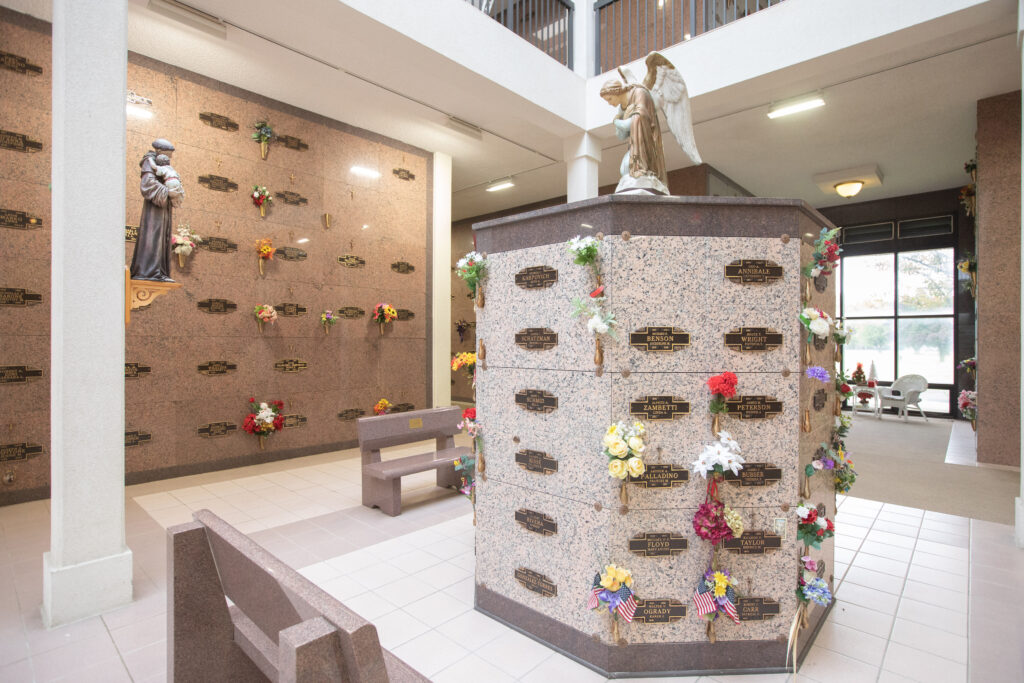
Keeping cremains intact demonstrates reverence for the deceased and belief in the Resurrection. A Catholic cemetery offers the deceased – whether cremated or full body – the love and honor of being placed in a sacred space, where your family, friends and the Catholic community can visit and pray for the deceased. Remember, it’s never too late to place cremated remains in sacred grounds.
Paul I. Martin is the director of South Jersey Catholic Cemeteries for the Diocese of Camden.




 at the bottom and then tap “Add to Home Screen”
