





Entertainment in the Middle Ages was provided by wandering troupes of actors that performed in the cathedral square. One type of spectacle was the morality play, and “Everyman,” dating from 15th century in England, is a prime example.
One day, Everyman was on his way home when he was suddenly confronted by Death.
“You must come with me,” Death said.
“What? There must be some mistake,” Everyman replied. “I’ve never felt better in my life!”
“Oh, there’s no mistake, I assure you,” Death said.
Still shocked by the news, Everyman asked Death if he could at least bring a friend.
Smiling, Death consented, adding, “If you can find one! You have one hour.”
Everyman quickly paid a visit to three of his best friends. With a mixture of regret and horror, all three declined without hesitating. Those supposed good friends of his were Riches, Fame and Pleasure.
Sad and afraid, Everyman trod back to his rendezvous with Death. Fortunately, on the way, he met a friend he had not seen in a long time, and he asked this friend to accompany him. “Sure,” he said. And that friend’s name was Good Deeds.
So, at least, Everyman had the consolation that he would not have to make the journey alone into the great beyond.
In the Middle Ages, life expectancy was not much more than 40. Death was very common. People were not shocked by it. Today, however, many prefer to cosmeticize death or just plain ignore it altogether. At a viewing, it is often heard, “Doesn’t he look great?” or, “She never looked better!” Also, the term “life celebration” is gaining popularity and frequently used for the service for the deceased instead of the traditional term “funeral.” These are attempts at softening the inevitable confrontation we all eventually have to face with death.
Ash Wednesday is different. Death is brought to the forefront of our minds by the ashes. Talk about wearing your religion on your sleeve. Why today, we wear it on our heads! And proudly so, as the minister of ashes says, “Remember you are dust and to dust you shall return.”
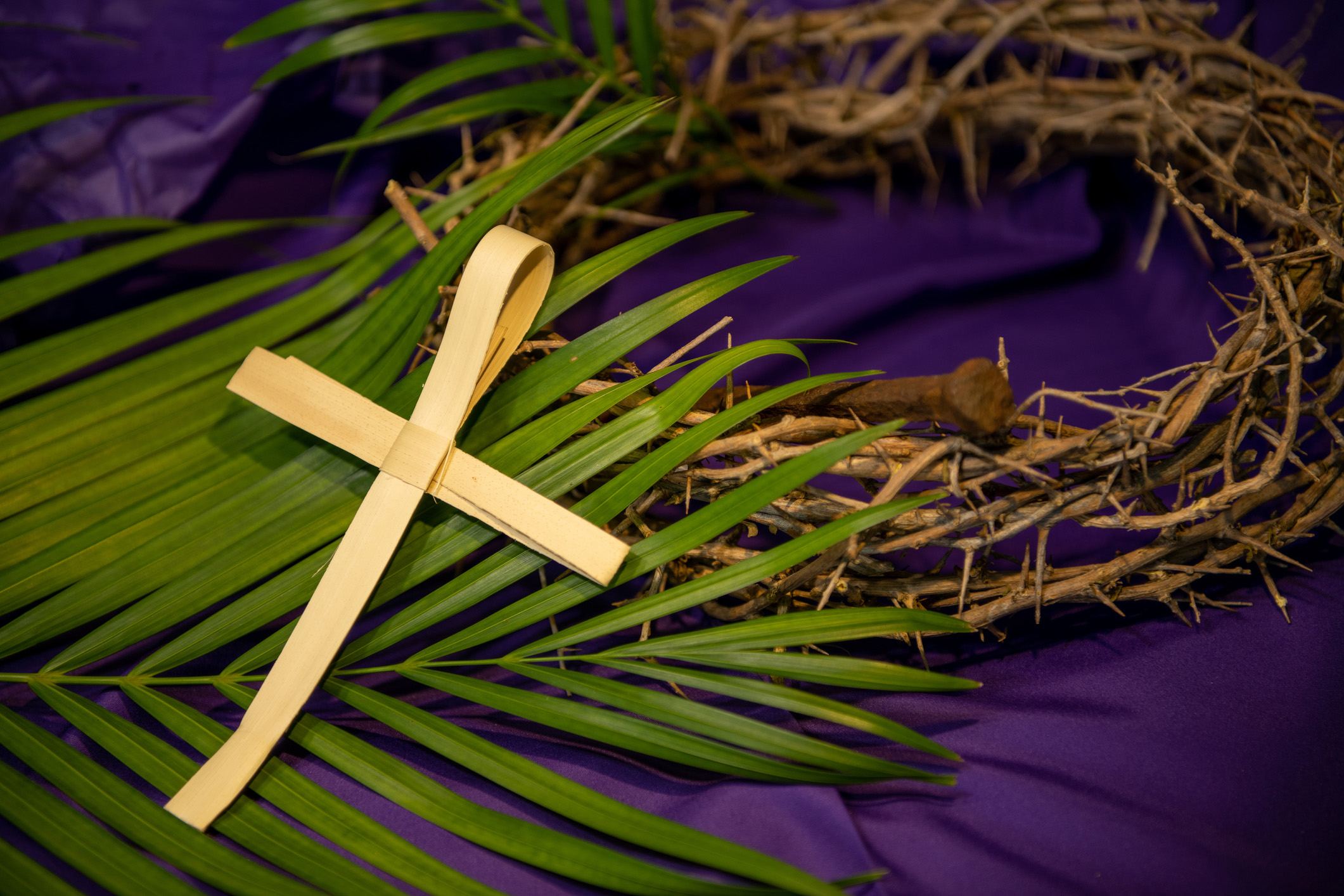
However, there is nothing frightful or morbid about this focus on death. For the faithful Christian, it is simply a prelude or the gateway to heaven and the glory of our resurrection at the end of time. Everything we do on Ash Wednesday and throughout the 40 days of Lent is meant to prepare us for a glorious future.
In the first reading for the Mass of Ash Wednesday, the prophet Joel cries out: “Blow the trumpet in Zion! Proclaim a fast. Call an assembly. Gather the people. Notify the congregation.” That public gathering of people fits in very well with the public wearing of ashes. In addition to being a symbol of human mortality, ashes are also a sign of fasting and other works of penance. And that ashen cross shouts out to all who see it: “I can be better than I am now! And I want to be better, too.”
On the other hand, Jesus emphasizes the private nature of the Lenten observance. In the Gospel according to Matthew for Ash Wednesday, Jesus tells his disciples to fast inconspicuously, to pray privately and to give alms secretly.
Lent, then, begins with a very public pronouncement of our Catholic faith on Ash Wednesday with the application of ashes on the forehead. But the ashen cross will quickly wear off, be wiped off or washed off before the day is done. That leaves us with 40 days of private observance of the spiritual practices of prayer, fasting and charitable works. That’s the hard part.
Like Everyman, we come face to face with our mortality on Ash Wednesday, the first day of Lent. However, we remember at the same time that Lent means springtime, the promise of new life. So with our faith and our good works to accompany us on our journey into eternity, we already have good reason to rejoice in the hope of our resurrection.
Father Edward Kolla is a retired priest of the Diocese.






 at the bottom and then tap “Add to Home Screen”
