



One might correctly guess that the largest numbers of Argentines in the United States are in Florida, California and New York, where there are large multi-ethnic Hispanic enclaves. But right behind them are the thousands in New Jersey, where they actually make up a larger percentage of the state population than in some of the others above them on the list. Yerba mate tea, Malbec wine, dulce de leche, and chimichurri sauces are increasingly becoming staples on many area menus, not to mention the proliferation of Argentine “asado” steakhouses, renowned for their barbequed meats.
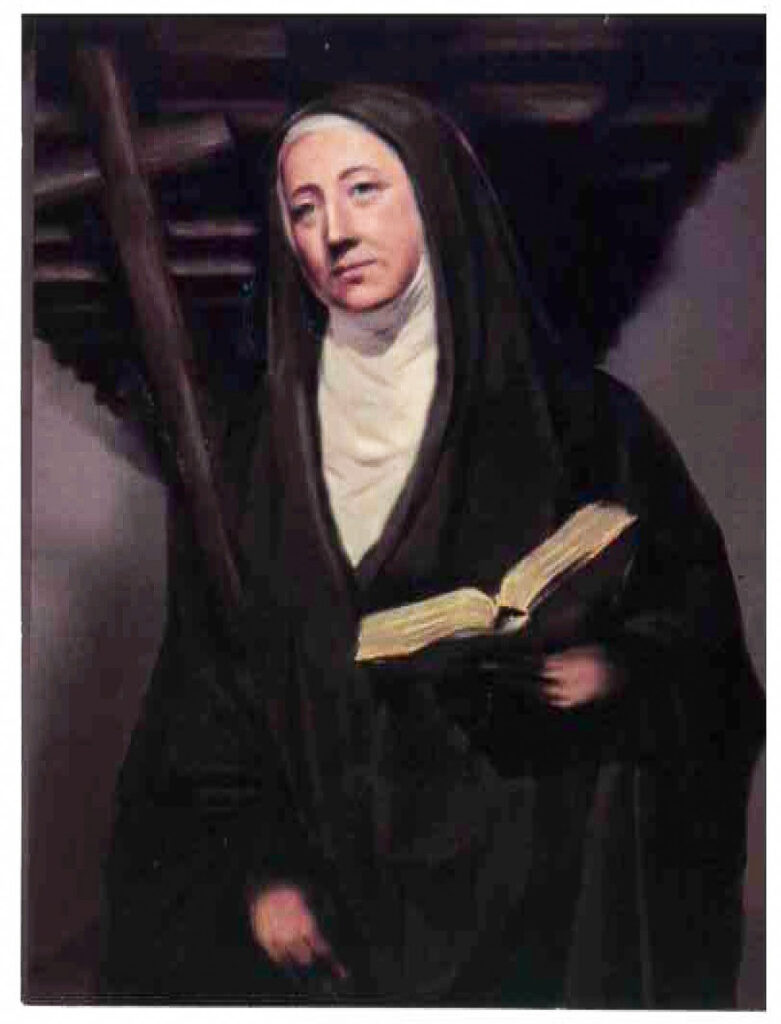
My wife, Valeria, and mother-in-law were both born there before immigrating back to their family’s ancestral homeland in Europe, and so my daughter holds Argentine citizenship, along with the USA, Italy and Spain. Obviously, I have heard countless stories about life there, including about my wife’s primary school in Córdoba Capital, named Instituto Sor Maria Antonia de Paz y Figueroa, since the patroness was related to the city’s founder.
Our extended family was then delighted, along with millions of others with ties to the largest Spanish-speaking country in the world, when on Feb. 11, their fellow compatriot, Pope Francis, canonized this remarkable nun, making her the first Argentine woman saint.
Sister Maria Antonia was born in 1730 in what was then officially called by the Spanish Empire “The Viceroyalty of the Rio de la Plata,” which would later trade in the Spanish word for silver (plata), for the Latin one (Argentum). Descended from a wealthy and influential family, she would come to found the Daughters of the Divine Savior. Though the primary school was named for her well before her official canonization, she is also known throughout Argentina by her more colloquial title: “Mama Antula,” in the indigenous Quichua language.
This spiritual motherhood developed because of a sort of ironic twist of history. Her own life was marked in a profound way by the spiritual exercises of Saint Ignatius of Loyola. When the politics of the 18th century Age of Exploration led the Spaniards to expel the Jesuits from all their territories (and then eventually to the papal suppression of the entire order from 1773-1814), Mama Antula continued their work, offering Ignatian retreats and catechetical work with the poor.
It is claimed that she walked 2,500 miles throughout the country, sharing the Good News and helping form the national spirit of the intensely Catholic country, before establishing a more stable center of spiritual activity in Buenos Aires. In this way, she is a sort of female counterpoint to the legendary Cura Brochero, the traveling gaucho priest of a century later, who is still revered throughout Argentina.
It is claimed that in the centuries since her death in 1799, the intercession of Mama Antula has led to various healings that are inexplicable by modern science, including that of Claudio Perusini, a stroke victim, who presented the offertory gifts to the pope at the canonization Mass while in perfect health.
Popes Paul VI, John Paul II and Benedict XVI collectively canonized more than 600 men and women, arguing in effect that the modern world needed models demonstrating the universal call to holiness and the fact that God’s presence is powerfully diffused throughout the entire People of God (as a contrast, the entire 15th century had only 17 canonizations, with a number of popes of the period not creating any new saints at all).
Pope Francis has continued his immediate predecessor’s trend, “raising to the altars” 68 causes, though one – the martyrs of Otranto – comprised 813 individuals in one Southern Italian village who were slaughtered together for refusing to apostatize.
The important pastoral work of Mama Antula can speak to the contemporary era beyond her Argentine context. Countless women around the world serve as professional ministers in a wide variety of roles in the Catholic Church today: spiritual directors, pastoral counselors, liturgical musicians, catechists, religious educators, financial officers, chancellors and more. This is not to mention the leadership roles they play in academic theology, religious journalism (like in this newspaper) and even the Vatican itself.
Thankfully, the days when women “serving the Church” was interpreted to mean ironing priest’s vestments or arranging flowers for funeral Masses has long since passed. Though in closer study of women like the newly christened Saint Maria Antonia, we come to see that such an attitude, albeit widespread, was ultimately nothing more than an ahistorical anomaly and a warped caricature, though with obvious disastrous real-world consequences.
We are lucky to have a new saint, who is then in many ways still continuing to teach all of us valuable lessons.
An alumnus of Camden Catholic High School, Cherry Hill, Michael M. Canaris, Ph.D., teaches at Loyola University, Chicago.




 at the bottom and then tap “Add to Home Screen”
