



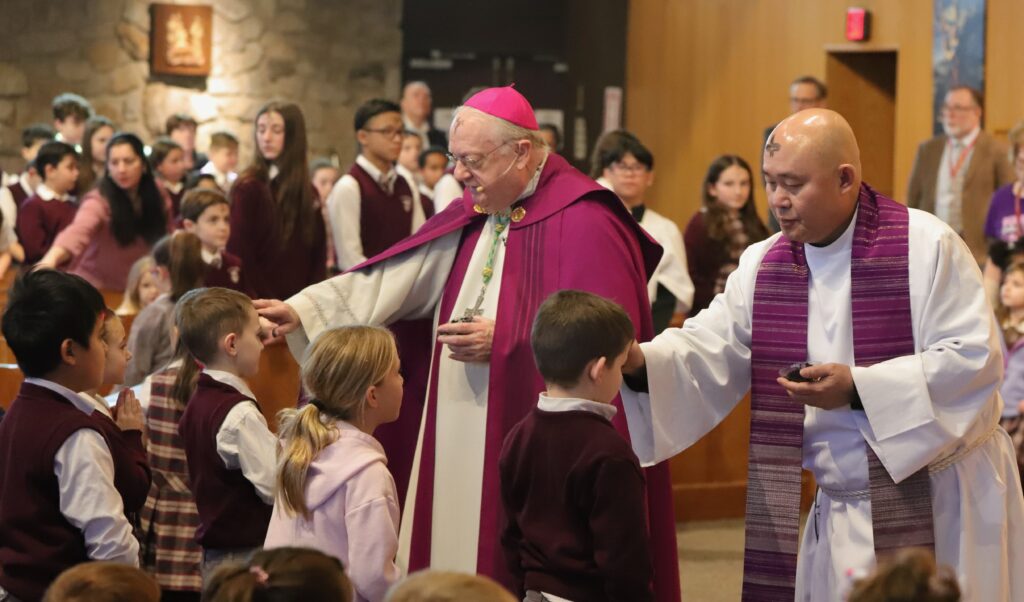
Kneeling before an image of Our Lady of Perpetual Help, 21-year-old Joseph Pham, on the verge of attempting to escape Vietnam with his family, prayed.
“Mary, like you protected Jesus before in your womb, I ask you, please pray to Jesus and protect our family tonight,” he pleaded.
“I know that there are three possibilities. The first one is to be caught by the Vietnamese Coast Guard. The second is that the whole family will drown in the ocean and die. The third possibility is what we hope for: to be rescued by some country, a free country, and be able to worship and have freedom. And hopefully, I will have a chance to become a priest.”
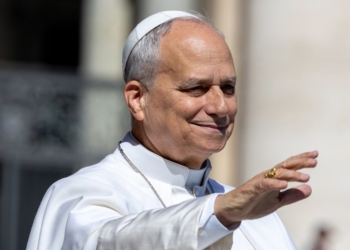
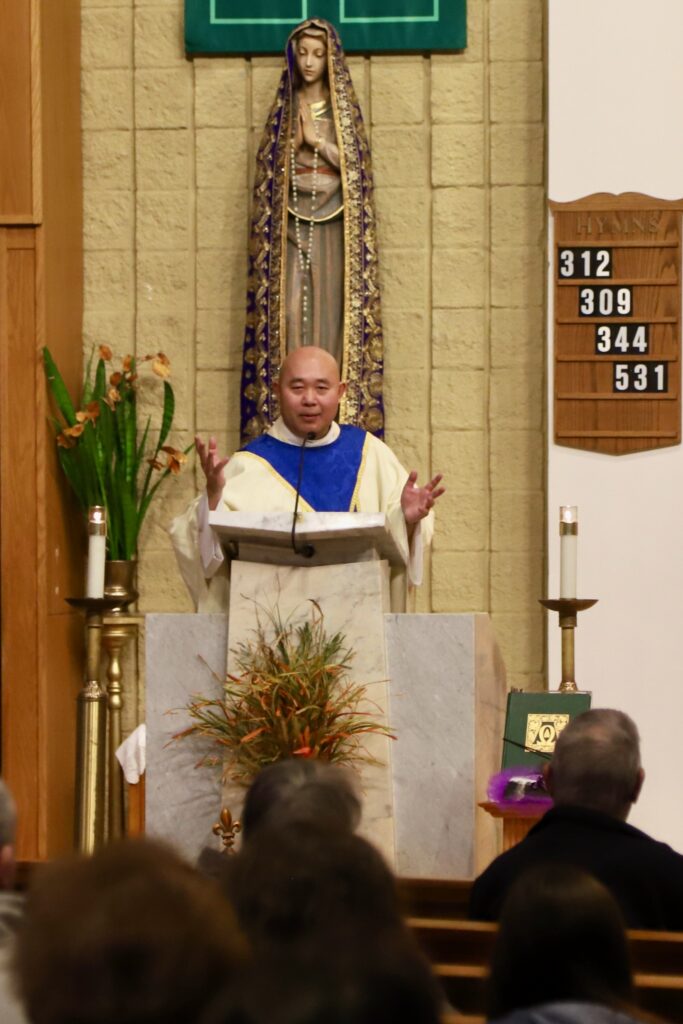
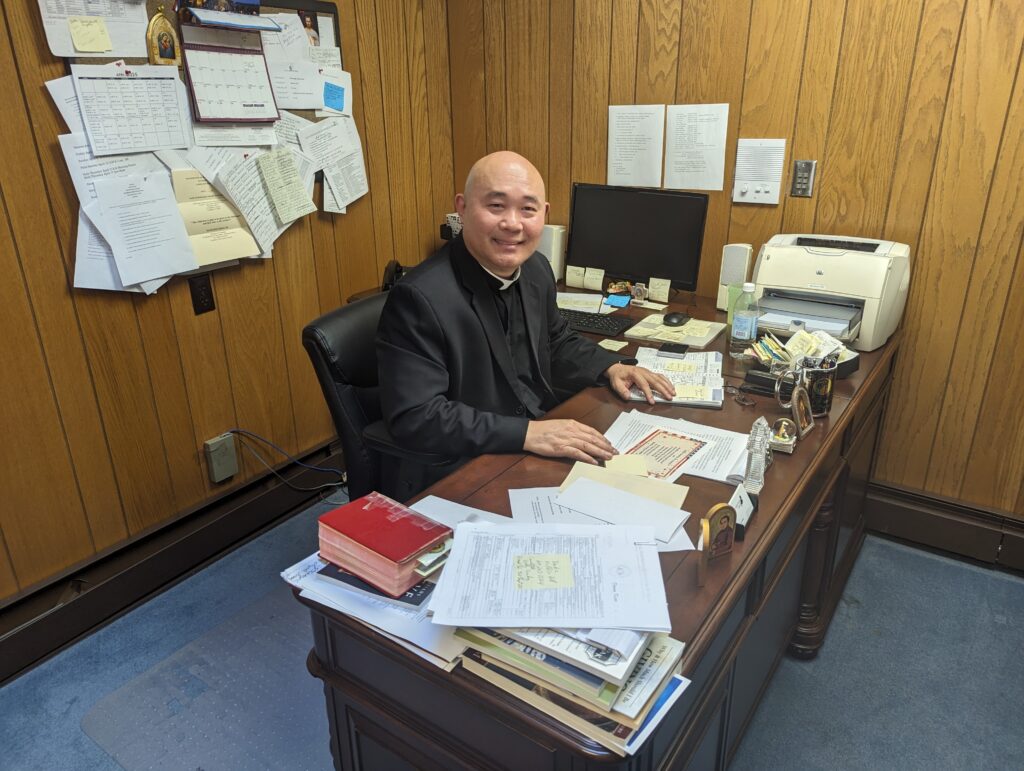
Father Joseph Pham, pastor of Infant Jesus Parish in Woodbury Heights, recently reflected on this time living under a communist regime, his escape and his trust and hope in God along the way.
Freedom of religion
He was a young child in what was then South Vietnam – a time in the 1960s and early 1970s when Catholics were free to openly practice their faith.
“When I was in third or fourth grade, I went to church every day. After school, I took my bike and attended Mass by myself. I just loved to go there. I had an idea in the back of my head that I wanted to be a priest,” Father Pham says.
Even though his parents took the family to Mass on Sundays, he would go daily without his parents knowing.
“I just wanted to be drawn to the Eucharist,” he says. “When I went home, my mom would ask where I had been. I don’t know why I didn’t say that I was at Mass. One day, the pastor gave me Communion and said, ‘I want to see you after Mass.’ Father asked if my parents told me to go to Mass every day. I said no. He must have told my parents, because my mom one day said, ‘Oh, you go to church. Why didn’t you tell us? Your father and I thought that after school, you were just playing somewhere.’”
The young boy continued going to Mass every day until the spring of 1975. When he was 11, Saigon fell to the North Vietnamese, unifying the north and south under a harsh communist government.
“In my parish, [the communists] put our priest in jail, and the church was closed,” Father Pham says. “But the usher had a key. He opened it on Sundays for people to gather in the church to say prayers, a rosary, sing hymns then go home.”
For the next 10 years, Father Pham and his family worshipped in this way, but since there was no priest, there was no Eucharist.
Hungry for God
“As a young boy, I was dying for the sacraments, especially the Eucharist,” he says. “I prayed and hoped someday something would change.”
Shortly after the communists took over, Father Pham’s father was arrested and sent to a concentration camp for two years because he had been working with the Americans in South Vietnam.
When Father Pham was 14 entering his first year of high school, the principal asked to see him. The principal pulled out his application and pointed to a column titled “religion.”
“I put Catholic. I remember that he said, ‘If you believe in God like that, you keep it in here,’” Father Pham says, pointing to his head. “‘If you put it here [on paper], you’re not allowed to continue studying in high school and graduate. The government has no time for the Catholic Church.’”
“What do you do?” he says, adding that he talked about it with his parents. “If I take it out, I’m like Saint Peter denying Jesus, and I want to be a priest. But if I don’t take it out, I cannot finish high school. If I cannot continue, how can I be a priest?”
Father Pham struggled with his choice for a week until he was called back into the principal’s office. He was given a new application with the religion column left blank.
“I said, ‘no,’” Father Pham recalls telling the principal. “I said, ‘I don’t want to change anything. What’s written is written.’”
He was told to pack his book bag and go home. “They kept me out of school. I knew I could not become a priest without a high school diploma. But every night, I gave up a prayer: ‘God, please help me to become a priest.’ I never gave up hope.”
In mid-June 1986, Father Pham’s parents’ concern for the faith of their 11 children reached a peak. With no sacraments available, his father decided that it was worth the risk to leave Vietnam. Since Father Pham was the oldest boy, 21, he would help organize the escape.
The first thing they did was buy a boat, a river boat to avoid government suspicion. Their boat, 8 feet by 30 feet, was a tight fit for 13 people and dangerously small for the ocean. After modifying the boat the best they could for ocean worthiness, the family was ready to go, taking nothing but the clothes they wore, and some food and water.
Before setting out, the family went to church to pray. It was at this point that Father Pham went before the image of Our Lady of Perpetual Help. “I surrendered to God my whole family. Then I went home, and that night we risked it – getting out on the river and away.”
Stormy seas
After several hours on the Mekong River, they were out in the open waters of the ocean. The first day was calm. The second day began much the same, but they began to run out of water to drink and then, in the late afternoon, the sky became dark. A storm was coming. Winds became stronger and the ocean swells grew.
The storm intensified that night and into the third day, with waves lifting the boat “like you’re on the top of the mountain.”
“My whole family was crying. My mom, my dad, my brothers and sisters crying and saying a prayer to Mary, to Saint Joseph, but I did not join them,” he says. “I remember they were in the center of the boat, and I was in the back by myself. I don’t know why, but at that moment, I was so peaceful.”
His mother asked why he wasn’t praying with them. “I just told them that I did my prayer already, and that I had surrendered,” Father Pham says. “I don’t pray now because I trust God, and I said that I accept whatever happens.”
Later on the third day, the storm subsided. They had survived the storm but were out of drinking water. Then they saw an offshore platform and headed there.
“Hope opened up with that platform,” Father Pham says. “We knew that we had gotten out of the country. It’s like the whole sky being opened in my mind. I said, ‘Oh my God, thank you. We’ve been rescued. We survived.’”
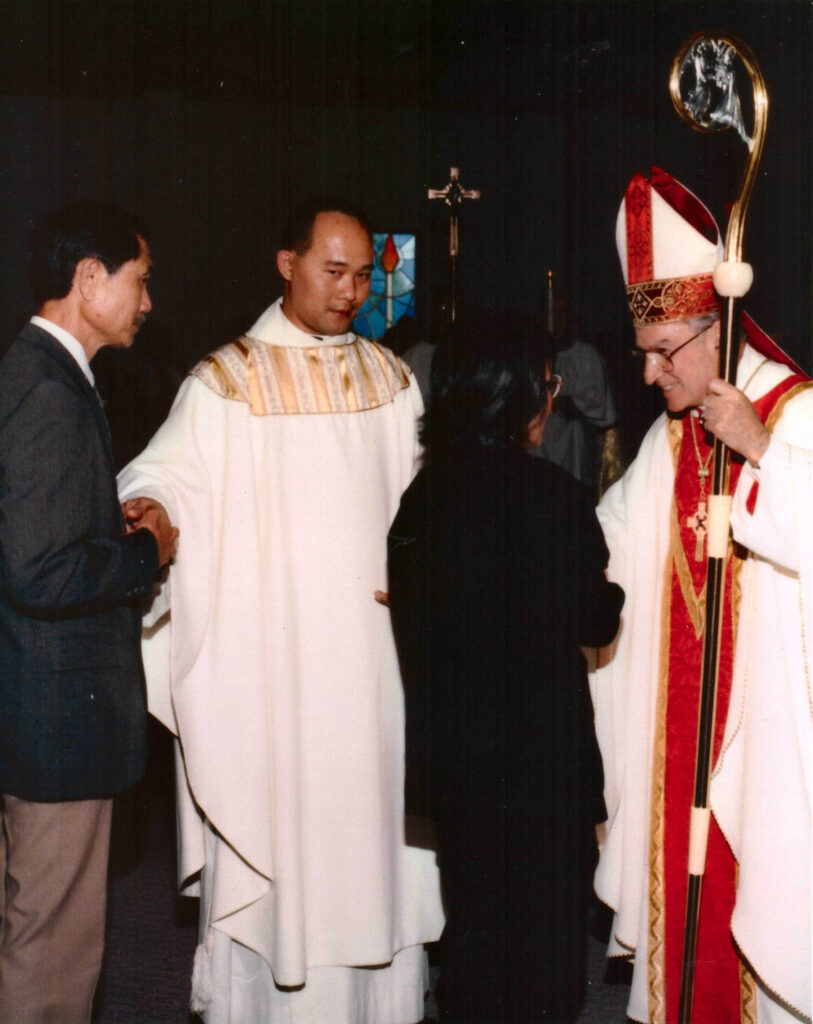
The next morning, they were taken on a small boat to a refugee camp in Malaysia, which had a church with a Catholic priest. For the first time in more than 10 years, Father Pham and his family were able to participate in a full Mass.
“Every single word the priest said kind of permeated, getting into my whole body. The ‘Lord be with you’; ‘Let us pray;’ ‘God our Father,’ everything. Then, the consecration. … Powerful,” he says after a pause, tears in his eyes.
“I was experiencing the joy of it,” he says. “I could feel the Eucharist melting in my mouth and going into my body. The first time being at Mass, to hear the words of God, to hear the priest say Mass and go up for Communion after 10 years? Oh my God, I desired that. It’s like when you’re so hungry or thirsty. Then you see food, the bread and water, and you just grab it. You drink every drop. I could feel the Eucharist, fulfillment, satisfaction, joy, happiness.”
His prayer after Communion was simple: “Thank you, Jesus. Thank you, Jesus. That’s all I can say. Thank you. Thank you.”
“I always say that, constantly say that,” he says.
The family stayed at the refugee camp in Malaysia for three months before being transferred to another refugee camp in the Philippines for another six months. After nine months in refugee camps, the family was able to contact relatives in Philadelphia who had escaped Vietnam five years before. These relatives became the family’s sponsor in America.
On to the priesthood
Father Pham still had the desire to become a priest, but, without a high school diploma, he was afraid it would be impossible. “I kept praying: ‘I want to be a priest. God help me.’”
He earned his GED, and went to community college and Temple University before entering the seminary.
However, there was still one more lesson on the horizon. On the morning of May 16, 1998, the day he was to receive Holy Orders to the Priesthood, he found himself sitting in his 1989 Toyota, stuck in traffic on the Walt Whitman Bridge.
“I lived in Philly, and it only takes about 30 minutes to get to Our Lady of Lourdes Church in Glassboro,” he says. “The ordination was at 10:30 a.m. and I left at 7 a.m. so there’s plenty of time. But now I was stuck in the middle of the bridge. And then it’s 8, nothing moved. And 8:30, nothing moved. Then 9:30. It’s 10 a.m. and I was still up there. I just said, ‘God, Jesus, why did you do it to me? If you don’t want me, why wait until now?’”
At 10:15 a.m., he heard car horns. He looked up and traffic was clear. He had been so deep in prayer that he hadn’t noticed.
He made it to the church just as the Mass was beginning.
“I say, ‘Jesus. I’m sorry. I’m truly sorry,’” Father Pham recalls. “‘But tell me, what did you try to tell me?’ Immediately bombarding my mind was, ‘Joe Pham, don’t you understand? Don’t you know nothing’s impossible for me?’
“God taught me a lesson: that nothing is impossible for God. All you have to do is surrender. Trust, as well.”



 at the bottom and then tap “Add to Home Screen”
