




This new series will try to investigate aspects and dimensions of the new pope – from his biography to his fascination with Ignatian and Franciscan spirituality to his views on current hot button issues of the day and Vatican politics. As is probably unsurprising, Francis’ life and personality are infinitely more complex than the popular media presentations of him would lead one to believe.
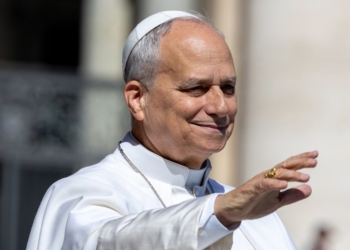
Jorge Bergoglio was born in Buenos Aires on Dec 17, 1936. Although he is unquestionably Latin American, because his parents had Italian roots, he grew up eating pasta and understanding the Piedmontese dialect of their ancestors.
He studied chemistry but, being enveloped within a deeply believing Catholic family, always loved theology. Though pious, his mother had a difficult time with his decision to pursue a religious vocation with the Jesuits, but eventually she warmed up to the idea.
The most significant and luminary figure in terms of the pope’s spiritual development was his grandmother, Rosa Margherita, who had arrived in the humid Argentinian climate years before in a heavy fox fur coat when emigrating from Europe. It was not her vanity that led her to this decision, but rather the fact that all of her family’s savings were secretly sewn into its lining. Years later, Rosa would compose a deeply personal letter to young Jorge when he was in the seminary, which he continues to carry in his breviary to this day.
He claims “It was my grandmother who taught me how to pray. She left a deep spiritual imprint on me and used to tell me stories about the saints.” She also encouraged him to celebrate every Mass “as if it were your first and last.”
He has continued to make clear that the popular piety of humble believers like his grandmother, without degrees in patristics or systematic theology from prestigious centers of learning, has always profoundly impacted his view of the world. He recently told the story of an elderly woman who had expressed confidence and awe in the wideness of God’s mercy during a conversation with him. His intrigue with her appreciation of this mystery was made clear in his off-the-cuff aside made during his Angelus, “I felt like asking her: Tell me, madam, have you studied at the Gregorian [University, one of Rome’s leading schools of theology]?”
Though the pope had four siblings, only he and his younger sister Maria Elena are still alive.
Many people don’t take time to reflect upon the enormity of what being elected to the papacy means. While we all know the political and spiritual mantle that comes with the office, we don’t often note that it demands a severe personal sacrifice as well.
When Jorge accepted his canonical nomination, it had to have crossed his mind in that instant that he possibly may never see his beloved spartan residence or even his own country again, and certainly could not again in his life plan an unassuming and casual meal with his sister in private.
I read a story of one of his oldest friends in Argentina bursting into tears when she heard of the election. Not out of joy, but because she knew her relationship with him would never revert back to what it had been for decades.
Rumor has it that instead of the traditional Latin one-word response, “accepto,” he whispered something along the lines of “I am a sinner, but trusting in the infinite mercy and patience of Our Lord Jesus Christ, I accept in a spirit of penance.”.
Francis’ upbringing, family and friends have played a crucial role in his decision to become a priest, the way he has defined his own ministry and aspirations, and the formation of his distinctive personality in these many decades since.
Michael M. Canaris, Ph.D., of Collingswood, is a Research Associate at Durham University’s Centre for Catholic Studies in Northeast England.




 at the bottom and then tap “Add to Home Screen”