

Click Here to Subscribe

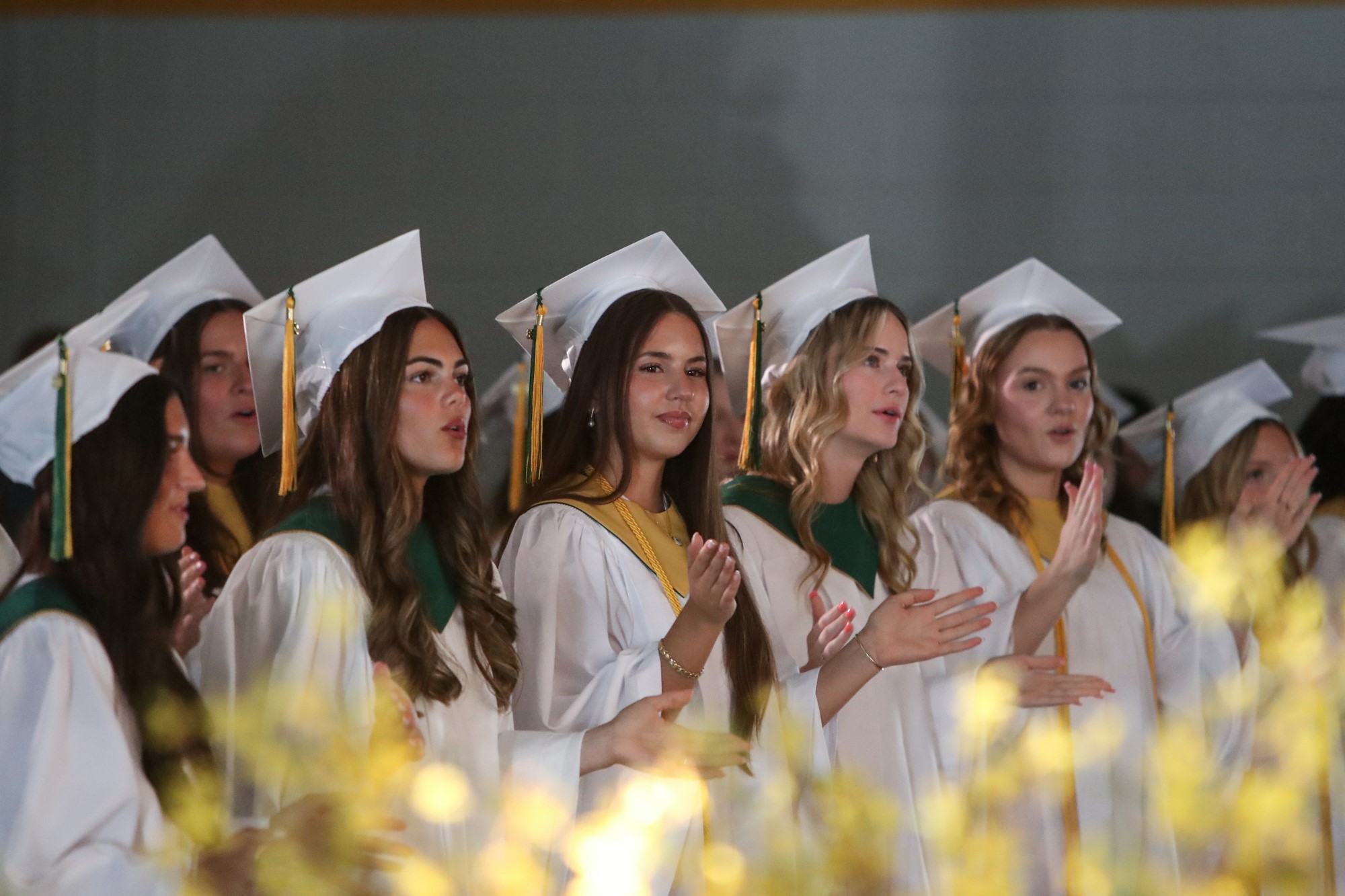
Photo Gallery: OLMA Graduation

Bishop's Schedule

The Bishop’s Schedule, June 2 – 14

by Staff Reports
May 28, 2026
0
ShareTweet

Featured

Lego announces new set designed after Spain’s Sagrada Família basilica

by OSV News
10 hours ago
0
ShareTweet

Webinar on human trafficking set for June 9 ahead of World Cup

by David Karas, Correspondent
7 days ago
0
ShareTweet

Remaining human in the age of AI

by Michael Walsh
2 weeks ago
0
ShareTweet
  • Contact
  • Advertise
  • Subscribe
  • Home
Wednesday, June 10, 2026
Catholic Star Herald
  • News
    • From Bishop Williams
    • Parish Life
    • Diocesan News
    • Sports
    • Columns
      • From Bishop Sullivan
    • Obituaries
    • World/Nation
  • Catholic Schools
  • Español
  • Features
    • Special Supplements
      • Thank You Bishop Sullivan
      • Welcome Bishop Williams
      • Jubilarians
    • Entertainment
      • Movie Reviews
    • Photo Galleries
    • Talking Catholic
    • Latest Videos
    • Health and Wellness
  • Advertise
  • More
    • Classified
    • Subscribe
    • Contact Us
  • News
    • From Bishop Williams
    • Parish Life
    • Diocesan News
    • Sports
    • Columns
      • From Bishop Sullivan
    • Obituaries
    • World/Nation
  • Catholic Schools
  • Español
  • Features
    • Special Supplements
      • Thank You Bishop Sullivan
      • Welcome Bishop Williams
      • Jubilarians
    • Entertainment
      • Movie Reviews
    • Photo Galleries
    • Talking Catholic
    • Latest Videos
    • Health and Wellness
  • Advertise
  • More
    • Classified
    • Subscribe
    • Contact Us
No Result
View All Result
Catholic Star Herald
No Result
View All Result
Home Columns

Artistic interpretations of reality beyond the physical

Michael M. Canaris by Michael M. Canaris
November 27, 2019
in Columns, Growing in Faith, Latest News
Reading Time: 4 mins read
0
0
VIEWS
Share on FacebookShare on Twitter

Salvador Dalí’s most recognizable paintings are probably The Persistence of Memory and its quasi-sequel The Disintegration of the Persistence of Memory. It’s here that we find the melting clocks most associated with his surrealist masterpieces, which he once claimed were inspired by watching camembert cheese begin to ooze when left in the sun.

The implicit critique of our ongoing slavery to the rigidity and regimented timekeeping of our wristwatches and their dominance over our lives has not diminished in our day, but has perhaps simply been transferred to smartphones. His focus on the irrational — or perhaps better “supra-rational” — dimension to life in these paintings argues in a way not completely antithetical to Christianity that the time-bound physical world is not the end of our experience as humans, but rather only a part of something of ultimate value that transcends and stretches our notion of the “real.”

While some have posited that these paintings are inspired by Einstein’s theories of relativity and their scientific explorations into the possible dilation of time, Dalí bristled at this suggestion in many interviews. It is likely more closely tied to a charge to re-interpret our surroundings. Religious texts speak of “kairos,” the sacred or opportune moment for transformation, which is a human interpretive occurrence, not a strictly evidential or physical one.

Think for example of the interpretative assertion which Elizabeth makes in the moment when John the Baptist moves in her womb. She comes to recognize in and through that event the profound statement of faith that the child “leaps for joy” when she encounters the pregnant Mary and the Lord within her. A more skeptical protagonist, or author, could have told us that the same physical event led her to conclusions of an entirely different character: “And how does this happen to me, that the infant in my womb vaulted in revulsion away from that one who would claim to be the King of Israel and instead suffer an ignominious death on a withered tree? And cursed are thou among women, who carry within your womb a folly and stumbling block.” It is in the interpretation of reality and events of great and small import that faith (or doubt) come to be, and around such interpretation that we order our very lives. Elizabeth taught us what it meant to interpret reality beyond the physical and instead to turn with openness and authentic availability toward the genuinely spiritual. Another might not have reacted similarly, but Dalí perhaps echoes such a call in his painting.

Two other details in the first of these paintings can be interpreted to have theological significance. In addition to the melting clocks, there is a solid one on the left covered with ants. This is widely believed to be a commentary on the inescapability of decay. It’s perhaps not entirely dissimilar to what we sometimes find on tombs or other gravesites: the skull and crossbones or skeletons prominently clutching hour-glasses (note that Dalí’s entire landscape is, too, filled with sand).

More hopeful is the tiny round object lying on the distant horizon.  Most art historians believe this to be an egg. Of course, the dialectic between hard and soft which so fascinated Dalí is potentially at play here. But even more so, the egg is almost always a symbolic allusion to life, breaking forth from within the walled “shell” of the tomb. That is the central reason why we use eggs for Easter celebrations, along with the fertility symbols of young bunnies (which no one regularly seems to call idols or throw into rivers).

Saint Paul VI claimed that the primary mission of the church is evangelization, which is blunted and futile if it is not “affecting and, as it were, upsetting, through the power of the Gospel, humanity’s criteria of judgment, determining values, points of interest, lines of thought, sources of inspiration, and models of life, which are in contrast with the Word of God and plan of salvation” (Evangelii Nuntiandi, 19). Dalí’s works continue to challenge their audience to upset and reinterpret our relationship with “normal” reality, even decades after their first appearance.

Originally from Collingswood, Michael M. Canaris, PhD., teaches at Loyola University, Chicago.

Previous Post

Cross Country

Next Post

Pope Francis’ missionary trip to Asia

Related Posts

Pope Leo XIV greets faithful after he attended the midday prayers at the Cathedral of the Holy Cross and St. Eulalia, during his apostolic journey, in Barcelona, Spain, June 9, 2026. (OSV News/Bruna Casas, Reuters)
Latest News

Pope Leo XIV arrives in Barcelona on eve of Gaudí’s 100th death anniversary

June 9, 2026
Deacon Assignments

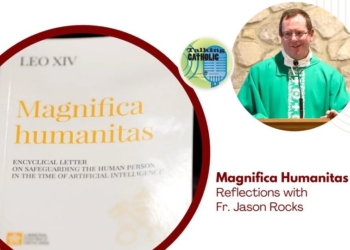
Fr. Jason Rocks on Magnifica Humanitas

June 8, 2026
Diocesan News

Webinar on human trafficking set for June 9 ahead of World Cup

June 8, 2026
Columns

Diocese’s faithful invited to 250 hours of Adoration and mercy

June 2, 2026
Facebook Twitter Instagram LinkedIn Youtube RSS

No Result
View All Result

Latest News

Pope Leo XIV arrives in Barcelona on eve of Gaudí’s 100th death anniversary

Fr. Jason Rocks on Magnifica Humanitas

Webinar on human trafficking set for June 9 ahead of World Cup

CCUSA’s People of Hope Museum

Faith, service, hope on display in Catholic Charities museum

Latest Videos

View Ordination of Nickolas B. Naticchione in Cathedral

The legacy of Pope Francis

Pope Leo’s first Easter message

See livestream of Bishop Williams celebrating annual Chrism Mass

Pope Leo XIV’s first Palm Sunday

Around the Diocese

  • The Diocese of Camden
  • Talking Catholic Podcast
  • Catholic Charities
  • Advertise
  • Catholic Cemeteries
  • VITALity Healthcare Services
  • Housing Services
  • Camden Deacon
  • Camden Priest
  • South Jersey Catholic Schools
  • Man Up South Jersey
  • Catholic Business Network

Additional Resources

  • New Jersey Independent Victim Compensation Fund
  • Quick Guide to Reporting Sexual Abuse
  • List of Credibly Accused Priests and Parish Resources
  • Bishop’s Commission Report on Catholic Schools

Reorganization of the Diocese

  • Chapter 11 Claims filing info
  • Chapter 11 Prime Clerk Filing

© All Rights Reserved | June 10, 2026 | Catholic Star Herald of the Diocese of Camden

En español/Sa Tagalog

Add the Catholic Star Herald to your home screen

For Android users(Chrome) tap the at the top right vertical 3 dots then tap “Add to Home Screen”

For iPhone tap:at the bottom and then tap “Add to Home Screen”

  • This field is for validation purposes and should be left unchanged.

If you need assistance with submitting your subscription, please call Neal Cullen at 856-583-6139, or email Neal.Cullen@camdendiocese.org

No Result
View All Result
  • News
    • From Bishop Williams
    • Parish Life
    • Diocesan News
    • Sports
    • Columns
      • From Bishop Sullivan
    • Obituaries
    • World/Nation
  • Catholic Schools
  • Español
  • Features
    • Special Supplements
      • Thank You Bishop Sullivan
      • Welcome Bishop Williams
      • Jubilarians
    • Entertainment
      • Movie Reviews
    • Photo Galleries
    • Talking Catholic
    • Latest Videos
    • Health and Wellness
  • Advertise
  • More
    • Classified
    • Subscribe
    • Contact Us

© All Rights Reserved | June 10, 2026 | Catholic Star Herald of the Diocese of Camden