




Although there have been some warm days recently in the Midwest where I am, and on the East Coast where I still keep a close eye on the weather reports, it is nothing compared to broiling Roman summers, where the cobblestones and terra cotta seem to hold in the 100-degree heat like an enormous pizza oven. For this reason, many Romans clear out or remain hunkered down behind shuttered windows for almost the entire month, so in the future (when Americans are allowed to visit once again) if you can stand it and stay hydrated, it’s a good time to see many of those indoor treasures that remain open, without long lines.
The intensity of the weather makes one particular Roman tradition seem all the more miraculous. The universal church celebrates the Dedication of the Basilica of Santa Maria Maggiore on Aug. 5. But many (especially those born after 1969) do not realize that this coincides with the veneration of Mary under the separate, seemingly ill-timed feast of Our Lady of the Snows, which would seem to make more sense in the global North in February.
Saint Maria Maggiore is still sometimes referred to as the Liberiana, because the basilica was built by Pope Liberius in the years immediately following the Council of Ephesus, the Turkish church gathering which had defended the use of the term theotokos to refer to the Virgin. This phrase is usually translated into English as “Mother of God,” but it literally means something closer to “God-bearer.” The basilica was the largest church dedicated to Mary in the wake of the official promulgation of this deeply Christological statement. Supposedly, its ceiling was centuries later decorated with gold from Columbus’s expeditions, which in our day is obviously being discussed a bit more frequently.
But a thousand years before that, during the time of Pope Liberius, the legend says two childless Roman patricians decided to donate their wealth to sponsor the building of a monument to Mary. She appeared to them in a dream telling them a miraculous snow would mark the spot that she would prefer. On the sweltering morning of Aug. 5, the Esquiline Hill was somehow covered with snow, and so they were able to envision their commemoration’s perimeter as it would one day stand. (There is some beautiful relief art on the doors of the basilica that show Pope Liberius marking the perimeter in knee-deep billows of freshly-fallen snow). To mark the occasion, even if historically dubious, the Romans still drop white rose petals from the ceiling during the “Gloria” of the Mass on the feast. Oftentimes, there is a celebration in the piazza out front with “foam suds” imitating snowflakes fluttering against the darkened summer sky.
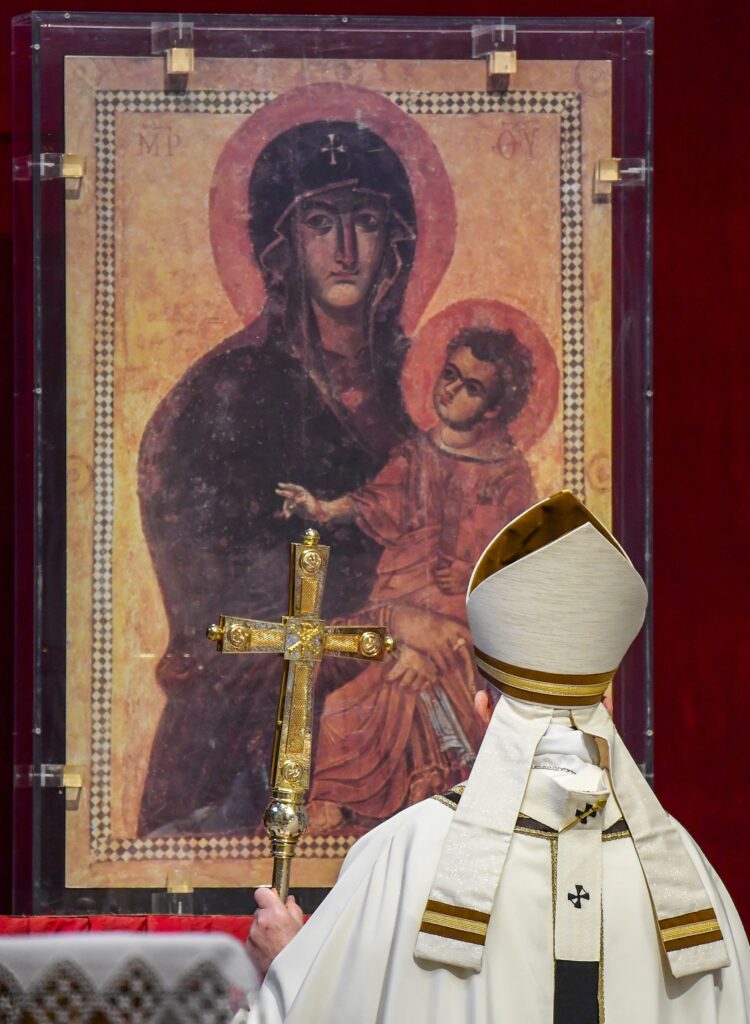
This year the pope made a surprise visit to the church on Aug. 5 to venerate the image of Maria, Salus Populi Romani, the “Protectress of the Roman People.” This painting, supposedly (but very likely not historically) painted by Saint Luke has long been dedicated to the health and well-being of the Roman people, and the pope holds a special devotion to it in his adopted home, where he will soon have been in office longer than his immediate predecessor. People may recognize the image from Pope Francis’ powerful Urbi et Orbi blessing where it accompanied the San Marcello crucifix during the rain-soaked prayer for the victims of the coronavirus in the Piazza San Pietro.
It is a loss for me not to be able to spend time in Rome this summer, as has been my privilege every year for the last decade. But I am looking forward to returning as soon as I am able, perhaps as early as the holiday season, if it is at all feasible. When I do, I will remember the Star Herald and Camden Diocese in prayer at these precious sites, as is my constant custom. But for now, the closest I’ll come to those blessed “summer snows” is likely some imported gelato along the shores of Lake Michigan.
Originally from Collingswood, Michael M. Canaris, Ph.D., teaches at Loyola University, Chicago.




 at the bottom and then tap “Add to Home Screen”
