



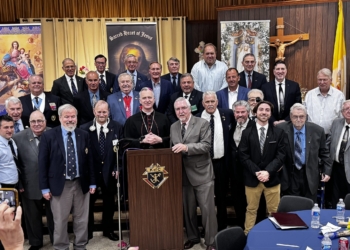





Bishop Eustace sophomores Trey Martin, left, and Landon Mack share a laugh June 15 during the Carpenter Cup Classic baseball tournament at FDR Park in Philadelphia.
Most of the time, it’s hardly noticeable.
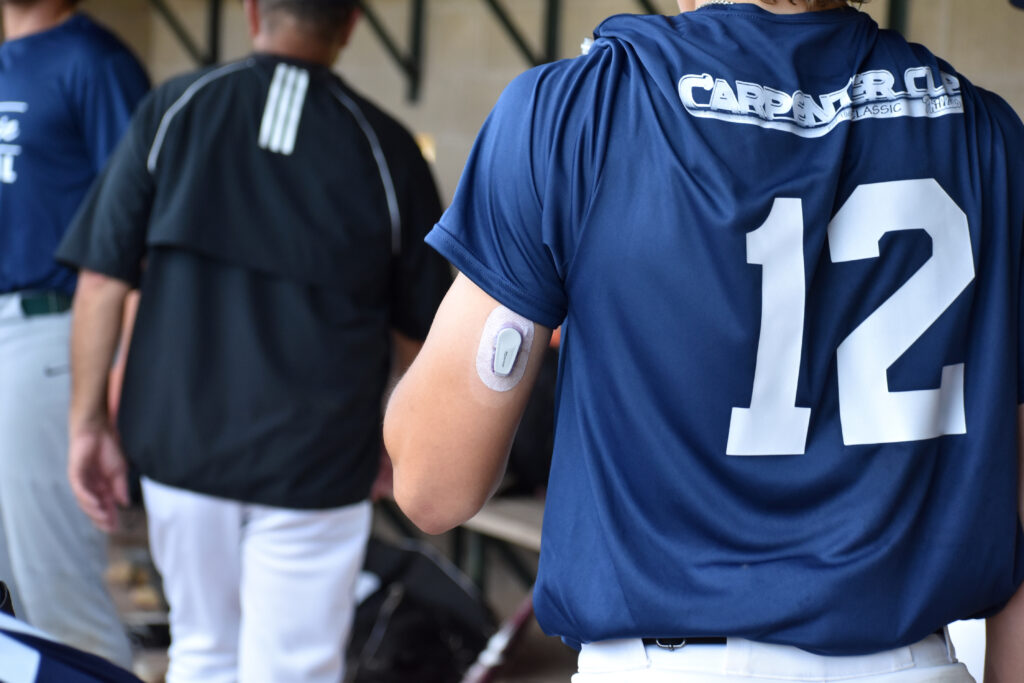
But if you look hard enough, the Dexcom G6 transmitter on the back of Landon Mack’s left arm reveals itself when he reaches out to catch a ball or extends his arm for a high-five. Mack treats it like it’s no big deal, but that little piece of plastic can be a lifesaver.
Mack, who just finished his sophomore year at Bishop Eustace Preparatory School, has Type 1 diabetes. But the hard-throwing precision pitcher doesn’t let it stop him from playing the game he loves.
“When I was 3, my parents noticed I was drinking a lot of water and was getting skinny,” Mack recalled. “We went to the doctor and they sent me to the hospital, and I was diagnosed. I manage it, and with the technology now, it takes care of itself.”
That’s where the Continuous Glucose Monitoring system comes into play. Type 1 diabetes is an autoimmune disease that occurs when the body’s own immune system mistakenly destroys insulin-producing cells in the pancreas. Mack has a small sensor under his skin that detects glucose levels, and the transmitter sends readings wirelessly to his mobile phone every five minutes. His parents also get notifications on their phones. Mack started wearing a sensor about two years ago and has worn this particular brand about eight months.
“Technology nowadays is amazing,” Mack said.
There’s also a pretty good backup plan about 60 feet away at all times on the baseball diamond. Bishop Eustace’s catcher is Trey Martin, who is also a sophomore and one of Mack’s best childhood buddies. They’ve played baseball together since they were 8, so Martin is the first to notice if something is off with Mack on the pitching mound, although that’s not very often.
“There have been some times when his CGM pops off and his parents are worried, or maybe [Bishop Eustace Coach Sam] Tropiano is worried,” Martin said. “I’ll just point to his CGM and let them know he’s fine and he can keep pitching.”
Tropiano, who has been coaching the Crusaders for 32 years and has guided them to more than 700 wins, admits he’s not as calm as the two sophomores claim to be.
“Every once in a while, we see what he has to deal with,” Tropiano said. “He doesn’t make a big deal out of it. He doesn’t panic. For us, it can be a little disconcerting to see the sensor occasionally fly off of him, but he’s just a bulldog out there. [He’s] such a big part of our success this year.”
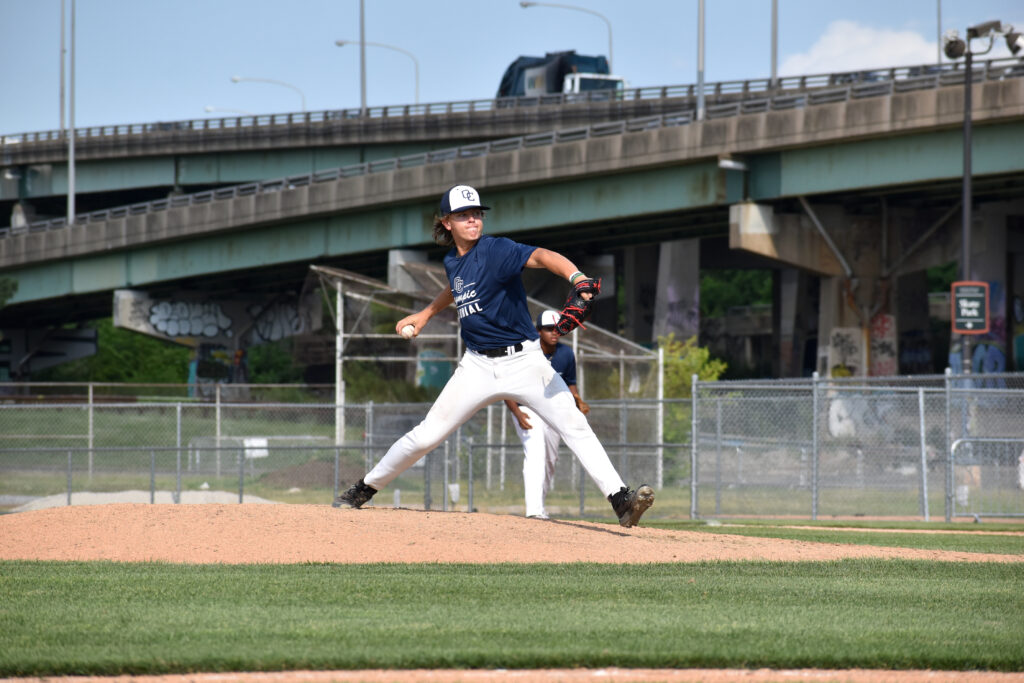
Mack had a stellar year for the Crusaders, throwing 47 and two-thirds innings and allowing just 12 earned runs (1.76 ERA) with 52 strikeouts as Bishop Eustace finished with a 20-8 season.
His shining moment was arguably an 89-pitch complete game effort in a one-walk, one-hit shutout over Seneca (15 strikeouts) on April 21. Or maybe it was a 97-pitch complete game 7-4 win (five strikeouts) over highly-touted Cherokee on May 3. Either way, it earned Mack a spot on the Olympic-Colonial Carpenter Cup team, which competed at FDR Park in South Philadelphia in the annual showcase tournament. Martin, who hit .361 with four home runs and 20 RBIs, was also selected for the team. They were joined by four other Eustace players including Andrew Auerbach, Jack Kirchner, AJ Lauletta and Nick Sulpizio.
“For the last time playing with some of these seniors, it was pretty awesome,” Mack said. “Even though we didn’t win, it was still a great experience. We’ll be back next year.”
Mack plans to keep playing at Bishop Eustace the next two years, followed by Rutgers University, where he committed to play Division 1 collegiate ball.
“I don’t think I can put it into words how awesome he is and how far he’s come, committing to Rutgers,” Martin said. “That’s big time baseball. I’m really happy for him.”
No one’s happier these days than Mack, who reflects fondly on following his dreams while living with diabetes. He sought advice from other athletes who had a tougher road including Philadelphia Phillies general manager Sam Fuld, who was also diagnosed as a Type 1 diabetic at a young age. The two spoke when Fuld was playing ball in the majors nearly a decade ago.
“When I was 7 years old, I had a call with Sam Fuld, and he told me about how to chase my dreams. He told me how he deals with [diabetes] in the big leagues,” Mack said.
Devin Smeltzer was the next to chime in. The Bishop Eustace grad and current Minnesota Twins pitcher battled and defeated a form of cancer called pelvic rhabdomyosarcoma at age 9.
“[Smeltzer] was kind of my mentor, teaching me to not let it bother you or not letting it change who you are … to let other people know you’re no different just because of something you were diagnosed with.”
These days, Mack has learned to start spouting his own words of wisdom. “It’s humbling … to know that you have something that other people don’t deal with,” Mack said. “Yet you don’t let it stop you. You just keep following your dreams.”






 at the bottom and then tap “Add to Home Screen”
