




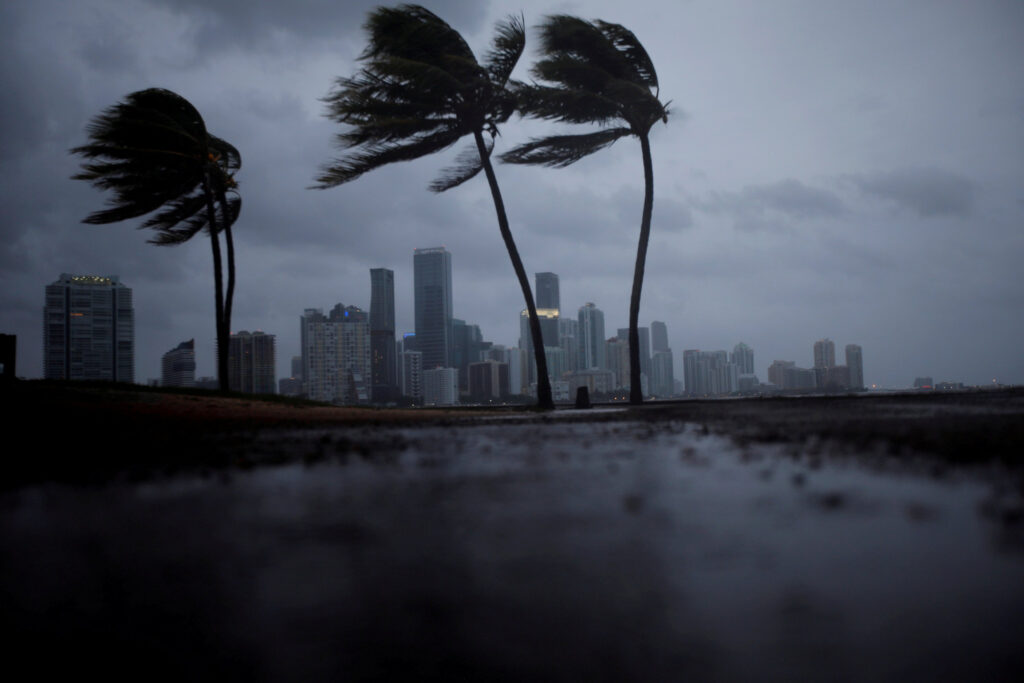
Scientists from throughout the world who are members of the U.N.’s Intergovernmental Panel on Climate Change released a report Aug. 9 on the state of climate change in the world, and it was deadly serious and a bit scary.
Their report, “Climate Change 2021: the Physical Science Basis,” was approved by the 195 member governments that belong to the IPCC. Climate changes that have been unfolding since around 1850 are unprecedented in the history of studying this global phenomenon. Many of the changes set into motion by global warming are caused by human activity and industry.
Just some of the deleterious effects that global warming is causing, according to the scientists who issued the report:
• Climate change is intensifying the water cycle. This brings more intense rainfall and associated flooding, as well as more drought in many regions.
• Climate change is affecting rainfall patterns. In high latitudes, precipitation is likely to increase, while it is projected to decrease over large parts of the subtropics. Changes to monsoon precipitation are expected, which will vary by region.
• Coastal areas will see a continued sea level rise throughout the 21st century, contributing to more frequent and severe coastal flooding in low-lying areas and coastal erosion. Extreme sea level events that previously occurred once in 100 years could happen every year by the end of the century.
• Further warming will amplify permafrost thawing, the loss of seasonal snow cover, melting of glaciers and ice sheets, and loss of summer Arctic Sea ice.
• Changes to the ocean – including warming, more frequent marine heatwaves, ocean acidification and reduced oxygen levels – have been clearly linked to human influence. These changes affect both ocean ecosystems and the people who rely on them, and they will continue throughout at least the rest of the century.
Not only have the world’s secular leaders been warning about these dire side effects, the world’s religious leaders, too, have been speaking out about the necessity of the global community to change its ways for the sake of the planet and future generations.
Shortly after being elected, President Biden named two fellow Catholics to lead the administration’s climate policy. Gina McCarthy, the national climate advisor, heads the newly created White House Office of Domestic Climate Policy and a National Climate Task Force. Former Sen. John Kerry was appointed to serve as a special presidential envoy for climate, and he holds a seat on the National Security Council – the first time climate is being addressed as a matter of national security and U.S. foreign policy.
President Biden, when asked by a reporter about the connection of his personal faith as related to the environment, said, “Pope Francis is right in ‘Laudato Si’’ [when he said], ‘Never have we so hurt and mistreated our common home as we have in the last 200 hundred years.’” President Biden added, “My faith teaches me that we should be a nation that not only accepts the truth of climate crisis, but leads the world in addressing it.”
In May, Kerry traveled to Rome to meet with Pope Francis and address a meeting that discussed climate change that was sponsored by the Pontifical Academy for Sciences and the Pontifical Academy for Social Sciences. After his meeting with the Pope, Kerry announced to his staff that Pope Francis plans to attend the U.N. Framework Convention on Climate Change, in Glasgow, Scotland, this November. He told his staff, “First day, he’ll be there with the heads of state. It will be amazing. I’m telling you it will have a profound impact.”
Pope Francis’ planned attendance in Glasgow falls in line with his numerous statements regarding stewardship of the earth.
“We urgently appeal to those in positions of social and economic, as well as political and cultural, responsibility to hear the cry of the earth and to attend to the needs of the marginalized, but above all to respond to the plea of millions and support the consensus of the world for the healing of our wounded creation,” Pope Francis said in a joint message with Ecumenical Patriarch of Constantinople Bartholomew, issued during the Pope’s 2017 visit to the Holy Phanar in Istanbul.
“We are convinced that there can be no sincere and enduring resolution to the challenge of the ecological crisis and climate change unless the response is concerted and collective, unless the responsibility is shared and accountable, unless we give priority to solidarity and service,” they said.
Father Joseph D. Wallace is diocesan director of Ecumenical and Inter-religious Affairs and pastor of Christ the Redeemer Parish, Atco.



 at the bottom and then tap “Add to Home Screen”
