







It is quite significant that Pope Leo XIV’s first encyclical, “Magnifica Humanitas” (“Magnificent Humanity”), was signed on May 15, as it was on that date in 1891 that Pope Leo XIII signed his landmark encyclical, “Rerum Novarum” (“Of New Things”).
Widely regarded as a foundational text of modern Catholic social teaching, “Rerum Novarum” addressed the exploitation of workers, social injustice and the pursuit of the common good. (Pope Pius XI and Saint Pope John XXIII also issued social justice encyclicals on May 15, in 1931 and 1961.)
After his election as Bishop of Rome, Pope Leo XIV said that he chose the name Leo to continue his predecessor’s commitment to social justice in the modern world. “Like the earlier Leo, I feel entrusted to look upon another huge transformation, with eyes of faith, with lucidity of reason, with openness to mystery, and with the cries of the poor and the earth resounding in my heart,” he writes in the encyclical.
An encyclical is a formal letter from the Bishop of Rome to the Catholic Church worldwide. It is also addressed “to all people of good will,” including non-Catholics who may wish to read and reflect upon it. These papal letters address urgent issues affecting humanity. In “Magnifica Humanitas,” drawing on Scripture and Church Tradition, Pope Leo XIV examines the global implications of the rise of artificial intelligence.
At the heart of the encyclical is a clear call to place the human person above both old and new forms of technology. It seeks to affirm human exceptionalism and dignity in the age of artificial intelligence. Pope Leo reminds us that every person is made in the image and likeness of God, and therefore possesses inherent dignity. For him, human diversity is a gift, and all of our actions must serve the common good, especially the poor, the vulnerable and the marginalized. He also recalls the core principles of Catholic social doctrine, rooted in Scripture and developed from “Rerum Novarum” to the present. He shows how dignity, the common good, solidarity and subsidiarity can guide our response to the challenges of rapid technological change.
Pope Leo sees AI as one of the defining challenges of our time. Although it is central to the encyclical, the letter is not only about technology. It is also about how we respond to the challenges AI poses for our world and to the way we live. The pope warns against allowing this technology to deepen inequality by concentrating economic and technological power in the hands of a few. Such a trend could widen the divide between those who are included and those who are excluded, between those who can participate and those who cannot. As Pope Leo states, “Technology has the power to heal, connect, educate and protect our common home, but it can also divide, exclude and generate new forms of injustice.”
Reaction to Pope Leo’s encyclical across ecumenical and interreligious communities has been overwhelmingly positive and collaborative. Many mainstream Christian denominations have warmly welcomed the letter as a historic opportunity for shared theological reflection. Orthodox and Protestant theologians alike affirm Pope Leo’s defense of “authentic human presence.” Orthodox thinkers especially note the letter’s resonance with their mystical theology, emphasizing that spiritual authority and pastoral care cannot be mechanized or replicated by AI. Protestant theologians likewise echo the pope’s warning that automated algorithms may distort the authentic proclamation of the Gospel and weaken genuine community engagement, which depends on real human relationships rather than mere connectivity.
At a moment of profound change, “Magnifica Humanitas” offers a timely reminder that as technology advances, our commitment to human dignity, authentic relationships and the common good must advance with it.
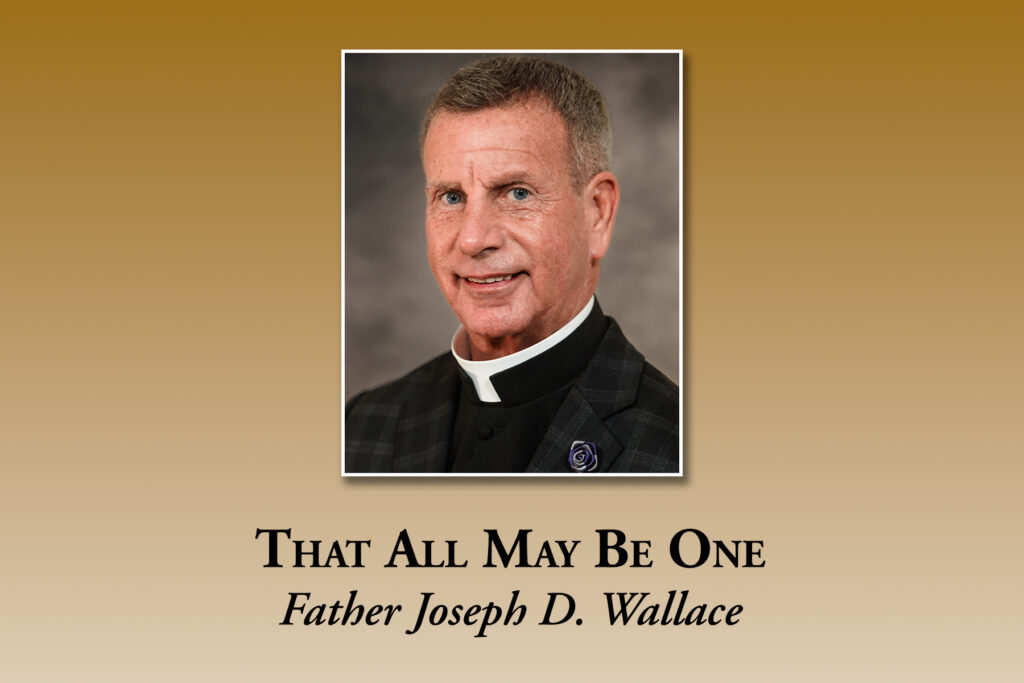
Father Joseph D. Wallace is diocesan director of Ecumenical and Inter-religious Affairs and pastor of Christ the Redeemer Parish, Atco.
More Online
Father Jason Rocks, diocesan chancellor, explores Catholic social teaching and AI. Visit talking.catholicstarherald.org.




 at the bottom and then tap “Add to Home Screen”
