





On Nov. 4, the worldwide Hindu, Sikh and Jain communities celebrated their major feast of Diwali, also called Deepavali. This festival is celebrated in the Hindu month of Karthika masam, which falls either in the month of October or November. It commemorates the return of Lord Rama after 14 years of exile and his victory over the demon Ravana. Rama and another avatar, Sita, are incarnations of gods. Rama is an incarnation of Vishnu, the god of protection. Vishnu is one of a trinity of the most important Hindu gods: Rama the creator, Vishnu the protector and Shiva the destroyer. They believe that Vishnu has had nine incarnations on earth as different beings.
Diwali marks the sending by Rama of Durga, the 10-handed goddess of power, safety and peace, to slay evil spirits oppressing angels and gods. The festival concludes with the immersion of the idol of Durga and her companions in a river in a gesture of her union with her consort Shiva. It is generally celebrated over a three- to five-day period. It celebrates the triumph of light over darkness, good over evil, and hope over despair. It is also called the festival of lights and it is celebrated with joy. During the festival, people light up their houses and shops with Diyas (small cup-shaped oil lamps made of baked clay). The lights are to attract and guide the goddess Lakshmi (daughter/avatar of Durga) to bring wealth and wisdom. While many of the Diwali festivities take place at large gatherings where families dress in new clothes and go to the temple for worship services, many other celebrations take place in the home.
Greetings were sent by the Pontifical Council for Interreligious Dialogue, titled “Christians and Hindus: Together bringing light into people’s lives in times of despair.” This theme was chosen due to the ongoing COVID pandemic. “May the observance of this feast even in the midst of anxiety and uncertainty arising from the present pandemic, and its resultant worldwide crises, light up your lives, homes and communities with the hope for a better future!”
Drawing upon the theme of light in the darkness, the letter stated, “As amidst the dark clouds of the current pandemic, which have caused immeasurable suffering and trauma to the people, there have been silver linings of solidarity and fraternity, it is within our ability to demonstrate that we can be ‘together’ and overcome every crisis with resolve and love, even the seemingly insurmountable.” It continued, “A growing awareness of the need to be with and to belong to one another in the present pandemic period calls for finding, more and more, ways of bringing the light of hope where there is discord and division, destruction and devastation, deprivation and dehumanization. … Even the pressing global issues that threaten to disrupt the harmony between nature and people and the harmonious co-existence of people such as climate change, religious fundamentalism, terrorism, hyper nationalism, xenophobia can be effectively addressed since these are concerns that affect us all.”
In Bangladesh, Catholic officials greeted Hindus on the feast of Diwali. Father Patrick Gomes, secretary of the Catholic bishops’ Commission for Christian Unity and Interreligious Dialogue, explained, “It is our duty to greet each other on various religious occasions to solidify interreligious harmony. On behalf of the Rajshahi Diocese, we have put up banners in towns and villages to greet Hindu brothers and sisters, while we have visited some places of worship and exchanged greetings with them.”
Animesh Chakraborty, a Hindu priest, said, “We are proud because people of other religions love us and respect our mother Durga. We Hindus also respect other religious ceremonies and exchange greetings with them. I hope that harmony will continue to grow in us, and peace will prevail in the country.”
Bringing its message to a close, the Pontifical Council for Interreligious Dialogue said that “as believers grounded in our own respective religious traditions and as persons with shared vision for and shared responsibility towards humanity, in particular the suffering humanity, may we Christians and Hindus, individually and collectively, and joining hands with people of other religious traditions and of good will, reach out to people who are in despair, to bring light into their lives! We wish you all a Happy Deepavali!”
Let us pray that Catholic Christians and Hindus throughout the world will continue to hold one another in mutual and fraternal love and respect. And may our different lights dispel the darkness that often invades the world that we share.
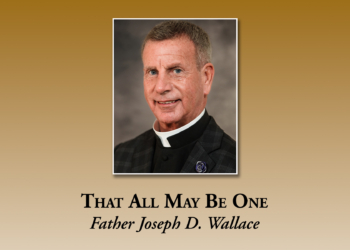
Father Joseph D. Wallace is diocesan director of Ecumenical and Inter-religious Affairs and pastor of Christ the Redeemer Parish, Atco.



 at the bottom and then tap “Add to Home Screen”
