




Frustrated with the uninspired work of the bored students in his drawing class, the artist Oskar Kokoschka is said to secretly instruct the model to suddenly collapse on the floor. When the man went down, Kokoschka ran over, pretended to listen for a heartbeat, and then announced to the shocked students that their model was dead.
At that, the model stood up and resumed his pose.
Kokoschka then instructed the students: Now see him not as you were drawing him before – as a dead object – but as you truly understand he is alive.
I thought of that story when I heard of a priest encouraging a lapsed Catholic to read the Gospels with a different attitude, with an openness to be spiritually changed.
The interaction was reported in a May 12 New York Times podcast on Americans’ increased interest in religion. The episode included an interview with Nick, 46, who had rejected religion when he was in high school.
After decades of atheism, he found himself unsettled by the hostility in contemporary politics and culture. “It kind of made me realize that without having a transcendent ideology that’s universalistic and grounded in something common for all of humanity,” Nick said, “we inevitably fall into this us-against-them world.”
Following an uncomfortable period of struggle, however, he still faced a big stumbling block to faith. As he put it then to a priest he consulted, “I’m having a real hard time just getting to the believing in God.”
Nick did not report the priest making intellectual arguments or emotional appeals for faith to him. Instead, he recalled, the priest advised, “Well, here is what you do. Just start reading the Gospels.”
Nick protested that he’d already read the Gospels. “And he’s like, ‘No … you have to read them with an open heart, as if this is giving you some sort of spiritual insight.’” The priest continued, “Then you have to start coming to Mass … just dive in.”
The guidance could not be simpler, but it worked for Nick.
“By going through the motions and absorbing and reading sacred Scripture with a different attitude,” he said, “I feel like I have a faith, a genuine faith in God now.”
In his essay “Salvation,” the poet Langston Hughes wrote about a time that he, too, had been eager for faith, but he received an entirely different kind of spiritual direction.
When he was 12, his aunt’s church was holding a revival that ended with a special meeting for children. Beforehand, the youngster had been told that when people were saved, they saw a light and that “you could see and hear and feel Jesus in your soul.”
After the preacher spoke and sang, he held out his arms and implored the children, who were seated together on the mourners’ bench, “Won’t you come to Jesus?” Some youngsters immediately responded. Adults knelt around the remaining children and began to pray.
Hughes recalled, “Still, I kept waiting to see Jesus.”
Eventually, young Langston was left alone on the mourners’ bench, still waiting and feeling anxious. Even the foul-mouthed Wesley, who had whispered he just wanted to get it over with, was now sitting up front, grinning at him. With the preacher calling him by name, and his aunt sobbing on her knees before him, young Langston eventually gave in to the pressure, and “waves of rejoicing swept the place.”
Whereas the priest who counseled Nick recognized his autonomy and God’s freedom to act in unforeseen ways in any individual spiritual journey, the adults in Langston Hughes’ story followed their own script. They had rigid assigned roles, even for God and a young boy – who ended up crying in his bed that night. (Their sincerity and the value of altar calls in general are separate questions.)
Christianity – and great art, too – challenges people to look beyond mere appearances.
Kokoschka did not complete his students’ drawings himself and then say, “This is how it’s done!” He believed that learning how to draw included learning how to see, so he gave his students a push in the right direction and told them: Now learn.
No two students’ drawings would be exactly alike – and none would be a perfect representation because, to use Saint Paul’s imagery, they would see partially, not fully. (1 Cor 13:12) But any student, with proper guidance and genuine effort, would be able to capture something of the living reality they were struggling to see clearly.
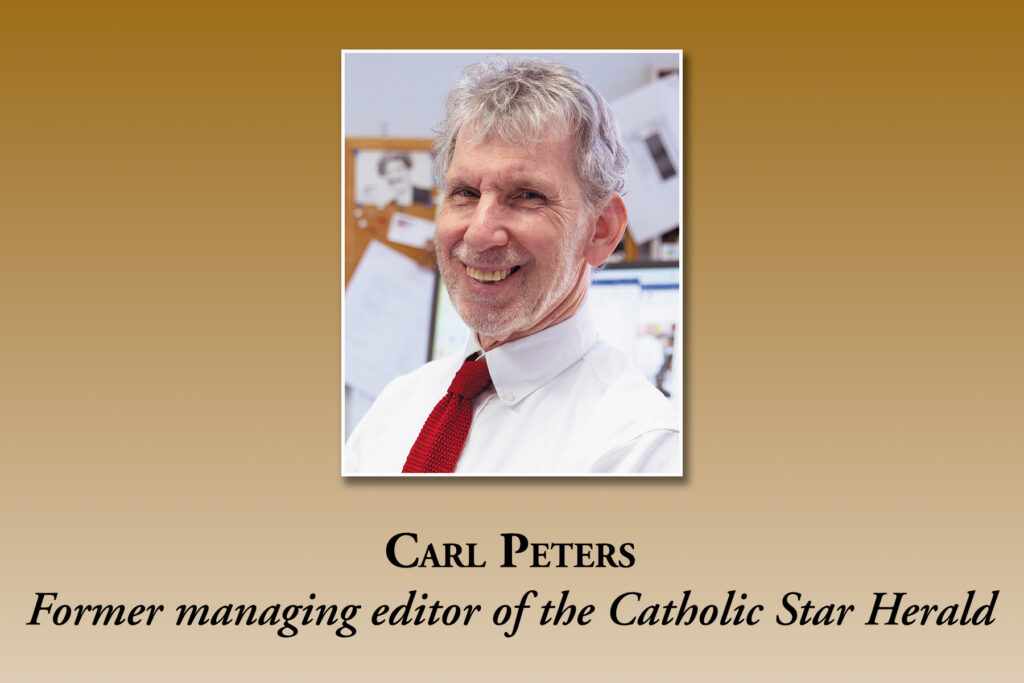
Carl Peters is former managing editor of the Catholic Star Herald.




 at the bottom and then tap “Add to Home Screen”

