




Editor’s Note: In the Catholic Church, November is traditionally dedicated to the holy souls in purgatory and remembering those who have left this earthly plane. Throughout November, the Catholic Star Herald is featuring articles related to death and dying and how “death is not the end, but rather the door through which we must pass to gain eternal life.”
This month, the Catholic Church celebrates All Souls and prays for the deceased in the hope of the Resurrection. It is important to remember that faith has a key role to play even once a person dies, say those who work in the Diocese’s Office of Catholic Cemeteries.
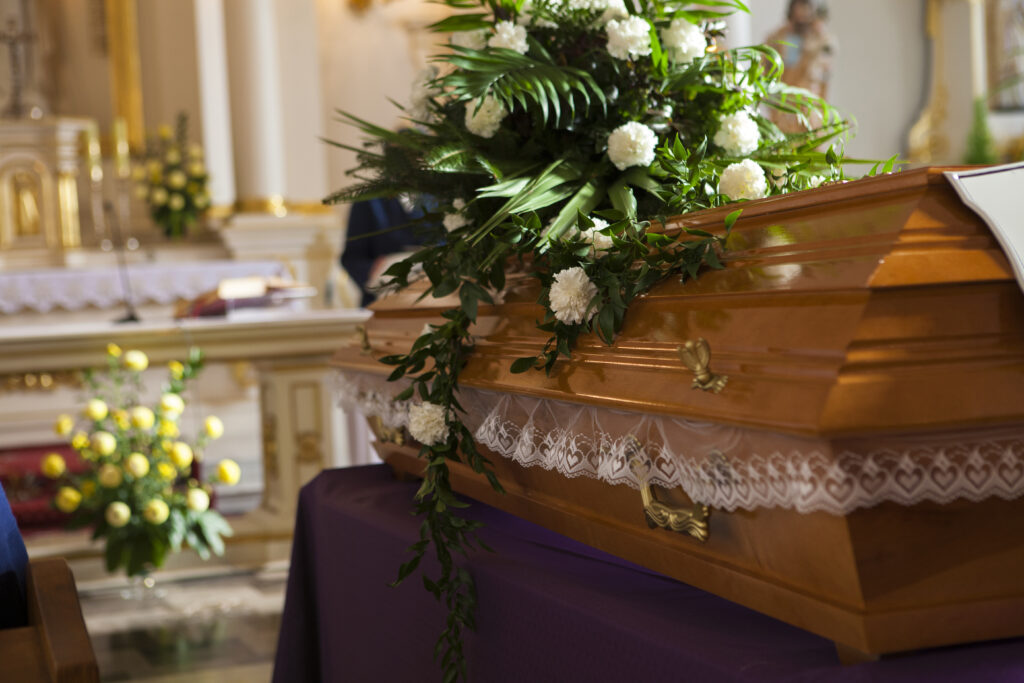
The three parts of the Catholic Funeral Rite – the Vigil Service, Funeral Mass Liturgy and Rite of Committal – bring comfort, peace and hope to survivors. This process continues the journey of faith, where the deceased’s family asks for mercy from God for the departed, entrusts them to the Lord and looks forward to the day they’ll see them again in heaven.
In the Vigil Service, the first part of the Rite, family and friends take the time to focus on the life of their departed loved one, and “come and pay respect to the deceased and the loved ones of the deceased,” says Debra Moore, assistant director for marketing and outreach for the Office of Catholic Cemeteries.
Usually held the eve before the Funeral Mass and burial, the vigil is a time of remembrance, support and comfort, and includes readings, prayers, reflections and intercessions, as the mourning community asks God for mercy for their departed and strength for the survivors. This is also the most appropriate time for the eulogy.
As Moore explains, the time leading up to and including the vigil can be a time of bonding and comfort among family members, who during this time will sometimes “collect pictures or make a video” commemorating their loved one.
“As the whole family is involved with this process, it gives them an opportunity to share experiences and stories together, share their grief and have joy in remembering the good times,” she says.
The second part of the Funeral Rite, the liturgy, is the central celebration, and is the time to present the deceased to the Lord. Through rituals such as the procession of the body, renewal of baptism, Liturgy of the Word, Liturgy of the Eucharist, blessing and farewell hymn, the deceased’s soul is commended to the Lord.
This moment can also include preparation for the body’s presentation to God, through such ways as anointing with baptismal water; incense; or by placing a white funeral pall, cross, and/or Bible on the casket. This celebration, where loved ones can further unite and share in grief, is a beautiful time that reminds all of the promise of eternal life. Moore says the family can also find comfort by participating in the Mass, such as a lector or cantor.
The final part, the Rite of Committal, the climax of the funeral, takes place at a Catholic cemetery or mausoleum. Mourners say goodbye to their loved one and consider the Resurrection on the last day. A priest or deacon presides over this ceremony, which can include the blessing of the gravesite, Scripture reading, intercessions and the placing of flowers on the grave.
Moore says it’s important to remember that the Catholic Funeral Rite applies to cremation, too.
“For the faith-based, the funeral rites are the connection between the living and the dead. Why would a practicing Catholic rob themselves of the opportunity to present their body, regardless of the form – full body or cremains – in such a beautiful ceremony to God?” she says. “This is the beginning of the transformation to eternal life. I think cremation has allowed many to forget this.”
The dignity shown to the deceased in the entire Rite, and the hope it looks to, can be “an evangelization moment for the entire family and community,” says Paul Martin, director of the Office Catholic Cemeteries, as it demonstrates that “faith is important, and it should be celebrated and recognized.”
For the deceased, the decision to have a Catholic funeral is an opportunity, even in death, “to reinforce [the] faith with your loved ones, and be a good steward of your faith.”
Moore added that when families “set the example” of a Catholic funeral rite, “you plant the seeds of strong faith. In the end, families want to see each other in heaven.”
These rituals also prove the unbroken bond between survivors and the deceased, and the obligation to continue to pray for our loved ones.
In keeping with his office’s mission to providing dignity and care for the faithful departed and those who mourn them, Martin says the 17 cemeteries they manage in Atlantic, Camden, Cape May, Cumberland and Gloucester Counties are dedicatedly kept clean and well-tended.
“You won’t see Catholic cemeteries in a state of abandon or disrepair; it shows that the Catholic Church is committed to maintaining our cemeteries. It’s one of the seven corporal works of mercy [bury the dead].”
This All Souls Month, he adds, is a good reminder to “visit the cemetery and reflect, and pray for them,” not just in November, but all year. “A cemetery is not just a place when someone has a funeral; it’s a place of remembrance and prayer, not only for our loved ones but for all souls.”




 at the bottom and then tap “Add to Home Screen”
