




In the weeks after the annual Synod of Bishops in Rome, Archbishop Sviatoslav Shevchuk, major archbishop of Kyiv-Halych and head of the Ukrainian Catholic Church, penned a letter to the president of the United States Conference of Catholic Bishops on the challenges – physical, psychological and pastoral – associated with the ongoing war in Ukraine.
Following are excerpts of that letter:
The humanitarian crisis triggered by Russia’s brutal full-scale invasion of Ukraine in February 2022, and its ongoing assault on civilian targets over the last 18 months, continues to impact the lives of real human beings, men and women, young and old, fathers and mothers, sons and daughters. The facts and figures of human suffering and material devastation are numbing to the point that one can no longer process them, mentally or emotionally.
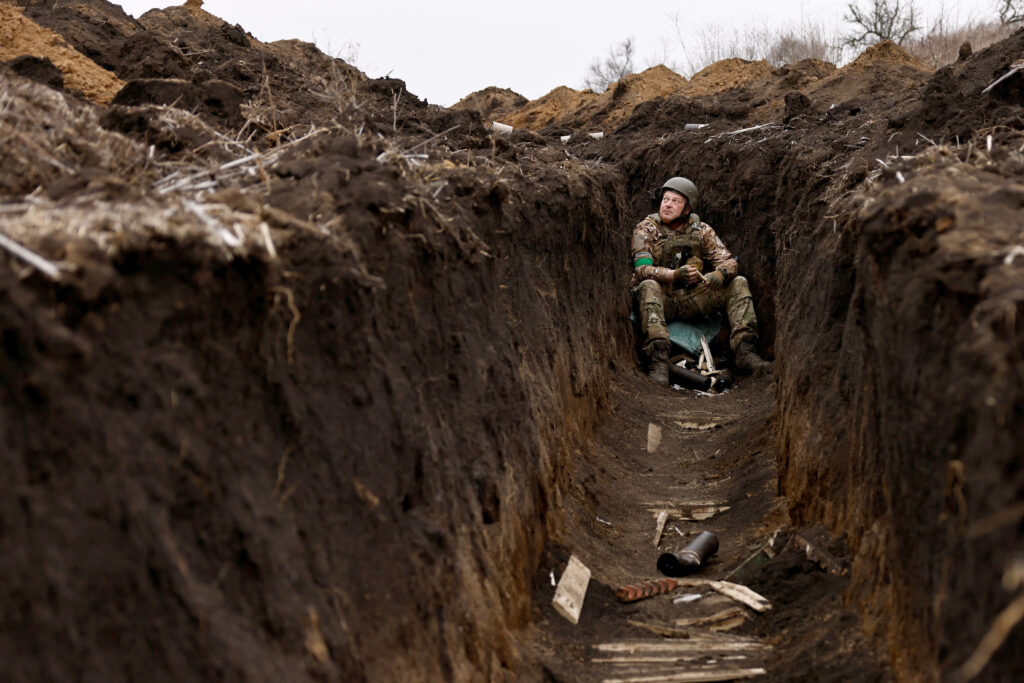
Nothing is sacred for the Russian invaders: hospitals, schools, parks, churches, apartment blocks and private residences, marketplaces, restaurants, energy grids, transportation and food supply routes. The threat of widespread nuclear disaster hangs by a thread, as Russian landmines and heavy armament remain in close proximity to Europe’s largest nuclear power plant in Zaporizhzhia. The ecological impact of such criminal actions such as the destruction of the Kakhovka dam and the indiscriminate mining of arable fields will be felt long after the war ends.
At the same time, the spirit of Ukraine and its people remains unbroken, and volunteerism remains high among the general population. … As high as the cost of victory may be, Ukrainians realize that the cost of defeat will be much higher, not just for Ukraine, but for the entire world.
The human impact of the war is profound, and we recognize its effects on each of us personally, as pastors, who are experiencing the horrors of war together with our flock. … We embrace our calling to be wounded healers, to spiritually accompany the afflicted, even as we ourselves are afflicted. In this, we find inspiration in Christ Himself: “For we do not have a high priest who is unable to sympathize with our weaknesses, but one who in every respect has been tempted as we are, yet without sin.” (Hebrews 4:15)
Acknowledging one’s woundedness is the first step toward healing. It is necessary to understand that what happens to us does not define who we are. We think of the soldiers who have returned from the battlefield with physical and psychological scars. We think of those who have buried family members, or have lost contact with their loved ones, not knowing if they have been taken captive or died on the frontlines. We think of young people who instead of attending the weddings of their friends, attend their funerals. We think of those who have lost their homes and seen their lives shattered in the flash of a missile blast in the middle of the night. We think of the children who wake up in the middle of the night screaming as they relive their trauma in their dreams.
The reality of warfare has reopened generational wounds that have already been a part of the history of the Ukrainian people for centuries, but especially throughout the 20th century. The children and grandchildren of those who experienced the Second World War and Soviet oppression are now able to recognize the burden of suffering that their parents and grandparents carried with them, often in silence and quiet dignity.
The violence of war challenges us to keep the evil and hatred visited upon us from infecting us spiritually and dominating our lives. Indeed, our Christian faith provides a roadmap for healing rooted in the love of Christ. Saint Paul writes: “Do not be overcome by evil, but overcome evil with good.” (Romans 12:18)
Trauma leads some to doubt God’s presence in their lives. For others, war wipes away superficial fixations and worldly illusions, and brings them closer to the Lord. In all cases, we are called to offer hope by simply sharing the goodness of Christ who is “the way, and the truth, and the life.” (John 14: 6)
We wish to thank you again for your moral support and material assistance. … We wish to convey heartfelt Ukrainian gratitude to the USCCB for your continued calls to prayer, for the dissemination of accurate information, for numerous humanitarian aid initiatives coordinated and provided by American bishops, clergy, religious and faithful.
At this critical moment, we ask bishops and all American Catholics to encourage their political leaders to continue supporting Ukraine. Ukrainians are sacrificing their lives for freedom, justice, and our common God-given human dignity.



 at the bottom and then tap “Add to Home Screen”
