



Editor’s Note: This article appears courtesy of The Catholic Spirit, the newspaper for the Diocese of Metuchen.
PISCATAWAY – Gina Cavallo learned to keep secrets from authority figures when she was just a child, even when her brother broke down the door of the room where she was hiding and cut her with broken glass.
Her mother told the hospital nurses that the girl had fallen down accidentally, but when Cavallo attempted to tell them the truth, her mother put her index finger on her lips and said, “Shhhh.”
“I learned about secrets, I learned about silence,” said Cavallo, a human trafficking survivor and victims advocate, one of three keynote speakers at the 25th annual Diocese of Metuchen Choices Matter Conference on March 21. “I learned to sweep things under the rug. That became my norm.”
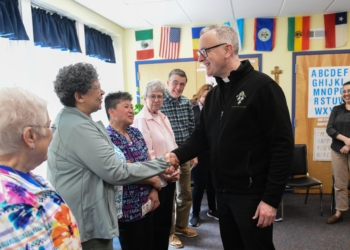
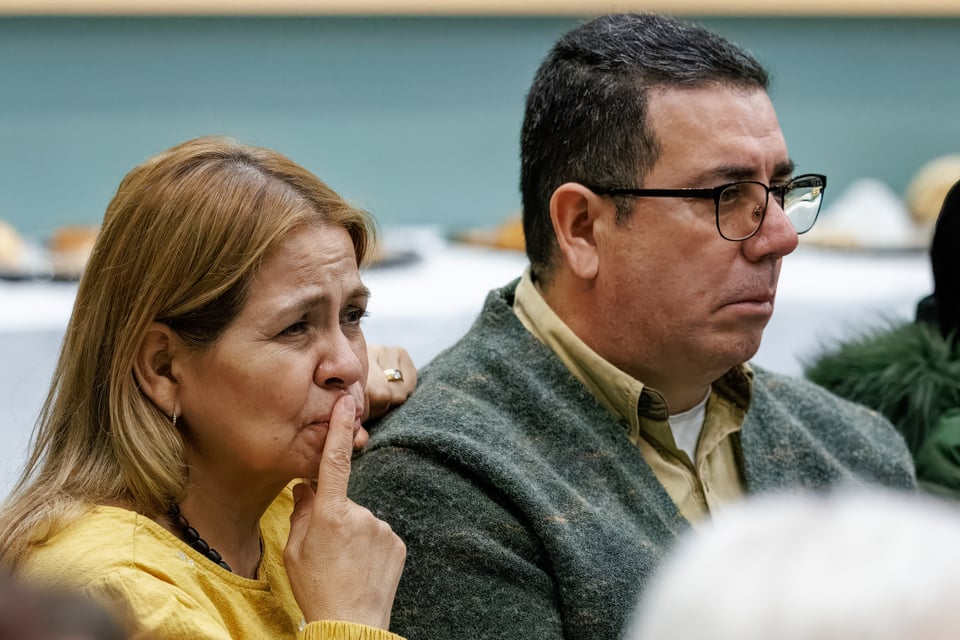
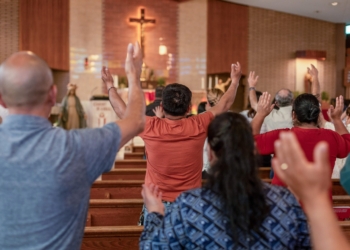
Recognizing the warning signs of human trafficking and learning ways to shine a light on its injustices were among the goals of the conference held at the Saint John Neumann Pastoral Center and sponsored by the Diocese of Metuchen’s Office of Human Life and Dignity. The all-day conference, themed “Safeguarding Human Dignity … Shining a Light on Human Trafficking,” drew nearly 200 people from across the state, including staff from the Diocese of Camden. It included faith-based exhibits, fellowship, and opportunities for confession and Eucharistic Adoration.
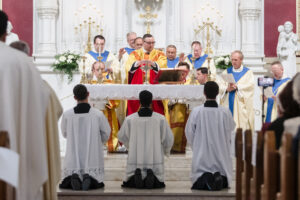
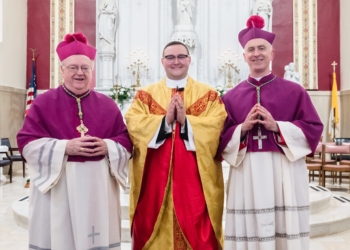
“This is not the easiest of topics, or the most pleasant, but a truly necessary one in our defense of the dignity of life,” said Father Jonathan Toborowsky, administrator of the Diocese of Metuchen, who celebrated Mass at the start of the day. “Take what you learn to your parishes.”
Jennifer Ruggiero, the Metuchen Diocese’s director of the Office of Human Life and Dignity, noted the topic was selected in light of preparations for the 2026 FIFA World Cup soccer finals, which are expected to draw more than a million people this summer to MetLife Stadium in East Rutherford.
“Large-scale events often create opportunities for abuse and exploitation due to large crowds, increased demands and vulnerable workers in construction and hospitality,” Ruggiero said. “Events like these can also serve as major, high-profile platforms to help raise awareness about this heinous crime.”
Protecting the Vulnerable
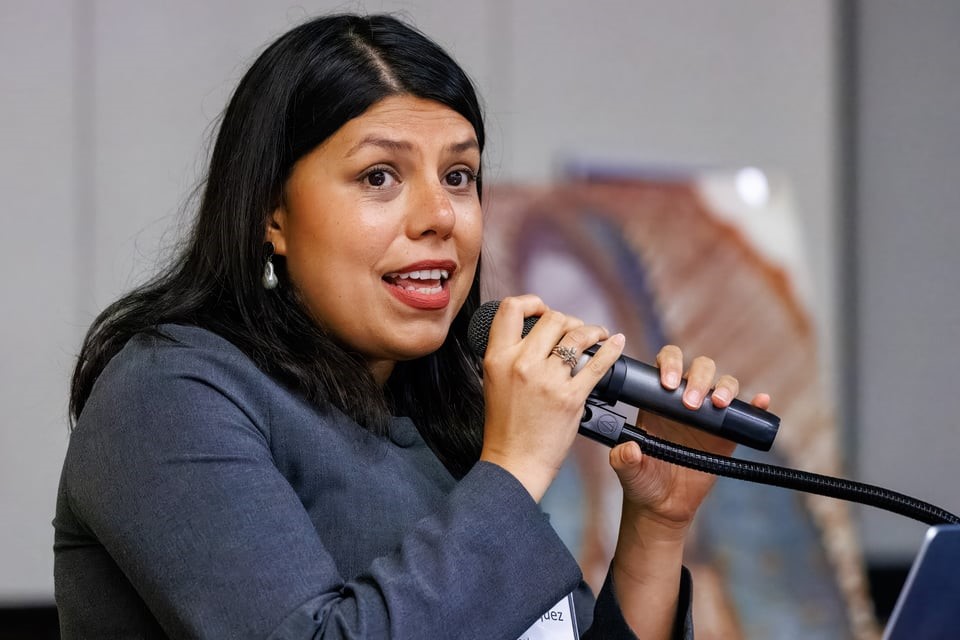
Celina Márquez Redd, outreach and policy adviser for the U.S. Conference of Catholic Bishops, informed the attendees of the faith-based steps taken by the Catholic Church to combat human trafficking, which is a federal crime defined as “the use of force, fraud, or coercion to induce someone into labor or sexual exploitation.” According to 2023 statistics from the Global Slavery Index, an estimated 49.6 million people live in situations of trafficking at any given moment, around 1.1 million of them in the United States.
The first comprehensive federal law to address human trafficking, the Trafficking Victims Protections Act (TVPA) of 2000 addressed gaps in the legal framework by creating new criminal offenses and establishing victim protections. It created a three-pronged approach to combatting human trafficking: protection, prevention and prosecution.
“We must work together – Church, state and community – to eliminate the root causes and markets that permit traffickers to flourish; to make whole the survivors of this crime; and to ensure that, one day soon, trafficking in human persons vanishes from the face of the earth,” said Márquez Redd, quoting from the USCCB statement of 2007.
The Church aims to inform and educate her members by offering those at risk with shelter, medical care, counseling, legal services and immigration reform. In addition, the USCCB and dioceses across the country partner with VIRTUS, a nationally recognized program, to develop human trafficking and sexual abuse prevention trainings.
“Our goal is not to instill fear, but to build awareness, confidence and preparedness,” said Márquez Redd.
Legal Measures, Civilian Efforts
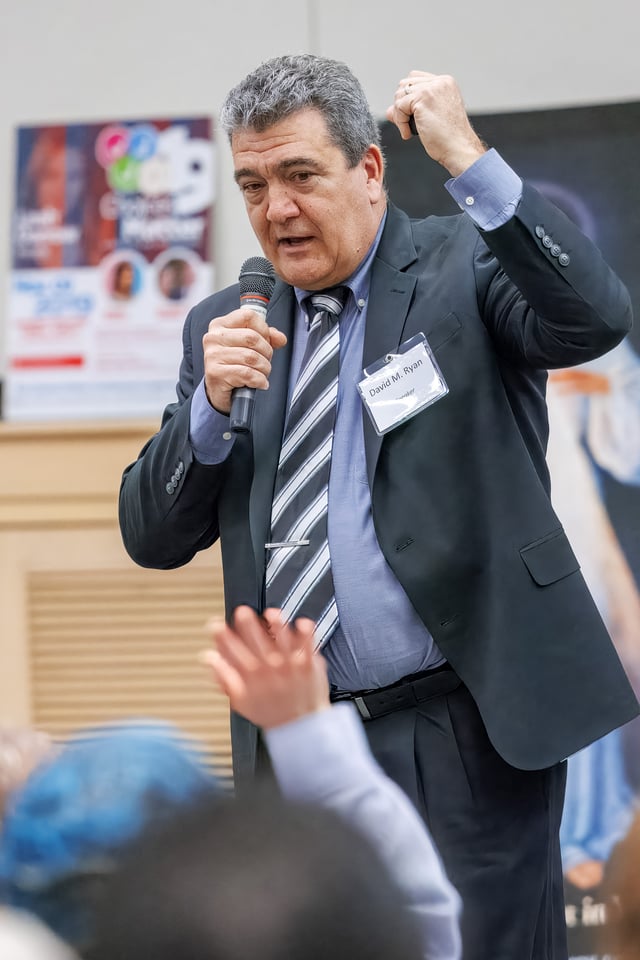
“Trafficking lives in the shadows, but it is a $150 billion industry,” said David M. Ryan, who served in law enforcement for more than 40 years. The retired chief of police of Pound Ridge, N.Y., is also the cofounder of the Westchester County Anti-Trafficking Task Force. “When you hear a survivor’s story, it gives you an awareness I cannot. Words matter, the language you use matters.”
In his presentation titled, “Survivor-Informed Human Trafficking Prevention,” Ryan noted that victims of human trafficking are made vulnerable through trauma and abuse; low self-esteem; cultural, immigration and language barriers; emotional manipulation; blackmail and financial indebtedness; physical isolation and threats of violence to their family members. The increase in online activity also may lure vulnerable youth into human trafficking and exploitation, Ryan continued, citing social media sites, dating apps, fraudulent job postings, video games and smartphone usage.
“Pay attention to what they are doing,” he urged. “[Children] need to know this is an unsafe place. You secure your houses physically, but you open up the internet and let anyone inside that house.”
Raising awareness is key, Ryan said, noting that by understanding traffickers’ tactics, communities can take proactive steps to protect vulnerable individuals. These include educating oneself and others by sharing information about common trafficking tactics; stay aware of children’s internet use, especially on social media and gaming platforms, and volunteer or donate to organizations that support vulnerable populations such as homeless shelters, youth programs or immigrant support services.
A Survivor’s Story
Gina Cavallo, author of “A Survivor’s Secrets,” now serves as founder and executive director of the survivor-led nonprofit organization We RISE USA and as vice president on the board of trustees for the NJ Coalition Against Human Trafficking.
She detailed her years of abuse and sex trafficking, beginning in childhood as the youngest of five children with abusive parents and progressing through her teen years filled with sexual abuse, imprisonment, trafficking and drug abuse.
Holding up a packet of seeds, she said, “These seeds that we plant become the norm in our life. My father [as a child] was punished all the time. Those seeds were planted in my father, and he taught that to the next generation.”
She explained that when she was being abused and trafficked, her companions were shame, fear and guilt.
“Do you think any child dreams of being raped?” she asked. “That’s what this crime is. My life was robbed, but I know the Lord is giving me this last home run of a stretch to live my life.”
“Human trafficking comes in many forms. The way to learn is to hear from different lived experiences; education brings awareness and awareness brings prevention,” she continued.
Cavallo was trafficked in Florida and Las Vegas, escaped, went through a tumultuous marriage and drug abuse, and was arrested multiple times. She admitted that “without God, I wouldn’t be here.”
“We have to do better, be better, be approachable,” she continued.
“The kids are learning to keep secrets.”
What You Can Do
To learn more about human trafficking and how to combat it:
- The Justice for Immigrants Campaign: justiceforimmigrants.org/bakhita
- N.J. Coalition Against Human Trafficking: safernj.org.
To report a suspected case of human trafficking, or violence against children, call:
- National Human Trafficking Hotline: 888-373-7888; Humantraffickinghotline.org (Support available 24 hours/ seven days a week in 200 languages)
- N.J. Human Trafficking Hotline: 855-363-6548
- Covenant House NJ Human Trafficking Services: 862-240-2453
- National Center for Missing and Exploited Children: 800-843-5678



 at the bottom and then tap “Add to Home Screen”
