




I was in the place where one of my parents and two of my closest friends died, and now I was the one in a hospital bed with an IV in my arm.
That’s a dramatic, but misleading, setup.
I was in the hospital for relatively minor surgery. I had every reason to believe – correctly – that I would leave after a few hours for a period of recovery at home (essentially a couple of weeks of mandatory laziness) and then resume my normal activities.
There was an unexpected delay for my operation, so despite the risk of raising my blood pressure, I read the morning news on my phone while I waited. The stupidity and horrors I was reading about were a striking contrast to the atmosphere at the hospital.
The first person I saw when I arrived that morning was the valet parking attendant. She was a remarkably cheerful woman, especially for someone standing outside at 6 a.m. in intolerable weather. Soon, I saw close to a dozen other people – receptionists, nurses, techs, doctors – and everyone was courteous and professional.
No one has a problem-free life, and no doubt every hospital worker I saw that morning has their private concerns and worries. But when they were with me – a senior with a relatively minor medical issue – they acted as if I was at the center of their world. I was almost embarrassed by the attention.
In the pre-op room, a woman in the bed next to mine was also waiting for surgery, and a nurse came by to see her for some routine check. We were separated by a curtain, but I could hear the woman crying softly. I couldn’t hear a lot, but she seemed worried about her health. Soon, she was talking more generally about her life, about no longer being able to work, about a pet that had recently died.
The nurse listened, and she asked some questions and offered some comforting words. She had a kind voice, a sympathetic manner. Their exchange didn’t last long, but the nurse’s concern seemed to make the woman feel a little calmer.
Then I was wheeled off to an operating room.
In the early afternoon, having spent less time in the hospital than most people spend at work on a typical day, I was given a folder of post-surgical instructions and discharged. A pain medication that I wouldn’t need was ready for pickup at my pharmacy.
As I waited in a wheelchair for my ride, I felt fortunate to be in overall good health and to receive the care I did. With the wave of my Medicare card, a photo ID and my signature on several papers I didn’t read, I got valet parking, sanitary conditions, highly skilled medical professionals and a bill I could afford. I got people asking me all morning if I was comfortable.
I felt grateful – but also troubled, knowing not everyone is so fortunate.
I know U.S. citizens who have medical bills they cannot pay. Yet their difficulties also reminded me of people whose immigration status is an obstacle to health care, and they’re also better off than people in many other countries. In a Holy Week message this year, Sister Mary Haddad, RSM, president and CEO of the Catholic Health Association, expressed concern for the poor and vulnerable, including “our immigrant brothers and sisters and those affected by war and displacement.”
At the time, the Catholic Relief Services website stated that the agency was experiencing “immediate and critical gaps” in carrying out its programs (which include health services) in large part because of changing priorities for U.S. government humanitarian assistance.
My mood darkened further as I rode past the cemetery next to the hospital.
In that cemetery years ago, I saw a balloon and a child’s toy at a small headstone. The dates on the stone indicated it was the birthday of the child buried there. It was not a new grave. The little one would have been fully grown by then. I was soon dwelling on the kinds of pain that robotic surgery, anesthesia and prescription painkillers – wondrous as they are – cannot reach.
Eventually, my thoughts returned to that nurse who helped a sad woman in pre-op feel less scared and alone that morning.
In practical terms, it would be facile to overestimate the effect of her kindness. Yet in this world with its ever-expanding circle of need, the value of genuine care and compassion – from personal interactions to public policy – is immeasurable.
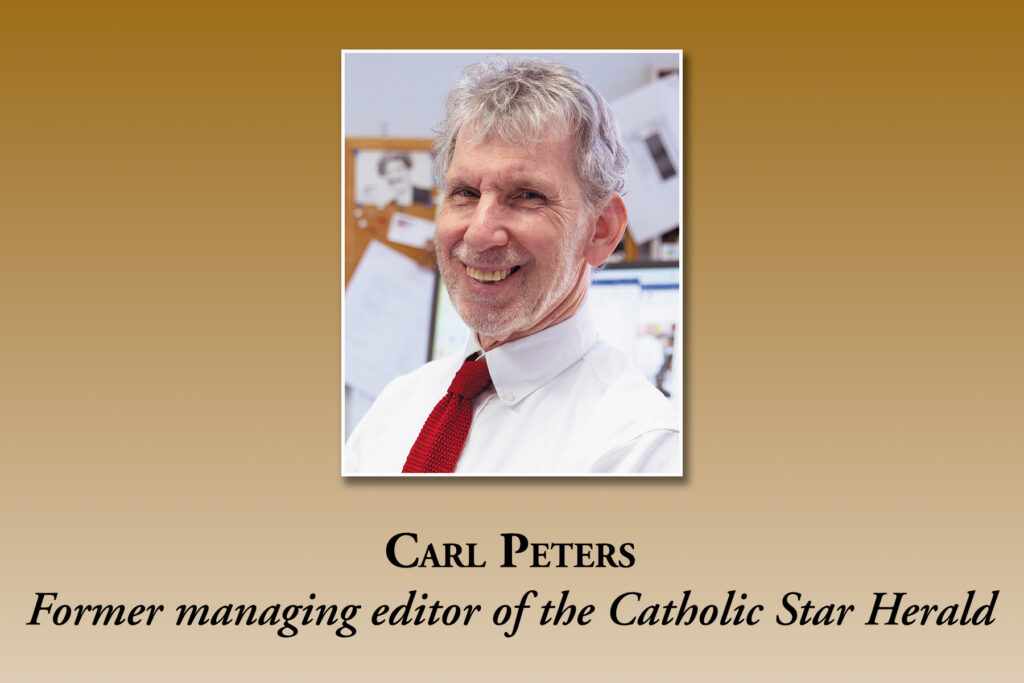
Carl Peters is former managing editor of the Catholic Star Herald.




 at the bottom and then tap “Add to Home Screen”

