




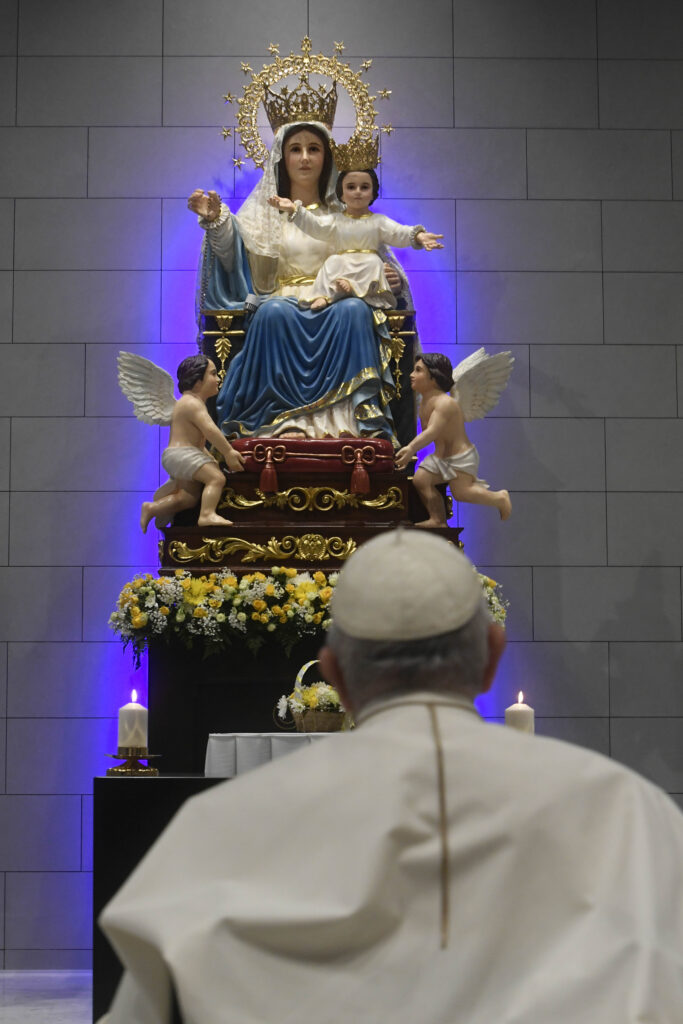
Fraternal dialogue and peacebuilding with all people of goodwill is at the center of Pope Francis’ papacy. He has intentionally reached out to our Muslim brothers and sisters throughout the world to move from a stance of competition or superiority, on any side, toward a partnership of peace and mutual respect. So, his recent visit to the Muslim country in the Gulf, the Kingdom of Bahrain, Nov. 3-6, extends his outreach and diplomacy to the Muslim world. Bahrain’s population is more than 70% Muslim, some 1.5 million, and there are some 161,000 Catholics also living in the country, many of them foreign-born.
Before leaving for the trip, Pope Francis said, “The journey to Bahrain should not be seen as an isolated episode; it was part of a process initiated by Saint John Paul II when he went to Morocco.” He went on to explain that this is why “the first visit of a pope in Bahrain represents a new step on the journey between Christian and Muslim believers, not to confuse things or water down the faith, but to create fraternal alliances in the name of our Father Abraham, who was a pilgrim on earth under the merciful gaze of the one God of Heaven, the God of peace.” He added, “And why do I say that dialogue does not water down the faith? Because to dialogue, you have to have your own identity; you have to start from your identity. If you do not have identity, you cannot dialogue, because you do not understand what you are either.”
The motto of the trip was “Peace on earth to people of goodwill.” The Kingdom of Bahrain is an archipelago of 33 natural islands. The Pope said understanding the unique relationship among a nation spread out among so many islands “helps us understand that it is not necessary to live by isolating ourselves, but by coming closer” – a good example of peaceful coexistence. “Dialogue is the ‘oxygen of peace,’” he said.
Pope Francis explained why he, like so many Muslims of Bahrain (and elsewhere), often place their hand over their heart when they are greeting someone. “I did this, too,” he said, “to make room inside me for the person I was meeting. For without this welcome, dialogue remains empty, illusory; it remains on the level of an idea rather than reality.” He encourages us all to have “‘open hearts’ toward one another. Meeting each other and praying together, we felt we were of one heart and one soul.”
Pope Francis met with the Muslim Council of Elders, an international organization whose leader is the Grand Imam Ahmad el-Tayeb, a Sunni Muslim and former president of Egypt’s Al-Azhar University. He took this opportunity to continue to build bridges of peace when he said, “We need to encounter one another, to get to know and to esteem one another, to put reality ahead of ideas and people ahead of opinions, openness to heaven ahead of differences on earth. We need to put a future of fraternity ahead of a past of antagonism, overcoming historical prejudices and misunderstandings in the name of the One who is the source of peace. We must be exemplary models of what we preach, not only in our communities and in our homes, for this is no longer enough, but also before a world now unified and globalized.”
In a strange but poignant twist, Grand Imam Ahmad el-Tayeb used Pope Francis’ challenge to Muslims and Christians as words that also speak to the disunity within the house of Islam itself. Muslims have been divided into two main sects of Islam, Sunni and Shiite, since the 7th century, and have different traditions and practices that have led to tensions and even conflict in many Middle East nations. The grand imam used Pope Francis’ concepts to call upon his Shiite friends and other sects of Islam to reach out to each other with “open hearts and extended hands” and “to put aside our differences and strengthen our Islamic unity.” He also reminded Muslims that Islamic law “prohibits Muslims from giving in to calls for division and fragmentation.” He called for the convening of a summit of the world’s Islamic scholars and clergy “from every sect and school of thought” for “dialogue around unity, cohesion and rapprochement, a dialogue for Islamic fraternity, void of division, discord and, more especially, sectarian strife.”
What a wonderful model Pope Francis makes everywhere he goes, calling the human family to greater fraternity, beginning in our own communities of believers, no matter what faith we profess!
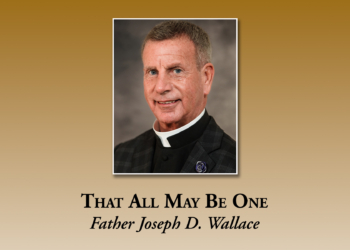
Father Joseph D. Wallace is diocesan director of Ecumenical and Inter-religious Affairs and pastor of Christ the Redeemer Parish, Atco.



 at the bottom and then tap “Add to Home Screen”
