





The Second Vatican Council’s declaration on religious freedom, titled “Dignitatis Humanae,” affirms that every person has a civil right to religious freedom. Its core principles state that people everywhere must be free from coercion by individuals, social groups or government authorities in choosing and practicing their faith. This right is grounded in the inherent dignity of the human person, as understood through human reason and God’s revealed word.
“Dignitatis Humanae” teaches that governments must protect religious freedom in constitutional law to ensure a just society. Religious communities likewise have the freedom to govern themselves, worship publicly, and teach their faith without hindrance or interference.
Today, these rights are under pressure in many places, including in India. Although Article 25 of the Indian Constitution formally guarantees the right to profess, practice and propagate religion, 13 of India’s 28 states have enacted “Freedom of Religion” laws, commonly known as anti-conversion laws, that regulate or penalize religious conversions.
Most recently, on Aug. 28, the Maharashtra Freedom of Religion Act took effect in Maharashtra, the second-most populous state in India. Passed in March by the state assembly under the ruling Hindu nationalist government, this broad anti-conversion law mandates that any person wishing to convert must give 60 days’ notice to the appropriate government authorities.
Four days before it took effect, civil rights, secular and Christian groups publicly appealed for its repeal at a news conference in Mumbai. When it was first passed, Catholic leaders called for prayer and considered legal action: “Far from safeguarding religious freedom, this law, in its present form, effectively undermines the very right it claims to protect, i.e., the freedom to choose and profess one’s religion, as guaranteed under Articles 19, 21, and 25 of the Constitution of India,” the Western Regional Bishops’ Council of India said in a statement March 19.
Similarly, in adjacent Goa, the state cabinet approved an anti-conversion bill on Aug. 26, making it the 14th Indian state to propose such legislation. The cabinet reversed course within a week and chose not to introduce the measure in the 40-member Goa assembly. The state legislature of Goa, like Maharashtra, is led by the Bharatiya Janata Party.
It was reported in “The Indian Express” that the government shelved the bill after strong protests by the Catholic Church and internal opposition from seven Catholic legislators within the federal government. In Goa, Christians, the vast majority of them Catholic, account for about a quarter of that state’s 1.5 million citizens. Goa has been greatly influenced by the Portuguese colonizers who brought with them to India the Catholic faith.
A joint statement by the Council for Social Justice and Peace of the Catholic Church and the Catholic Association of Goa, a lay forum, stated in part that the proposed bill “risks irreparably damaging that precious inheritance by replacing mutual trust with suspicion and social harmony with surveillance and fear.”
In the state of Maharashtra, civil society groups have signaled that the courts are the remaining avenue of redress after the law took effect. As human rights activist Dolphy D’Souza explained, “the government does not bother about our concerns. The only option before us now is to approach the judiciary as the Maharashtra Freedom of Religion Act infringes fundamental freedom of faith guaranteed under the constitution.”
Anti-conversion laws have existed in India’s states since the 1980s, but enforcement has hardened and spread over the last decade amid electoral gains by Prime Minister Narendra Modi’s BJP party. In the northern state of Uttar Pradesh, which passed its own anti-conversion law in 2020, legal aid groups count roughly 200 pending cases against Christians. More than 800 individuals, pastors and worshipers among them, have been arrested or jailed under the state’s anti-conversion law.
Let us pray for true freedom of religion in India and the whole world!
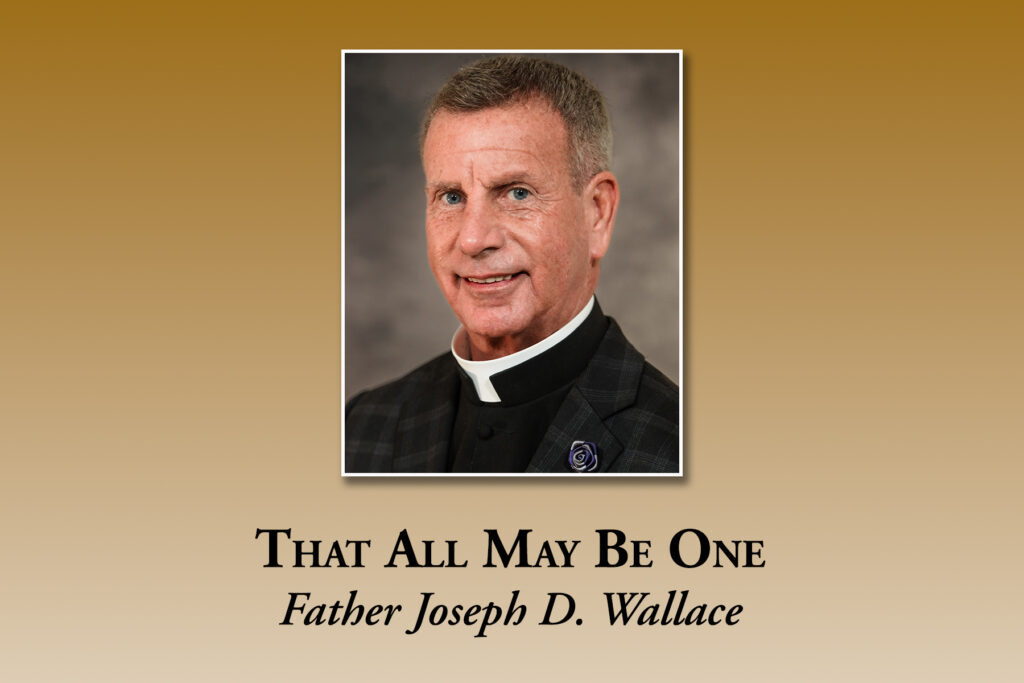
Father Joseph D. Wallace is diocesan director of Ecumenical and Inter-religious Affairs and pastor of Christ the Redeemer Parish, Atco.





 at the bottom and then tap “Add to Home Screen”

