




As I write this column this week, our nation and world are focused on two evils rearing their ugly heads in the forms of pandemics — a coronavirus and the suffering caused by racism and prejudice. On a personal level, I have been dealing with the news of the death of a dear friend of many years, Sister Rosaline Walters, OSF, who I have known since my seminary days. Sister’s past two assignments before her health crisis two years ago were with me in both Haddonfield and Wildwood as a pastoral associate. I was consoled knowing that she was being cared for so lovingly by her Franciscan family in Syracuse, N.Y., up to the moment of her death.
The events surrounding the terrible death of George Floyd and the multiple rallies opposing racism turned my thoughts to Sister Rosaline’s earlier assignment of many years in Camden’s Pro-Cathedral School where she served as educator and principal for many years. She would often discuss with me the challenges faced by many minority families in Camden who had to struggle with the double fetters of racism and poverty.
She would also speak of the issues and challenges faced by many of the families she ministered to at Saint Joseph’s School as fundamental to the church’s championing of the dignity of each human person made in the image of the Divine. So when I heard the statement made by Pope Francis this past week on the life of George Floyd, I thought of Sister Rosaline’s beliefs. The pope said, “Dear brothers and sisters in the United States, I have witnessed with great concern the disturbing social unrest in your nation in these past days, following the tragic death of Mr. George Floyd. My friends, we cannot tolerate or turn a blind eye to racism and exclusion in any form and yet claim to defend the sacredness of every human life.”
Other news of death touched me as well this week when I heard of the untimely death of Bishop George Murry, S.J., the fifth bishop of the Diocese of Youngstown, Ohio, after a two-year battle with leukemia. I got to know Bishop Murry during my year of living with Msgr. Edward Alleyne, pastor at Queen of Heaven Parish, Cherry Hill, before taking over as pastor there myself. Ed and George Murry were good friends from the time he was a kid growing up in the city of Camden.
Bishop Murry converted to Catholicism from the African Methodist Episcopal Church while attending Catholic school as a child. He graduated from Camden Catholic High School. He joined the Society of Jesus, the Jesuits, and was ordained a priest in 1979. After teaching at Georgetown University and serving as president of Archbishop Carroll High School in Washington, D.C., he was consecrated a bishop by Cardinal Joseph Bernardin, Archbishop of Chicago, and served him as an auxiliary bishop. He went on to serve as bishop of Saint Thomas, Virgin Islands, and Youngstown, Ohio, until his death last week.
Bishop Murry was appointed by Pope Francis as a member of the Synod of Bishops in 2015 to discuss family life. He shared his belief at the synod that he thought church practice toward the divorced and remarried could be revisited and changed without being in opposition to church doctrine. At that synod he also joined a number of voices that called for the creation of a commission to study and consider allowing women to serve the church as deacons. He said at the synod gathering, “It would be a wise idea to look into it, to learn more about it and then to present a proposal to the pope to say there either are theological problems, or not. And if not, let’s move forward!”
As an African American, Bishop Murry consistently spoke out on the sin of racism. Two years ago, Bishop Murry was appointed as head of the United States Conference of Catholic Bishops’ ad hoc committee against racism. At that time he was asked to be the keynote speaker at the 2018 Catholic Social Ministry Gathering in Washington, D.C., and said that American Catholics have “shown a lack of moral consciousness on the issue of race.” He spoke of the church’s historic stance toward slavery, from the view that once tolerated “just and unjust forms of slavery,” which led to “the subordination of blacks in America” as “simply an accepted part of the social and cultural landscape for Catholics and non-Catholics alike.”
I’ll end with the words of Bishop Murry which captures the beliefs that he and Sister Rosaline held in common. “If race in the Catholic imagination is to exemplify the love of Christ, it must move forward with the realization that no one can enter full communion with the Lord if one’s relationship to the other is marked by indifference or oppression. Christ wishes to break down the walls created by the evils of racism!”
May Bishop Murry and Sister Rosaline rest in peace.
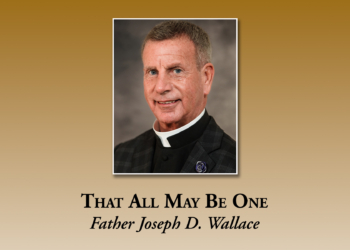
Father Joseph D. Wallace is director, Ecumenical and Inter-religious Affairs, Diocese of Camden.



 at the bottom and then tap “Add to Home Screen”
