





Pope Francis declared 2021 as the Year of Saint Joseph against the backdrop of a global pandemic. In his Apostolic Letter entitled Patris Corde (With a Father’s Heart), Pope Francis beautifully reflects on Joseph as “the man who goes unnoticed, a daily, discreet and hidden presence,” who nonetheless played “an incomparable role in the history of salvation.” Although Joseph is silent in the Gospels, his life has much to say to us about living ordinary life as a way of holiness, that is, a way of becoming increasingly one with God and the ways of God.
Saint Joseph received little attention in the early church. For a variety of reasons, the scant art of the era portrayed him as an elderly man. However, historians and Scripture scholars view this as highly doubtful. Research supports the belief that Joseph was 17-24 years of age when he was betrothed to Mary, who likely was approximately 15 years old.
By the 12th century, Joseph was accepted as true father to Jesus in every way except biologically. Saint Joseph began being seen as a role model for husbands and fathers.
Joseph finally emerged from the shadows during the 14th-16th centuries in Europe. This was a time marked by great instability due to wars, famines, epidemics and much death. People of faith, especially fathers, turned to Saint Joseph as intercessor, model and guide. This husband and father led his family through times of struggle; he served as provider and protector. He struggled for security in times of uncertainty. Popular belief held that Joseph died in the company of Jesus and Mary, although this cannot be verified. Therefore, amid endless deaths across Europe during the Middle Ages, Joseph became the patron of a happy death. It is no wonder Pope Francis points us to Joseph during this time in our own history when life has been upended by a global pandemic, economic insecurity, societal upheaval and countless deaths.
As a husband and father, Joseph experienced critical moments that called for moving beyond his fears and his own plans, taking risks for the sake of those he loved, and trusting in God. We see selfless and tender love in action when Joseph took Mary as his wife and embraced her child as his own, despite his initial anguish and confusion. Joseph again gives witness to selfless love when, like today’s refugees, he fled with his young family from the only country they knew to find safety in a foreign land. Clearly, Joseph models for us the “creative courage” Pope Francis highlights in Patris Corde.
After those first years of displacement, Joseph and his family settled into a small backwater town where they lived years of ordinary days with one another and their kinsfolk as faithful Jews. It is here that Joseph provided for his family by the work of his hands, often working with others as was the custom. Also, according to custom, Mary nurtured their son Jesus in his early childhood. However, it would have been Joseph who fulfilled the sacred duty expected of fathers. This was to educate teenage sons in the Jewish religion, in the family trade, and in the behaviors and values needed for contributing to the good of the household and of the townsfolk. Thus, as Jesus grew in “wisdom, age, and grace” (Lk 2:52), Joseph’s parental love was at the service of the One who came to be Love in the world. With Mary, Joseph fulfilled a significant role in Jesus’ maturing into adulthood and the mission that was his.
Saint Joseph is described in the Gospels as a “just man.” Biblically, the “just” person is one who lives in right relationship with God and others. The psalms describe the just person as one who gives freely, especially to the poor. The just one speaks with charity and wisdom and has a steadfast heart. These were the attitudes and the virtues that Joseph quietly brought to his vocation as husband of Mary, earthly father of Jesus, protector, provider, neighbor and worker. He lived ordinary life extraordinarily well.
This remarkably ordinary man has grown to be a quiet and subtle presence in my life as a Sister of Saint Joseph. Joseph silently assures me that it is in and through the ordinary rhythms of life that I can grow into deepening union with God and others. My holiness does not depend on accomplishing great works or in choosing a life of great austerity. Rather, I grow in love of God and neighbor as I faithfully tend to the relationships, circumstances and tasks of ordinary life. It is not always easy to freely make a gift of self through time, attention and an open heart. This is the stuff of on-going conversion! Such “ordinary” discipleship is at the service of the One who calls me to be love in the world.
Saint Joseph teaches me that holiness comes from facing life as it comes and leaning into God for wisdom and guidance, especially when life unfolds in ways that are difficult, unplanned or beyond my control. In the Gospels, Joseph has four dreams during which an angel reveals God’s desire for him. Biblically, dream-language symbolizes a person’s attentiveness to the movement of God in one’s heart and life. A dream event is a way of indicating this is a person who listens for God deep within so that they can respond to God’s desire for them. Joseph reaffirms for me that this kind of consistent listening is essential to my being who God desires me to be in the ordinary and not-so-ordinary moments of life.
When the Sisters of Saint Joseph were founded in France in 1650, we were given Joseph as our patron that we might serve “every kind of neighbor without distinction” (SSJ Constitutions) in the same way Joseph served Jesus and Mary: with heartfelt care and concern. Our service provides the context for relating in a manner that the other catches a glimpse of how God sees and relates to them: as a beloved child of God — no exceptions! However, this call to respond to the needs of another with heartfelt care and concern is not a call solely to Sisters of Saint Joseph. The life of Jesus as seen in the Gospels reveals that this is the way of all who follow Christ Jesus. As we read in Patris Corde: “In a way, we are all like Joseph: a shadow of the heavenly Father, who ‘makes the sun rise on the evil and the good, and sends rain on the just and on the unjust’ (Mt 5:45).”
Throughout the centuries, many people of faith have confidently heeded the words “go to Joseph.” May we, too, go to Joseph. No matter the circumstances of our life, Joseph stands ready to intercede and accompany us “with a father’s heart.”
Suggested resources for continued reflection on the life of Saint Joseph.
Patris Corde (With a Father’s Heart), Pope Francis, Dec. 8, 2020.
“Go to Joseph,” Michael O’Neill McGrath, OSFS, 2013
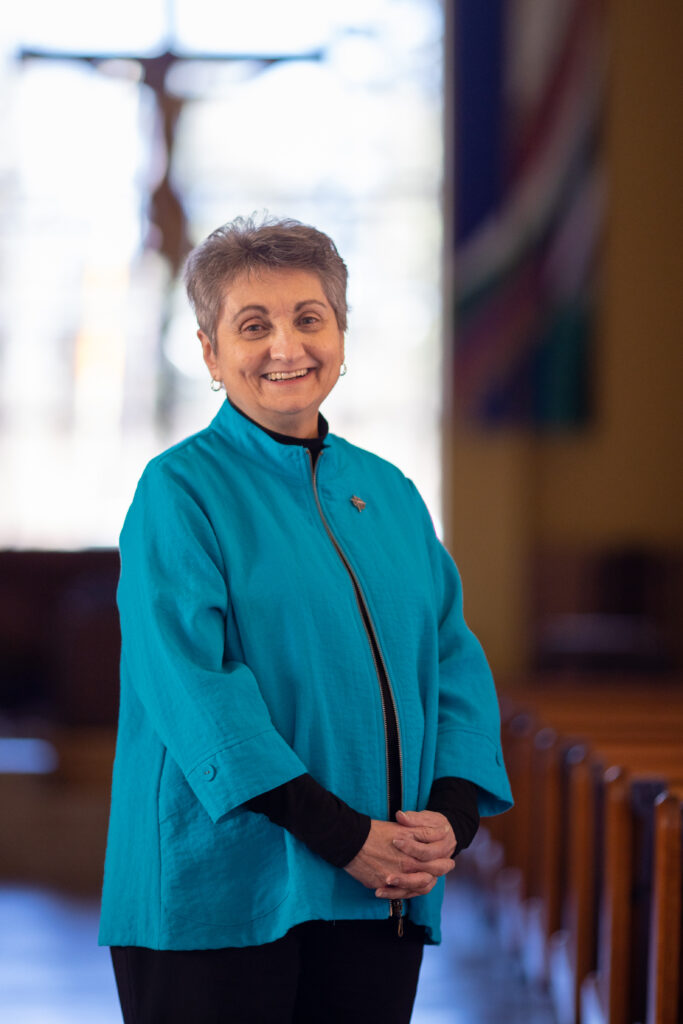
Sister Dolores Clerico has served in a variety of ministries as a Sister of Saint Joseph. Currently, she is a speaker, consultant and spiritual director. She lives in Cherry Hill.




 at the bottom and then tap “Add to Home Screen”
