


The contemporary papal inauguration Mass, which Pope Leo XIV celebrated May 18, has undergone substantial revisions in the past decades.
Before Pope Paul VI, the new pontiff was carried in on the sedia gestatoria, the portable throne carried aloft on attendants’ shoulders, complete with regal ostrich feather fans. Often, the grainy black and white photos or earlier etchings depict this scene with the pope wearing his triple tiara, the three levels representing both Christ as “priest, prophet and king,” and the Church “militant, suffering and triumphant” in earth, purgatory and heaven, respectively. This ritual was drastically simplified in the wake of the Second Vatican Council, as the office of the Petrine ministry moved further away from the secular governance of the Papal States.
Yet the current celebration includes unique aspects that highlight not the pope’s kingly stature, but spiritual shepherding of the community of the faithful. These were on full display this past week, as Pope Leo XIV officially took the reins as the 267th successor to Peter. The week of events didn’t end there, as he visited Saint Paul’s tomb May 20 and planned to celebrate Mass on May 25 at the Basilica of San Giovanni in Laterano, the resting place of Pope Leo XIII and the cathedral of Rome (which is not, as many suspect, Saint Peter’s Basilica). But all eyes were on the former swamps of the Vaticano on May 18, where Pope Leo connected his mission and office most directly to the physical remains of the Rock upon whom the Church was established.

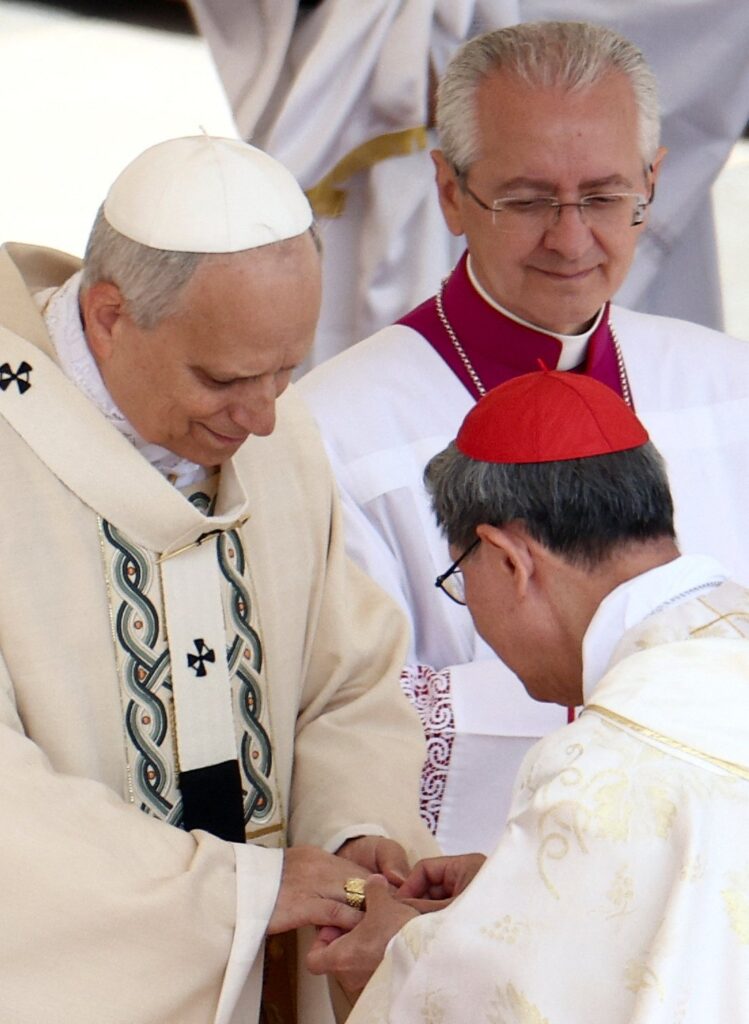
One element of the rite that has increased attention in recent months, largely due to the award-winning movie, is the imposition of the Ring of Fisherman. This is of course a connection to the Galilean “fisher of men” from all those centuries ago. As just happened with Pope Francis, the ring will be defaced with a chisel upon Pope Leo’s death or abdication, so that no one can use it to fraudulently stamp an image into the melted wax of a papal bull, as in past centuries. (The word “bull” actually comes from such a seal.) It was clear that with all that has happened in recent weeks, this was among the most profound symbols of Leo’s new life for him personally, as he visibly choked back sobs when it was placed on his finger.
The other element of the inauguration with an ecclesiological significance is the investiture of the pallium, a woolen garment placed on his shoulders representing his office as Bishop of Rome. Legend has it that this alludes to the Good Shepherd, carrying the lambs home on his shoulder, which is incidentally some of the oldest Christian iconography in existence. According to archeologists, such imagery predates the first depictions of the Crucifixion in the catacombs and elsewhere. As the Bishop of Rome, Pope Leo guides not only the universal Church, but also the special local See where Peter, Paul and so many other early believers gave their lives for the faith. The pallium marks this special relationship with this particular sacred place.
I received early approval from my dean to offer a class in Rome in 2026 on “The Theology of Popes Francis and Leo XIV” (eight weeks online, with two in Italy, come with us!). In starting some early preparation by digging closely into his first weeks of speeches and homilies, it is eminently clear to any observer that one theme overrides all others: Peace. He has cited Pope Paul VI’s famous thundering claim at the United Nations: “War, Never again!”
In his homily at the inauguration Mass, Pope Leo drew this theme out with two indispensable elements: unity and love.
“In this our time, we still see too much discord, too many wounds caused by hatred, violence, prejudice, the fear of difference, and an economic paradigm that exploits the Earth’s resources and marginalizes the poorest. For our part, we want to be a small leaven of unity, communion and fraternity within the world. We want to say to the world, with humility and joy: Look to Christ! Come closer to him! Welcome his Word that enlightens and consoles! Listen to his offer of love and become his one family: in the one Christ, we are one. This is the path to follow together, among ourselves but also with our sister Christian churches, with those who follow other religious paths, with those who are searching for God, with all women and men of good will, in order to build a new world where peace reigns! This is the missionary spirit that must animate us; not closing ourselves off in our small groups, nor feeling superior to the world. We are called to offer God’s love to everyone, in order to achieve that unity which does not cancel out differences but values the personal history of each person and the social and religious culture of every people.”
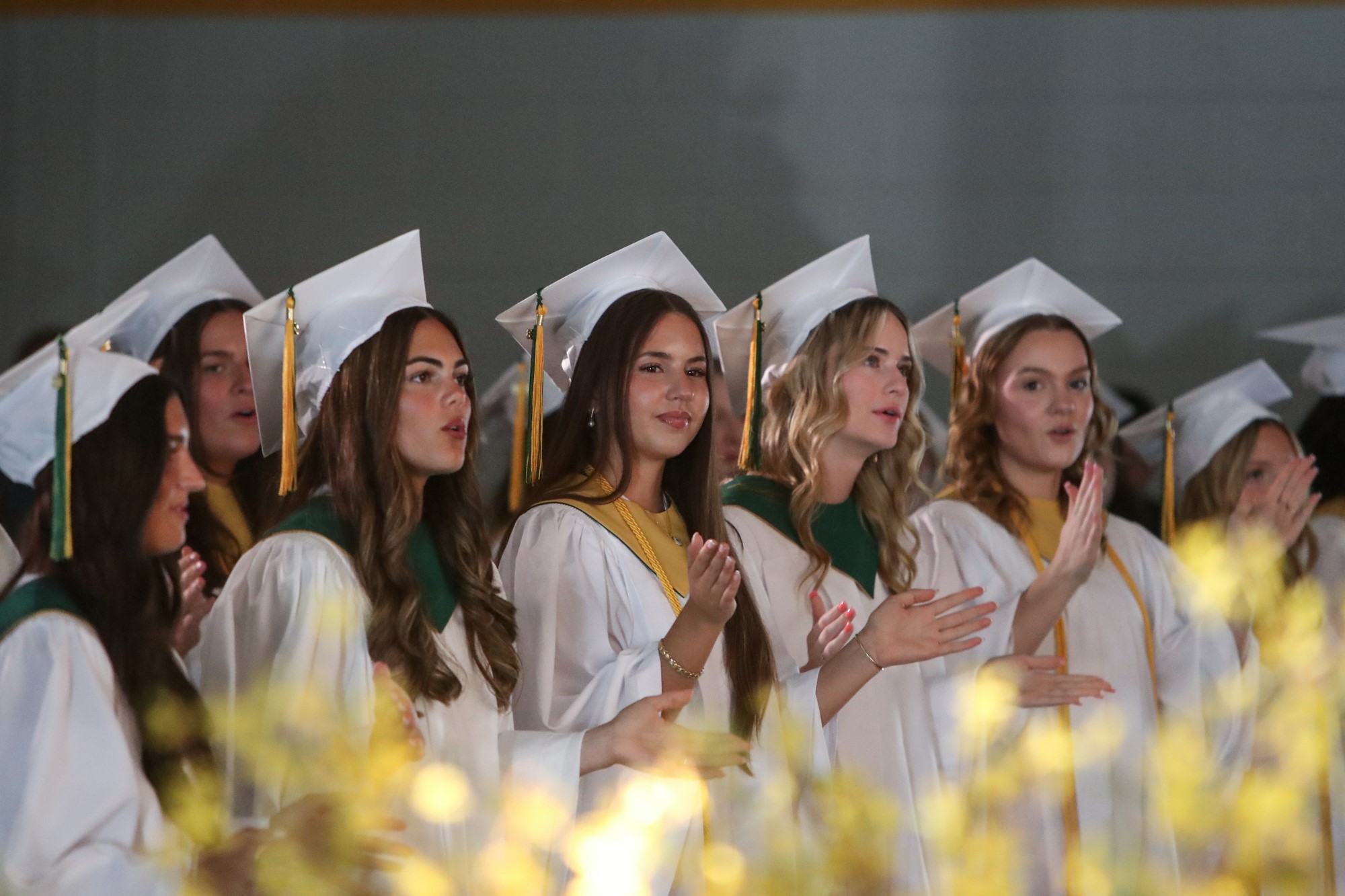
As we celebrate “commencement” season, as the word implies, these graduations represent not an end but the beginning of the next stage of life. Likewise, we are commencing in these days a new era in Church history. I personally am very excited to see where it goes.
An alumnus of Camden Catholic High School, Cherry Hill, Michael M. Canaris, Ph.D., teaches at Loyola University, Chicago.



 at the bottom and then tap “Add to Home Screen”
