





At a recent general audience in Rome, Pope Leo XIV announced that his catechesis this year would focus on the Second Vatican Council. Quoting Saint John Paul II, he said, “I feel more than ever that I am duty bound to point to the council as the great grace bestowed on the Church in the 20th century.”
It has been 70 years since the closing of the council, and many analysts see Vatican II as central to Pope Leo’s pontificate. In the past few months, especially, he has been strongly emphasizing the council’s vision for ecumenical unity and interreligious peace and harmony.
At the weekly audience, delivered Jan. 7, Pope Leo spoke about the progress initiated by the council, saying, “After a rich biblical, theological and liturgical reflection spanning the 20th century, Vatican Council II rediscovered the face of God as the Father who, in Christ, calls us to be His children; it looked at the Church in the light of Christ, light of nations, as a mystery of communion and sacrament of unity between God and His people; it initiated important liturgical reform, placing at its center the mystery of salvation and the active and conscious participation of the entire people of God.”
“At the same time,” he continued, “it helped us to open up to the world and to embrace the changes and challenges of the modern age in dialogue and co-responsibility, as a Church that wishes to open her arms to humanity, to echo the hopes and anxieties of peoples, and to collaborate in building a more just and fraternal society.”
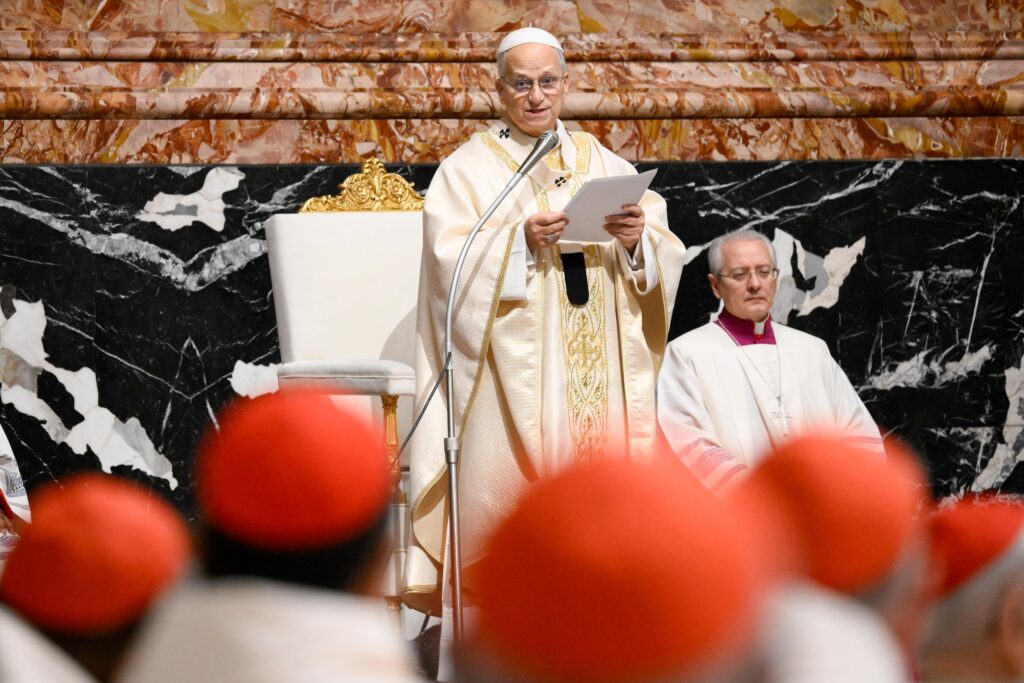
Pope Leo has spoken repeatedly about Christ as the center nexus of the Church. In opening the Extraordinary Consistory of Cardinals, also on Jan. 7, he said boldly, “It is not the Church that attracts, but Christ; and if a Christian or an ecclesial community attracts, it is because through that ‘channel’ flows the lifeblood of Charity that cascades from the Heart of the Savior.”
As he developed this Christocentric theme, he added, “To the extent that we love one another as Christ has loved us, we belong to Him, we are His community, and He can continue to draw others to Himself through us. In fact, only love is credible; only love is trustworthy.”
As the Holy Father met with cardinals for his first consistory gathering, he formally encouraged them to review the original texts of the Second Vatican Council – urging them to review the actual text “not through ‘hearsay’ or interpretations that have been given, but by rereading its documents and reflecting on their content.”
Pope Leo’s talks with the cardinals focused on evangelization, mission, synodality and curial reform, emphasizing unity, dialogue and ecumenical outreach. He stressed the themes of unity and collegiality, themes of the Second Vatican Council, so that they together could discern God’s will and call for a missionary Church in a struggling world.
Woven into this context for the future of the Church was the theme of ecumenism by emphasizing unity in Christ through shared prayer, common celebrations (like having a common date for Easter and Jubilees), moving past old disputes (like the Filioque disagreement), leveraging synodality, and highlighting the “ecumenism of blood” (martyrs) as a unifying force for a fuller visible communion, building on Pope Francis’ legacy with a focus on practical cooperation and shared spiritual pilgrimages.
All in the Church and all Christians are invited to reread and reflect with prayer upon the words of the council documents. For as Pope Leo reminds us all: “The conciliar documents have not lost their relevance with the passing of years; on the contrary, their teachings prove particularly pertinent in light of the new situations of the Church and of today’s globalized society.”
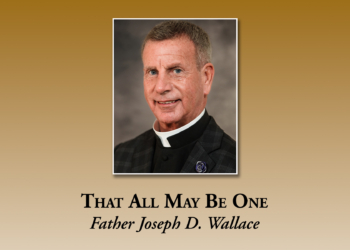
Father Joseph D. Wallace is diocesan director of Ecumenical and Inter-religious Affairs and pastor of Christ the Redeemer Parish, Atco.



 at the bottom and then tap “Add to Home Screen”
